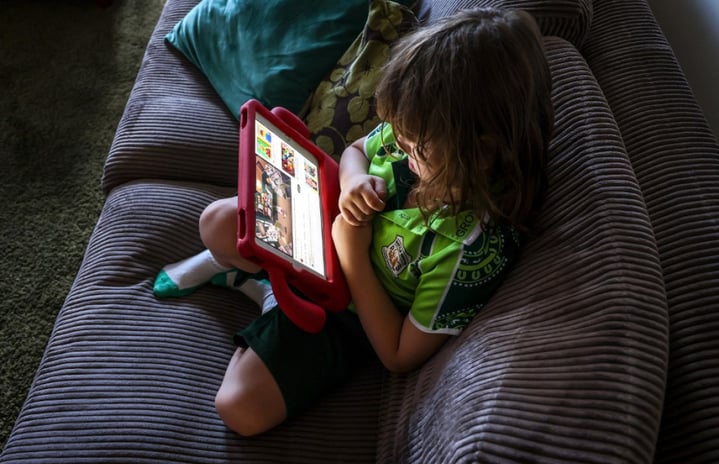
The UK government on Friday published its first national guidance on screen time for children, advising parents to allow no more than an hour a day for under-fives.
The guidance comes amid a wider global debate on how to keep children safe online and in particular on the potential perils of phones and social media.
The UK recommendations include no screen time at all for children under the age of two and the avoidance of "fast-paced social media-style videos and AI toys or tools".
Prime Minister Keir Starmer was discussing the suggestions during a visit Friday to a school in south London.
He said in a statement his government was committed to helping parents get the balance right in a world in which screens were "everywhere and the advice is often conflicting".
The government would "not leave parents to face this battle alone", he vowed.
Other advice to parents included avoiding screen time during meals and in the hour before bed.
Solo viewing should also be limited in favour of watching screens together, in an environment that encouraged discussion and questions, it added.
The pointers follows a consultation with more than 1,000 parents on how to build healthy viewing habits.
There has been concern after a report by the early years charity Kindred Squared found that 28 percent of children starting school aged five could not use a book properly, with many attempting to "swipe" pages like a tablet or phone.
Children's Commissioner Rachel de Souza, co-chair of the group that advised the government, said she hoped the guidance would provide "clear, non-judgemental information about why limiting screen use is important".
The debate has been galvanised in recent months after Australia in December issued a blanket ban on social media for children under 16.
The ban has prompted many to to urge the UK government to follow suit.
Britain's unelected upper House of Lords voted in favour of prohibiting social media for under-16s for a second time late Wednesday, piling pressure on the government.
MPs in the House of Commons, where Starmer's Labour party enjoys a huge majority, have already rejected the proposal once.
Starmer has not ruled out a ban, but is awaiting the outcome of a public consultation, due to close on May 26.
© Agence France-Presse