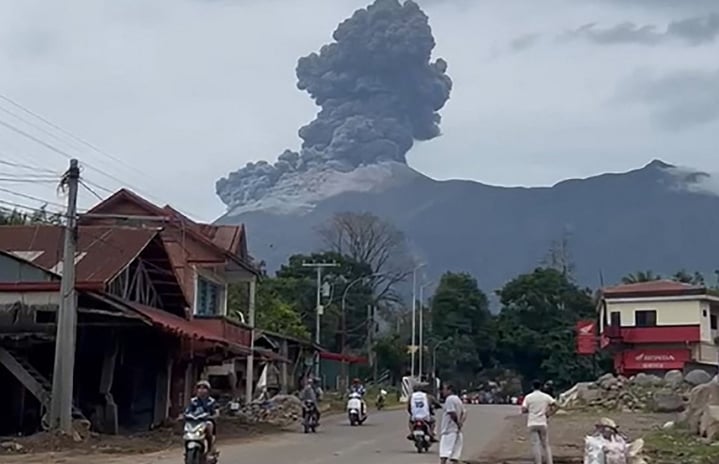
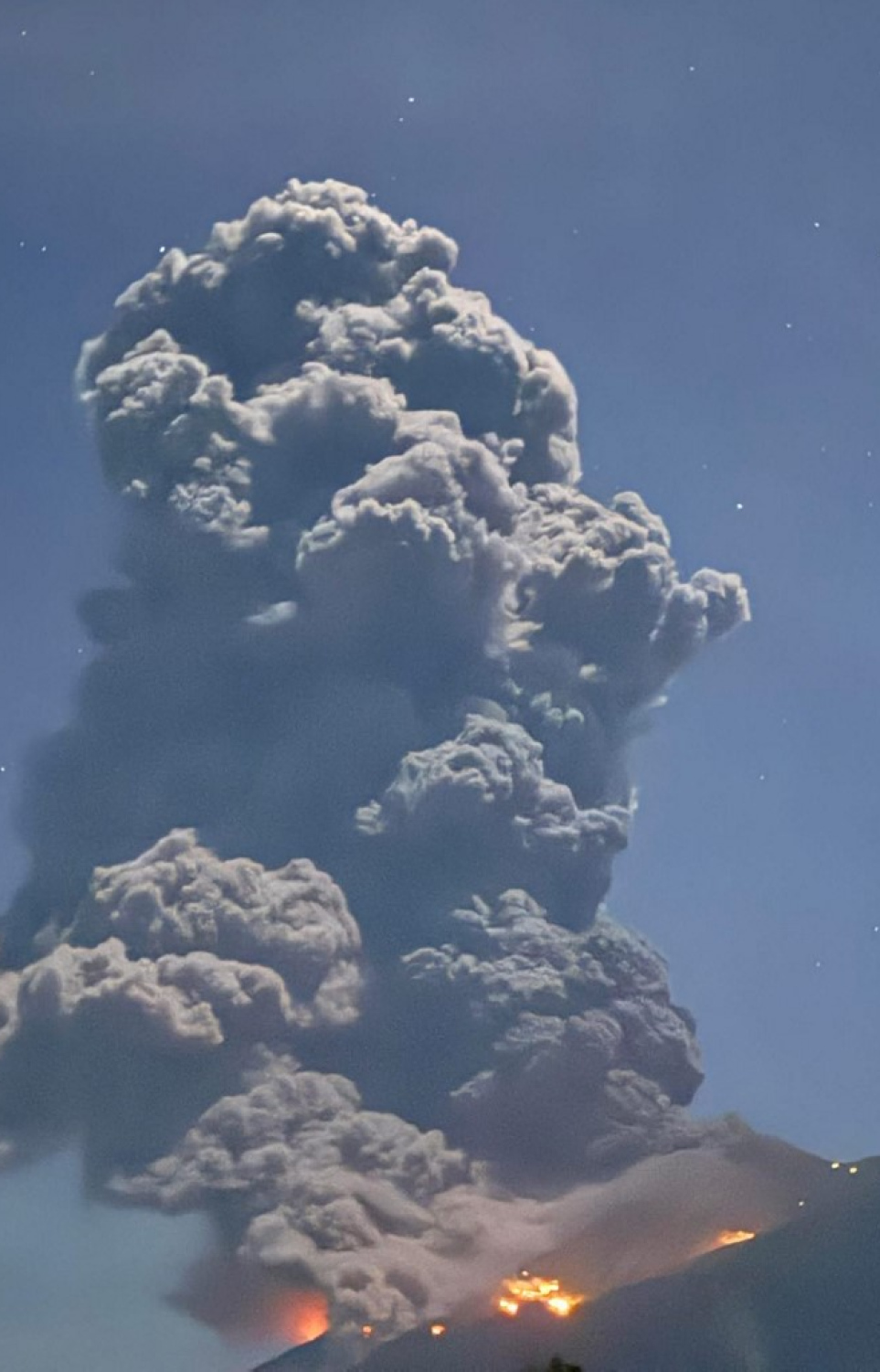
A volcano erupted in the central Philippines on Thursday evening, sending a billowing plume of ash about 2,500 metres (1.5 miles) into the nighttime sky.
The two-minute eruption began at 7:04 pm (1104 GMT), state volcanology agency director Teresito Bacolcol told AFP, saying "there might be a bigger explosive eruption in the next few days".
Kanlaon Volcano, one of 24 active volcanoes in the archipelago nation, has had several major eruptions in the past century -- including a 1996 blast that killed three hikers who were near the summit at the time.
"This is the second moderate eruption in a week," Bacolcol said in a phone interview, adding his agency would monitor the volcano for 24 hours before deciding if it should raise the alert level from two to three on its five-point scale.
"This event generated a plume that rose 2,500 meters above the crater before drifting southwest. Incandescent ballistics were observed to have rained around the crater," the volcanology centre said in a statement released minutes later.
John De Asis, a rescuer in the nearby town of La Castellana, told AFP that ash had begun to descend on local neighbourhoods.
"Tonight, we heard a sudden, loud boom, then after a few minutes, people started reporting that there was ashfall in their areas," he said, noting that rescue personnel were handing out facemasks.
Bacolcol said it was possible that "gas pressure had built up at the vent" of the volcano. He said recent low sulfur dioxide emissions suggested a potential blockage that would have caused pressure to build.
The volcano, which straddles Negros Oriental and Occidental provinces, currently has a four-kilometre exclusion zone in place.
The Philippines is on the seismically active region of the Pacific known as the "Ring of Fire", where more than half the world's volcanoes are located.
The most powerful volcanic explosion in the Philippines in recent years was the 1991 eruption of Pinatubo, about 100 kilometers (62 miles) from Manila, which killed more than 800 people.
© Agence France-Presse