
In the ongoing discussions at COP31, the UN’s largest climate change conference currently taking place in Antalya, Turkey, the Maldives has prioritized reforming the climate finance system, securing grant-based adaptation funding without adding to its debt burden, transitioning to clean energy, strengthening early warning systems for disasters, and establishing a sustainable waste management system.
"The Maldives does not seek sympathy. The Maldives calls for justice, accountability, and action," President Dr. Mohamed Muizzu said in his national statement delivered at this year's COP summit.
In his national statement, the President highlighted three main points:
● Fulfilling financial pledges made by developed nations and ensuring that these funds are provided as grants.
● Ensuring that international financial institutions and credit rating agencies recognize the vulnerability of Small Island Developing States (SIDS) and reform how climate projects are evaluated, so that investments in resilience do not become a financial burden for these nations.
● Highlighting the Maldives' ongoing efforts to ensure water, food, and energy security, as well as its progress toward achieving its renewable energy targets.
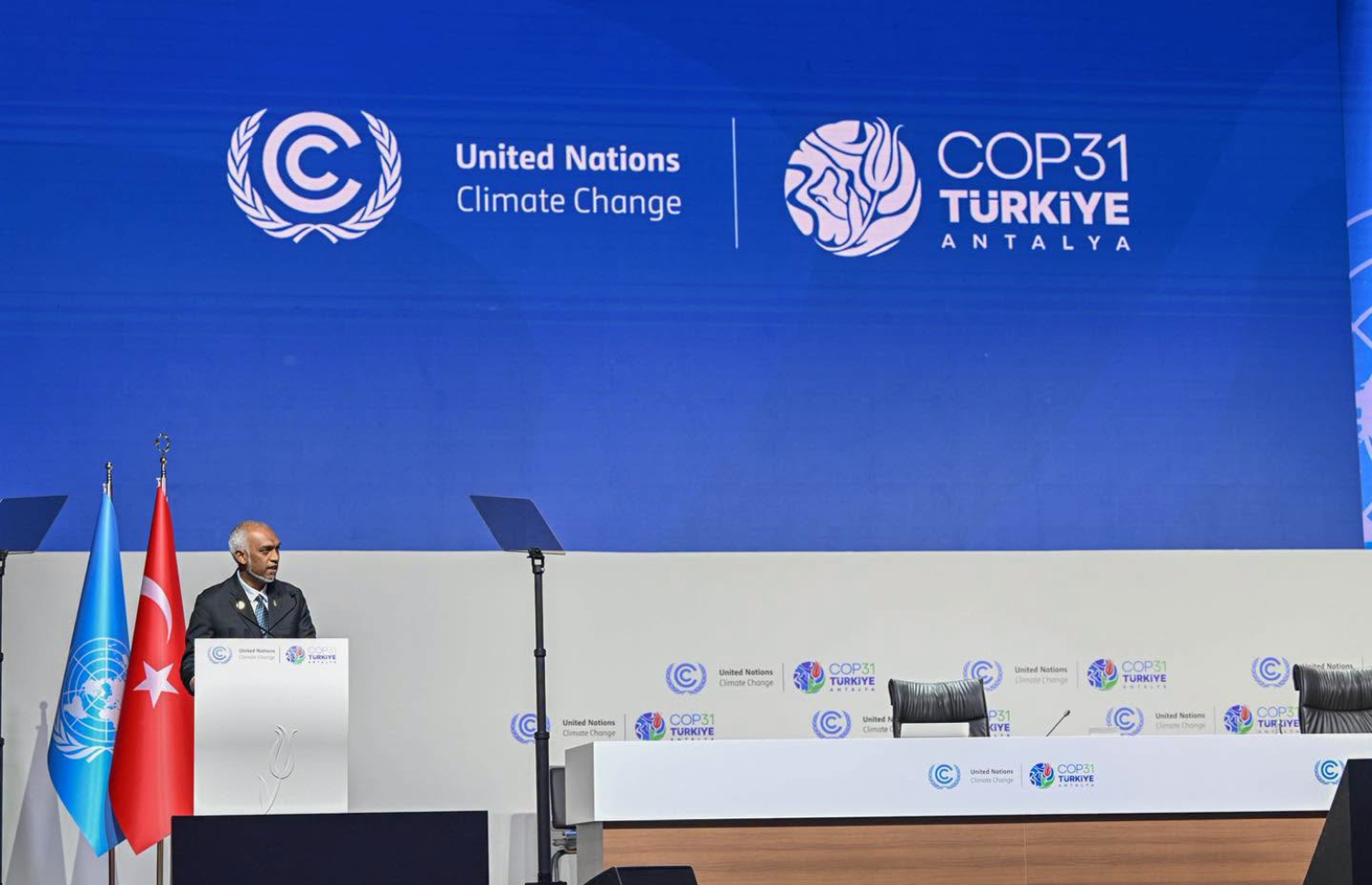
During his address, the President also announced that the Maldives Finance and Leasing Company (MFLC), a local private company, received accreditation as a National Direct Access Entity of the UN’s Green Climate Fund (GCF) on 28 October.
This marks the first time a Maldivian institution has received GCF accreditation.
Previously, the Maldives had to access GCF funding through international intermediaries such as the UNDP or the World Bank. However, through MFLC, the Maldives will now have the authority to submit project proposals, secure funding, and implement projects directly with the GCF without an international intermediary.
Oceans, Rising Seas, and Coastal Protection
Regarding the protection of marine ecosystems, the Maldives at COP31 primarily focused on sea-level rise, coastal protection, and the preservation of marine biodiversity.
According to this year’s "State of the Climate 2026 Update" report released last Monday by the World Meteorological Organization (WMO), sea surface temperatures have reached record highs, making this the worst year on record for the world's oceans. The organization also warned that climate change is now "out of balance".
Speaking at the "Sea-Level Rise: Multi-Level Action for Coastal Resilience" session held on the sidelines of COP last Wednesday, President Muizzu stated that rising sea levels are not a distant future threat, but a major challenge currently affecting the survival of Maldivians and the nation’s development.
The President also noted that the government's top priority is preventing a situation where Maldivians are forced to abandon their homeland and migrate elsewhere due to climate change.
"Climate vulnerability must not define the Maldives' future," the President said.
Highlighting ongoing coastal protection projects across the islands, the President pointed to beach protection initiatives and the "Rasmale Eco-City" project—which is being reclaimed at an elevated height to account for rising sea levels and developed to run on renewable energy.
Clean Energy Transition and Early Preparedness
Speaking at a high-level meeting on the clean energy transition, the President stated that reducing reliance on fossil fuels and shifting to clean energy is not merely an environmental matter, but a vital step to ensure the Maldives' energy security, insulate the economy from fluctuations in fuel prices, and provide reliable electricity services to the public.
The government aims to transition 33 percent of the electricity generated in the Maldives to renewable energy by the end of 2028
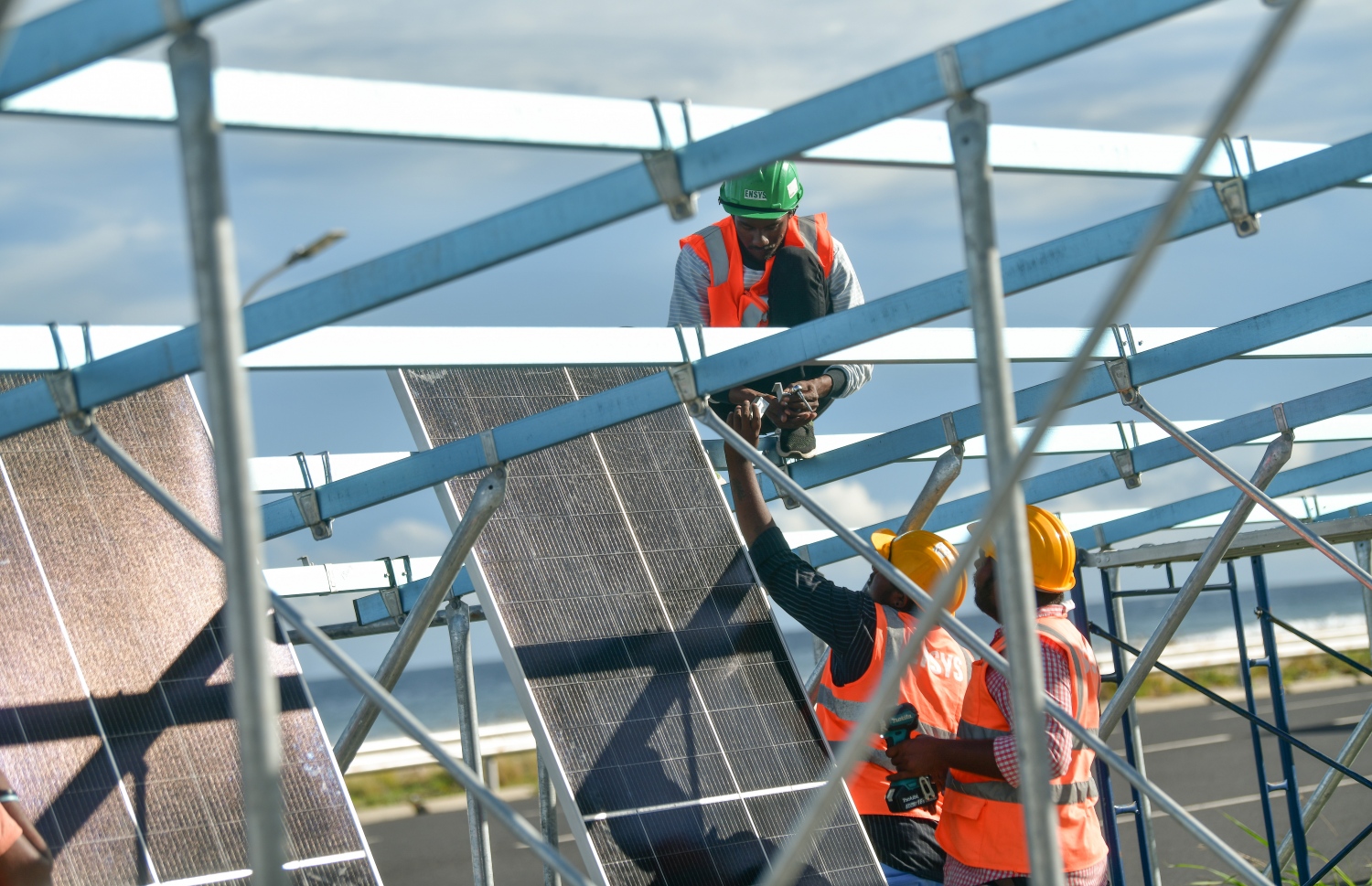
According to the Maldives' country profile by the International Renewable Energy Agency (IRENA), approximately 93 percent of the electricity generated in the Maldives comes from fossil fuels, while about seven percent is produced from renewable energy.
Regarding the strengthening of early warning systems ahead of climate disasters, the President said that establishing "multi-hazard early warning" systems in a low-lying nation like the Maldives is a top priority. He noted that this serves as a crucial investment to ensure the safety of the islands and their residents, as well as the sustainability of the economy.
Domestic Environmental Concerns
Although the government officially maintains that protecting the Maldives’ marine environment and ecosystems is a priority, civil society organizations, scientists, and human rights groups have leveled heavy criticism at the administration over the past year regarding its environmental governance.
In particular, organizations such as Transparency Maldives and EcoCare have previously raised concerns that the lack of independence of the Environmental Regulatory Authority (ERA), the body mandated to oversee environmental protection, and the relaxation of Environmental Impact Assessment (EIA) regulations for development projects represent a step backward for environmental safeguards.
Studies indicate that between 2000 and 2024, the Maldives set a "world record" by reclaiming more than 4,000 hectares of land, much of which remains unused and barren. While illegal sand mining and infrastructure projects such as harbor construction have damaged coral reefs and accelerated coastal erosion, the government faces widespread public criticism for attributing all of these issues to climate change in order to secure foreign financial aid.

Furthermore, major concerns have been raised over the government halting the publication of expenditure details for the Green Fund—which collects Green Tax revenue meant to finance environmental projects—earlier this year, as well as the low proportion of those funds actually being spent on environmental initiatives.
Environmental activists also point to a disconnect between the government’s words and actions, noting that despite calling for plastic reduction on international platforms, authorities have reinstated permits for importing plastic straws and continue to carry out environmentally damaging projects.
The question raised by the public is: what message is being projected on the international stage while the Maldives' natural environment is being altered and degraded at home?
This story was supported by Informed Earth.


