
Did the state hand over a massive 500-hectare plot of land reclaimed at great expense to a foreign company completely for "free"? When it is claimed to be a USD 20 billion project, what does the state actually receive from those funds?
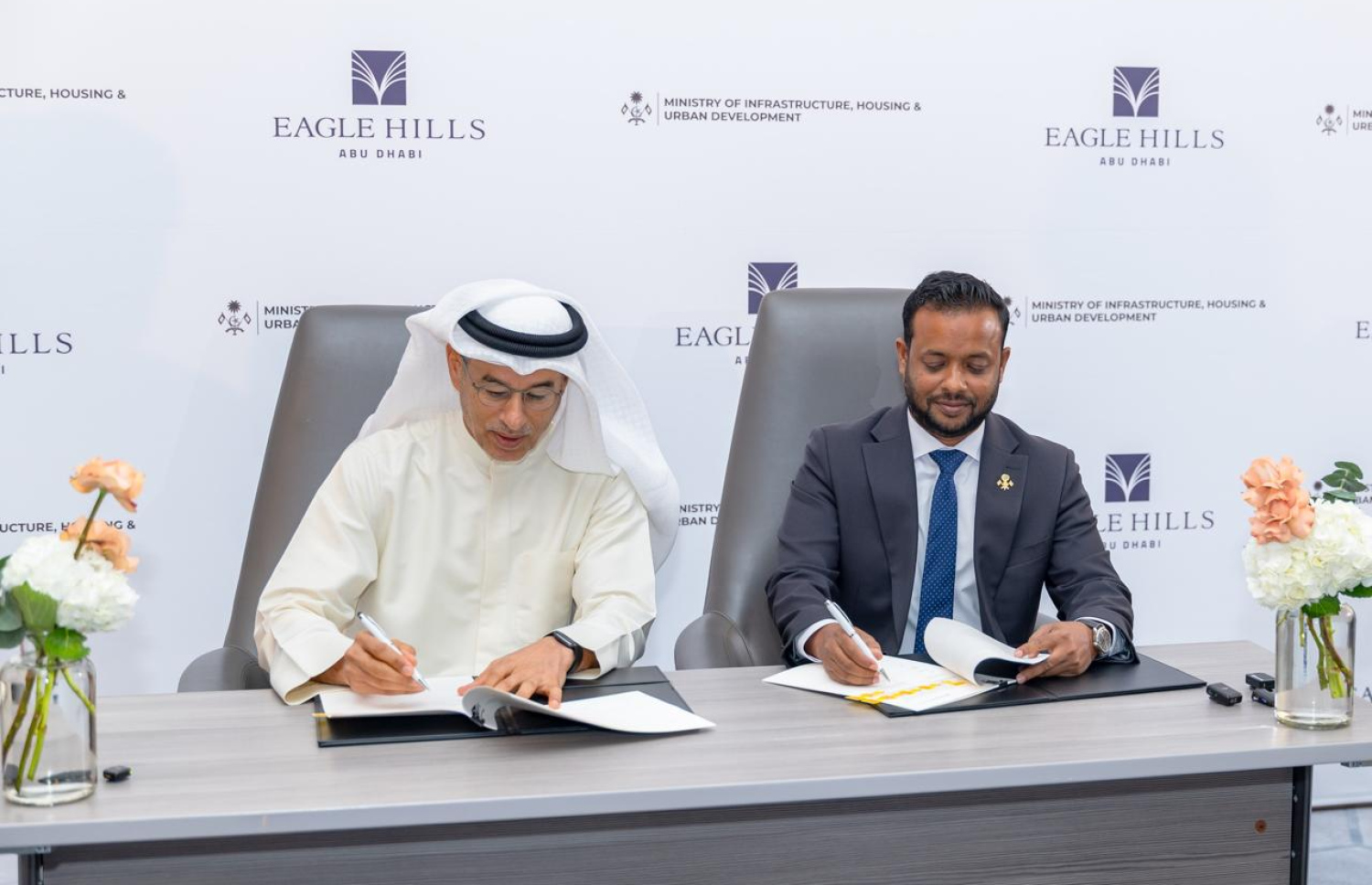
These are some of the questions posed by critics of the "Maldives Waterfront and Marina" project being developed in Rasmalé in partnership with the United Arab Emirates' (UAE) Eagle Hills.
In an exclusive interview with Mihaaru, Housing Minister Dr. Abdulla Muththalib addressed those questions by pointing to how deals made with foreign companies by various administrations in the same manner played out in the past.
One such agreement was the lease of Velana International Airport to India's GMR during the first MDP administration. While that agreement initially yielded USD 78 million for the state, all subsequent revenue from the country's main gateway was set to go to GMR.
"Therefore, that was a deal that was very beneficial to GMR and highly damaging to the state," Muththalib stated.
According to the Minister, Emboodhoo Lagoon was also leased for CROSSROADS during the administration of former President Abdulla Yameen, one of the marina project's harshest critics, in a manner that yielded very minimal income for the state. The entire Emboodhoo Lagoon was given to CROSSROADS for an acquisition cost of just USD 40 million.
"You will know that even though more than 10 years passed, only a portion of the entire lagoon has been developed. If we look at the TGST and employment generated from that place, what is the income derived from it? What is the actual benefit?" Muththalib questioned.
A third example he cited is the lease of V. Fohtheyo Lagoon to a foreign company during the second MDP term under President Ibrahim Mohamed Solih's administration. Muththalib stated that the vast 750-hectare lagoon was given away in a manner where "not a single coin" was received by the state. Instead, that company was required to build an airport.
"That airport was also slated to be given to that party to operate as a private airport for 50 years," he said.
According to Muththalib, the revenue the state would receive under that agreement amounted to just USD 2 million annually as land rent.
"From each of these places, the state will only receive two million dollars annually as land rent," Muththalib stated.
He noted that the long-term revenue generated from those places, which yielded virtually no significant immediate income for the state at the time of leasing, remains very low because only a handful of villas are constructed and operated there.
"If we look at Fohtheyo, they are developing around 54 private villas, I believe. If we look at the number of jobs created there, the TGST received from there, and things like that, the profit gained from there is actually very small considering it's such a large lagoon," Muththalib stated.
MVR 7.7 billion received before Rasmalé Marina Project even begins
The Minister stated that the state's benefits from the Rasmalé project will begin to materialize long before the physical work of the project commences. This is because Eagle Hills will initiate the construction of 5,000 flats in Hulhumalé prior to launching the project.
"Five thousand housing units would amount to USD 500 million based on current market rates. Therefore, in addition to the amounts received from all other projects, we are also getting advance funds from this project, that is MVR 7.7 billion," Muththalib stated.
Eagle Hills will develop over 8,800 properties in Rasmalé. When the lease rights for each of those locations are sold, 10 percent of the revenue generated from that business must be paid to the state.
Muththalib stated that the small acquisition cost normally due from the land given to the company is waived in exchange for this arrangement. Even after deducting the USD 500 million spent on building the flats, the government estimates that 10 percent of the proceeds from selling the lease rights will amount to roughly USD 3 billion.
"We expect, as the assessment shows, that more than USD 3 billion, roughly over MVR 46 billion, will be received by the government by the time the 10-year development of that place is completed."Minister Muththalib
He noted that this will also include a 4 percent charge collected from each property, TGST paid by the resorts and hotels operated there, and other business profits generated.
Key highlights
- There is no pathway from property ownership to permanent residency or citizenship. The government will retain full authority to grant or withhold visas.
- If the government revokes an individual's visa, that person must depart from the Maldives. Properties can only be purchased by parties approved by the government.
- No tax holidays or tax exemptions are included.
- All activities in Rasmalé will be taxed under the general laws of the Republic of Maldives.
- Payments owed to contractors and suppliers will be made through accounts opened in licensed banks in the Maldives.
- Financial transactions from selling units will be conducted through escrow accounts maintained in the Maldives under the Real Estate Act currently being finalized and submitted.
The Minister stated that considering the employment generated by the resorts and hotels developed in the marina project and the estimated annual influx of tourists, the project will yield profits never before achieved by leasing a lagoon or island in the Maldives. This is because once fully developed, it will be capable of bringing in one million tourists annually.
"This agreement was made in a way that, by giving a 500-hectare plot of land, more than one-third of the money currently earned in the Maldives' tourism sector enters the country in the manner described," the Minister stated.
If proceeding as agreed, the Minister described the Rasmalé project as an initiative that will elevate the Maldivian economy to an entirely new tier.


