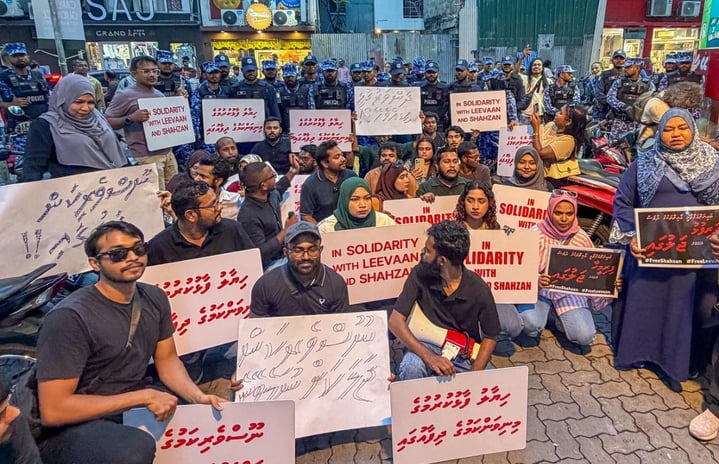
Adhadhu journalists Mohamed Shahzan and Leevan Ali Nasir remain imprisoned after being sentenced for violating a Criminal Court gag order. Yet the High Court's handling of the appeal has, instead of offering clarity, raised further questions - who is actually bound by this order, and what has become of the right to appeal?
"The High Court's decision does not make sense. The order applies to all citizens. The order clearly states so. So anyone to whom this order applies to must be able to appeal it," former Prosecutor General Hussain Shameem stated.
"Otherwise, the right to appeal granted in the Constitution is being narrowed. The registrar cannot limit this right."
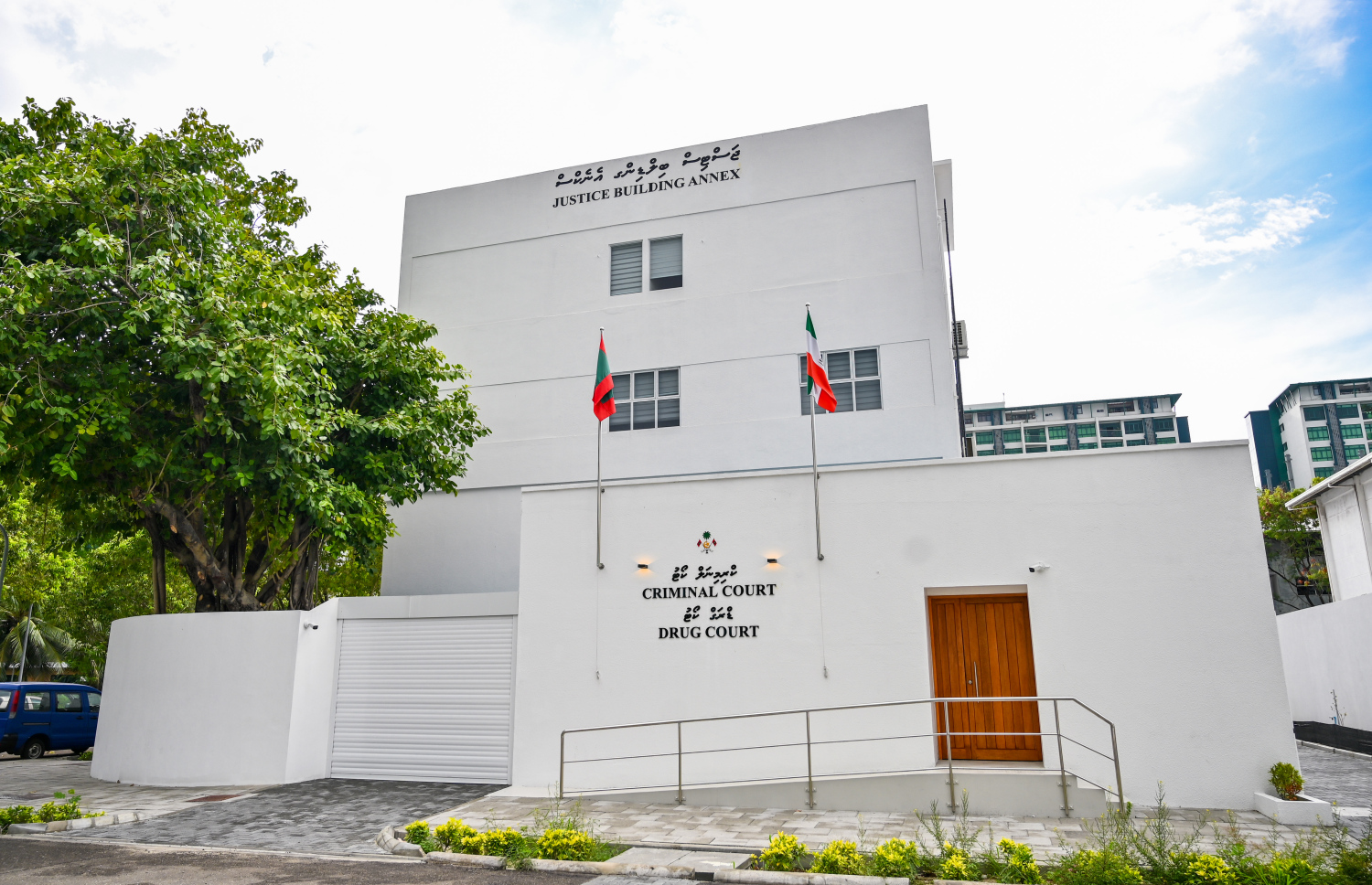
The Criminal Court issued a gag order prohibiting either direct or indirect discussion of an Adhadhu news documentary. The order was issued through the qazf trial against Adhadhu CEO Hussain Fiyaz Moosa and Editor Hassan Mohamed. However, the gag order effectively silences all citizens. There isn't a single person excluded from the order. Every citizen is obligated to comply and abide by the order.
The impact of the gag order on the media is immense. One of the jailed journalists, Shahzan, is the Vice President of the Maldives Journalists Association (MJA). As the circumstances are such, MJA filed an appeal against the gag order at the High Court.
However, the High Court's registrar decided to reject the case, stating that as MJA is not a defendant in the case the order stems from, they do not have the right to appeal it. The registrar cited Article 198(c) of the Criminal Procedures Act. This article states that persons involved in a case to whom a sentence, decision, or court order applies to will have the right to appeal. The registrar's stance is that, based on this, the right to appeal applies to Fiyaz, Hassan or the State.
However, a former judge of the High Court entirely disagrees with the registrar's interpretation. The key reason for this is because the order does not apply simply to Fiyaz and Hassan, but rather to all citizens. As such, everyone impacted by the order will have the right to appeal it, he said, emphasizing that this is a constitutionally guaranteed right.
Article 56 of the Constitution states that everyone related to a matter has the right to appeal a conviction and sentence, or judgement or order in a criminal or civil matter.
"Anyone with standing in the matter can appeal. Once appealed, the opportunity must be granted. When it is halted, this means that the order does not apply to these people, and they can continue to discuss the matters [the gag order prohibits]," the former judge said.

Former PG Shameem also highlighted the consequences of the registrar's decision. He noted that:
- The High Court's decision indicates that the court order does not apply to MJA and its members
- As Leevan and Shahzan are members of MJA, the court order does not apply to either of them
- For these reasons, the Criminal Court's decision to imprison the two journalists is unlawful as the order has been enforced on two individuals to whom it does not apply to.
This is the first time that an appeal in such a case has been taken to the High Court. This is also the first time that a lower court has issued an order on the entire citizenry. Hence, the High Court registrar's decision must take all this into account, and be appropriately broad, legal experts believe.
Appeals on gag orders such as this have gone through judicial systems in several other countries, and has established protocols surrounding it. There are past cases similar to this that can be referred to in the USA, UK, and India.
One such case is Idaho State vs. Brian Kohberger, relating to the November 2022 stabbing murders of four University of Idaho students in the USA. A gag order issued in relation to this case led to a joint appeal at the US Supreme Court by 30 media outlets.
The gag order prohibited lawyers, law enforcement bodies and officers and witnesses from speaking with the media. Media outlets that appealed the gag order as infringing on press freedom include Associated Press, New York Times and Fox News.
The media's appeal was accepted and the trial proceeded. While the Idaho Supreme Court did not entirely void the order, its reach was significantly narrowed in response to strong legal opposition from the media. Information that could be revealed, and that would be sealed was clearly laid out.
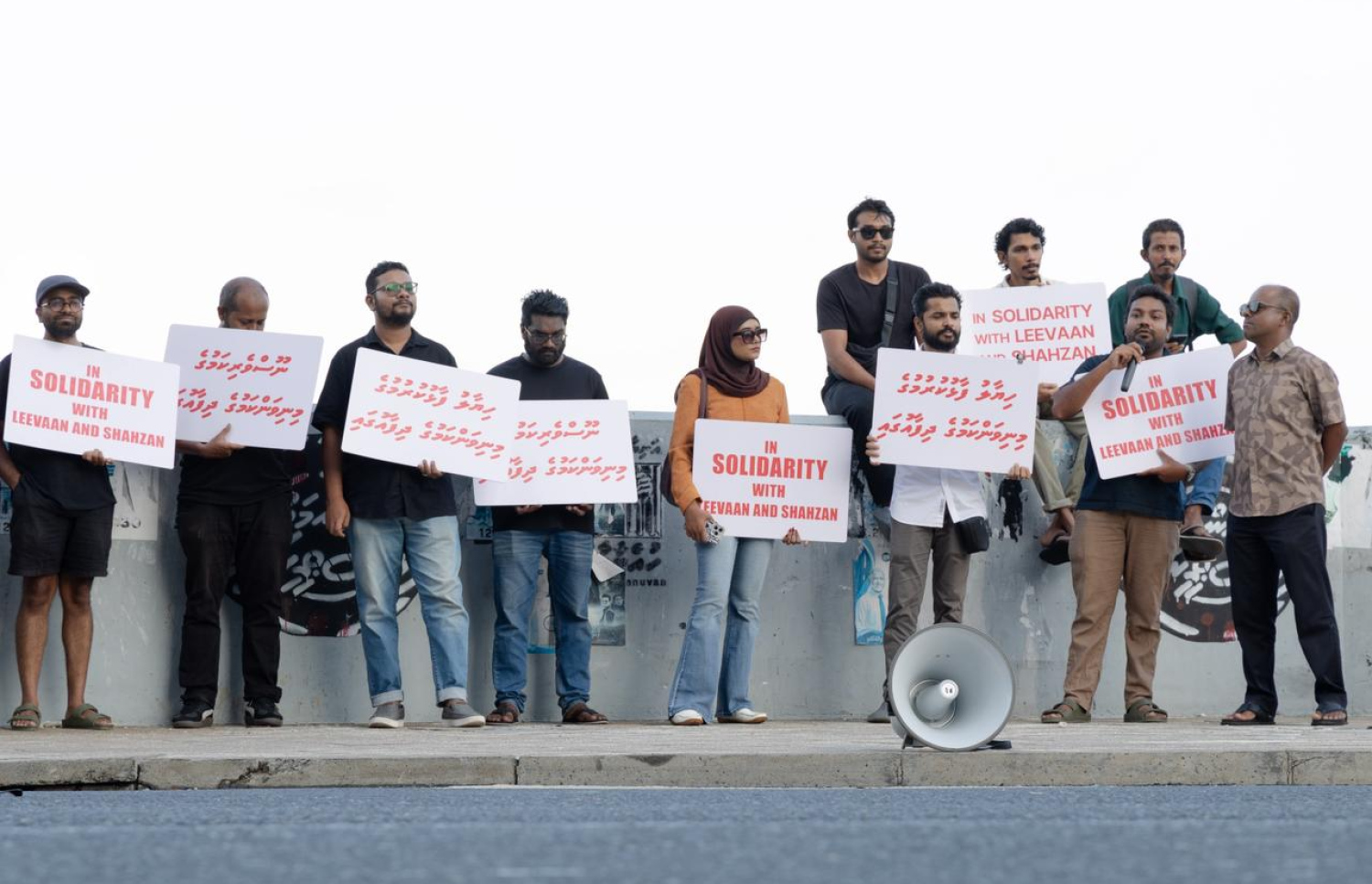
The CBS Inc. v. Young was a another case in which the superior court accepted the CBS media appeal submitted to the court, and ruled in their favour. The ruling established that the news media has the legal standing to challenge third-party gag orders that restrict trial participants from speaking to the press.
Media outlets in India also frequently submit similar appeals to High Courts and the Supreme Court.
One such case is Sohrabuddin Sheikh vs. State of Maharashtra. In this case, the lower court issued a gag order prohibiting the media from reporting on the trial. A crime reporter, along with Brihanmumbai Union of Journalists, appealed the order at the Mumbai High Court.
On January 23, 2018, the High Court struck down the ban. The court declared the gag order an overreach of judicial authority and stated that the public has the right to be informed of criminal proceedings and obstructing press freedom cannot be accepted under Indian laws.
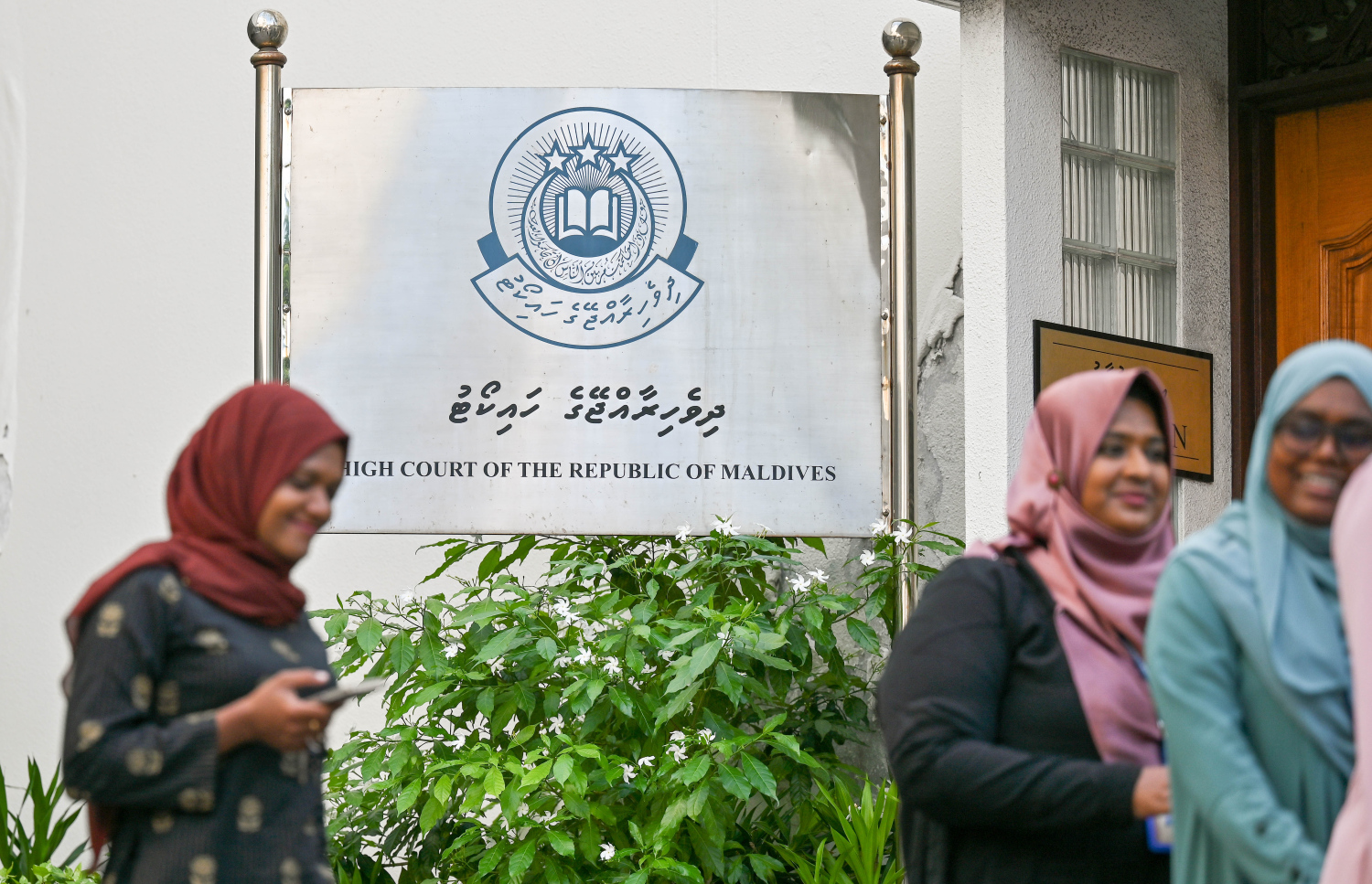
The Maldives' High Court's move to restrict the right to appeal stands in contrast to international practice, where media representatives are routinely permitted to challenge gag orders. In response, the Maldives Journalists Association has asked the Judges Council to review and overturn the High Court's decision.
Cases such as this must be allowed to proceed at superior courts even in the interests of establishing protocols in Maldives for gag orders.


