
The much anticipated Thilamale' Bridge, which will bring an end to commuters having to cross the sea daily, has reached 72.17 percent completion.
Minister of Infrastructure, Housing and Urban Development Dr Abdulla Muththalib and High Commissioner of India to Maldives G. Balasubramaniam made a site visit to the bridge yesterday, accompanied by representatives from several media outlets.
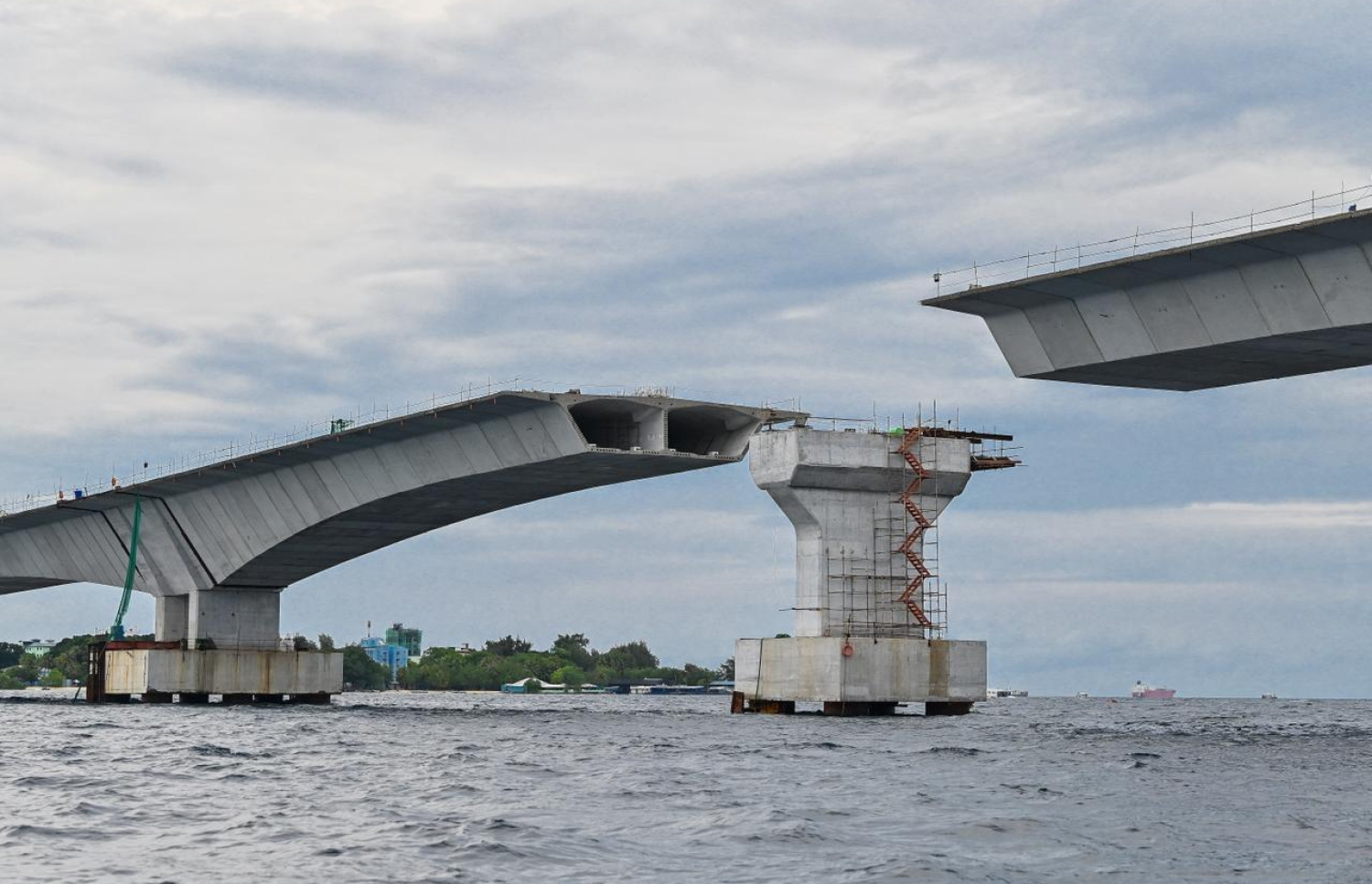
Walking about half a kilometer across the bridge and observing workers steadily carrying out the development work, Minister Muththalib paused and posed a rhetorical question to the press about recent claims on social media.
"So are you now convinced there are no bends or dips on this bridge? Can you see for yourselves that the bends that are being talked about does not exist?"
Photos have been circulating on social media claiming the bridge is 'not straight' and that it has a series of bends and dips, with some accusing the government of poor design.
The press visit to the site yesterday confirmed that these are unfounded claims, with the bridge distinctly free of any such dips or bends.
Although seen from a distance, it may appear to have such dips, this is not the case when on the bridge.
"This bridge was not drawn, it was designed and engineered. This means that in reality, it will not be the same as what can be seen from afar. There will be no dips like they say. As this structure is built much like you would with LEGO, bringing in separate segments and arranging them, all the segments would not align if there were any defects like that," Minister Muththalib explained.
"So it is not a quality issue. What we see from afar is just an optical illusion. There are no dips like they say as work is progressing on the bridge."
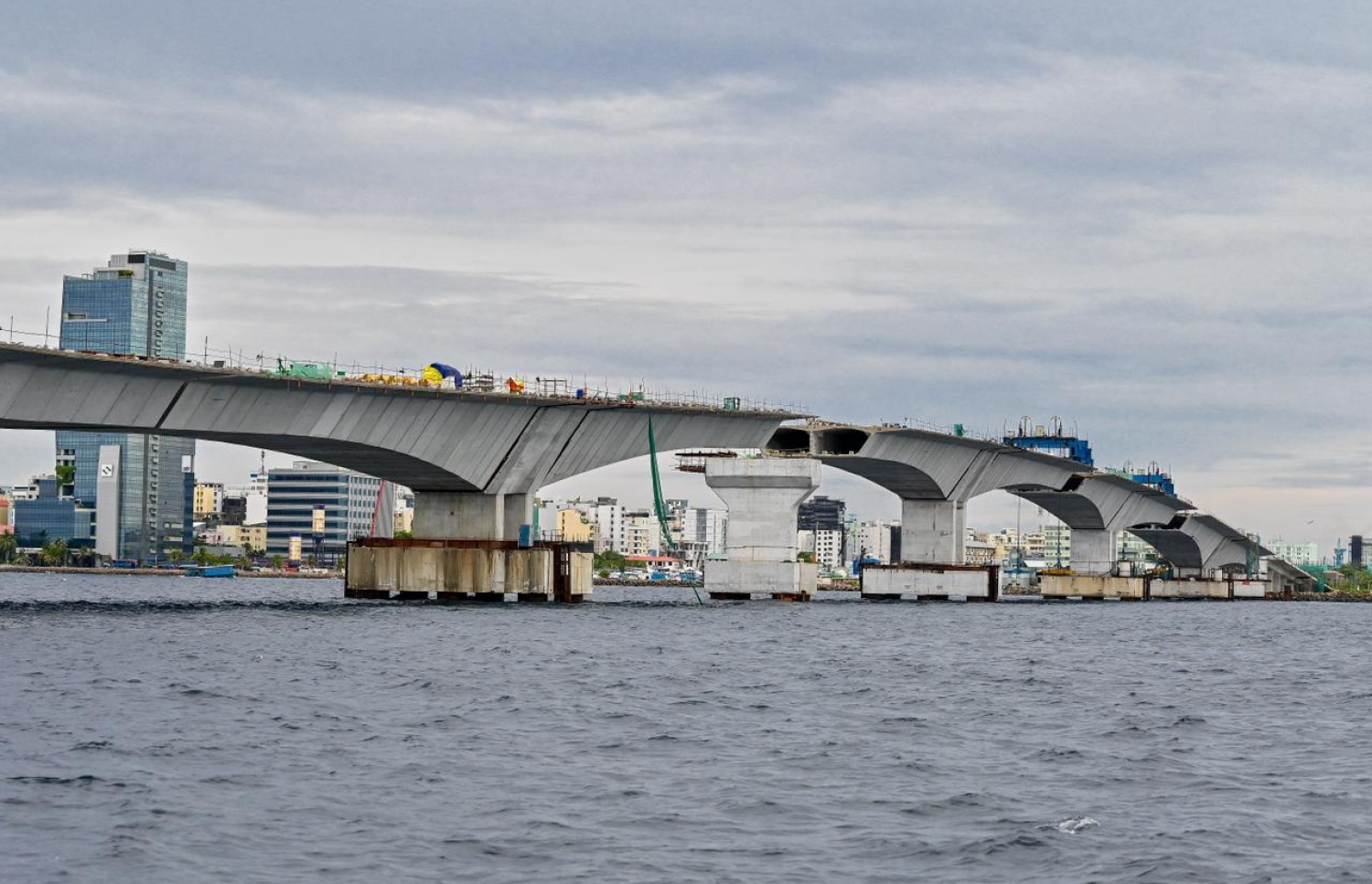
The project has met with delays owing to various factors such as the enormity of the project and weather conditions in the generally rough channel. However, the Minister appeared confident about the quality of the project as it steadily nears completion.
Minister Muththalib addressed concerns about the delays in project completion, assuring that the Maldivian government is working with the Indian government and contractor Afcons to ensure that work proceeds uninterrupted and is completed swiftly.
"God willing, this will be an engineering marvel as the project concludes. This is an immense, complex undertaking of that scale," Muththalib asserted.
Indian High Commissioner Balasubramaniam echoed the minister's views, saying the project would be an engineering feat that will impress the world.
"This project was named the Greater Male' Connectivity Project for an important reason. This is the largest infrastructure project that India has undertaken outside the country," the High Commissioner said.
"This is a 6.7km bridge. The minister has said it well, it will be an engineering marvel. This bridge, built with placing pillars so deep in the sea, is certain to bring significant economic development to the Male' area," he said.
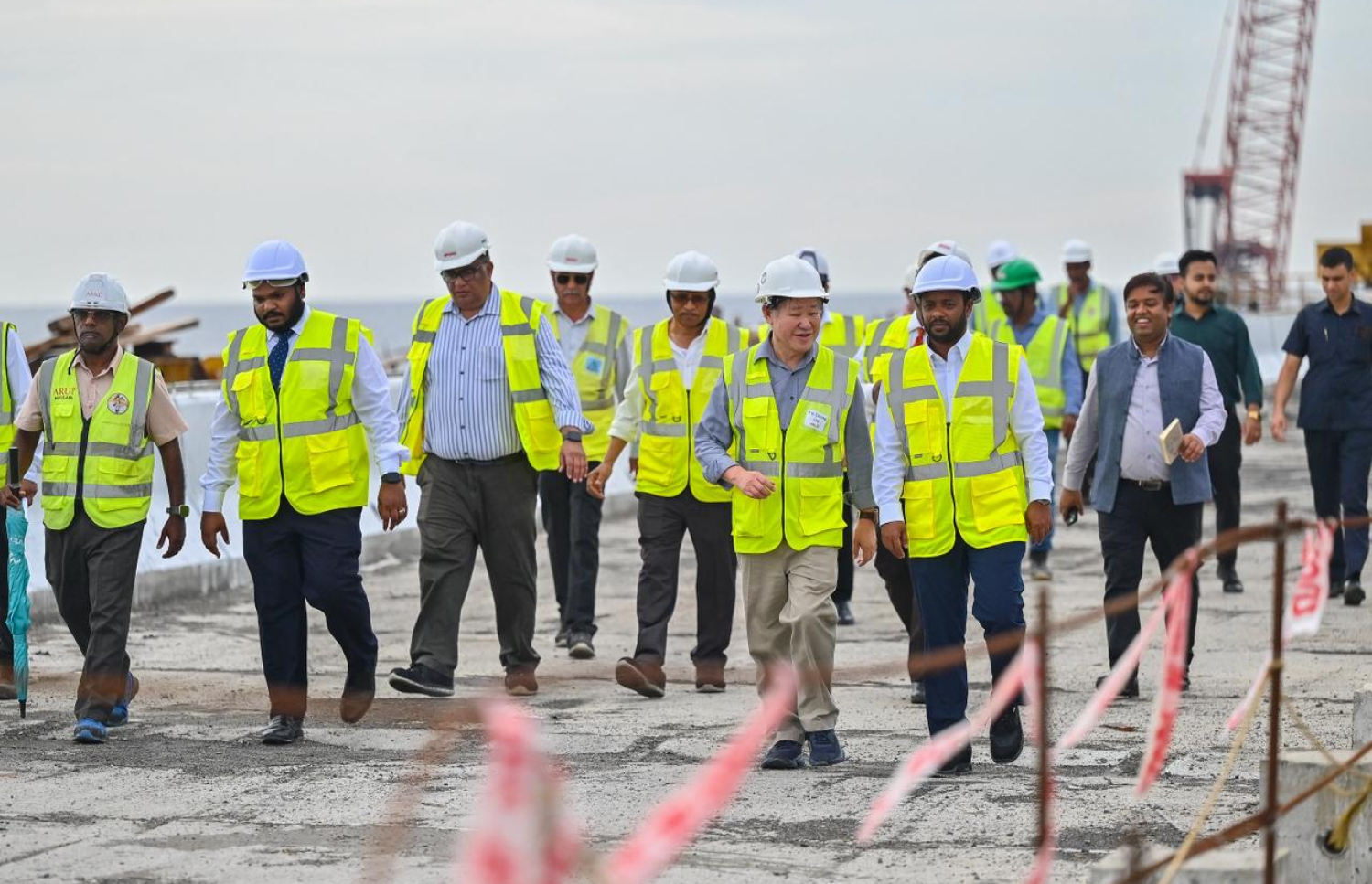
Much of the work on the bridge is expected to reach completion by the end of 2027, at which point the public will be able to travel between Male' and Vilimale', as well as Thilafushi, on the bridge.
The super structure segments for the bridge developed in Gulhi Falhu were the tallest precast segments made using the long line method in the world to date.
The project is now entirely above water, with all work necessary under the surface of the sea now completed.
Currently ongoing are efforts to install and connect the super structure segments, and development of the connecting roads on Vilimale' and Gulhi Falhu.
Casting of 86 percent of the 1,222 segments needed for the bridge deck has also been completed now, with 60 percent already installed.
In Thilafushi, revetment works and culvert installation are currently underway.
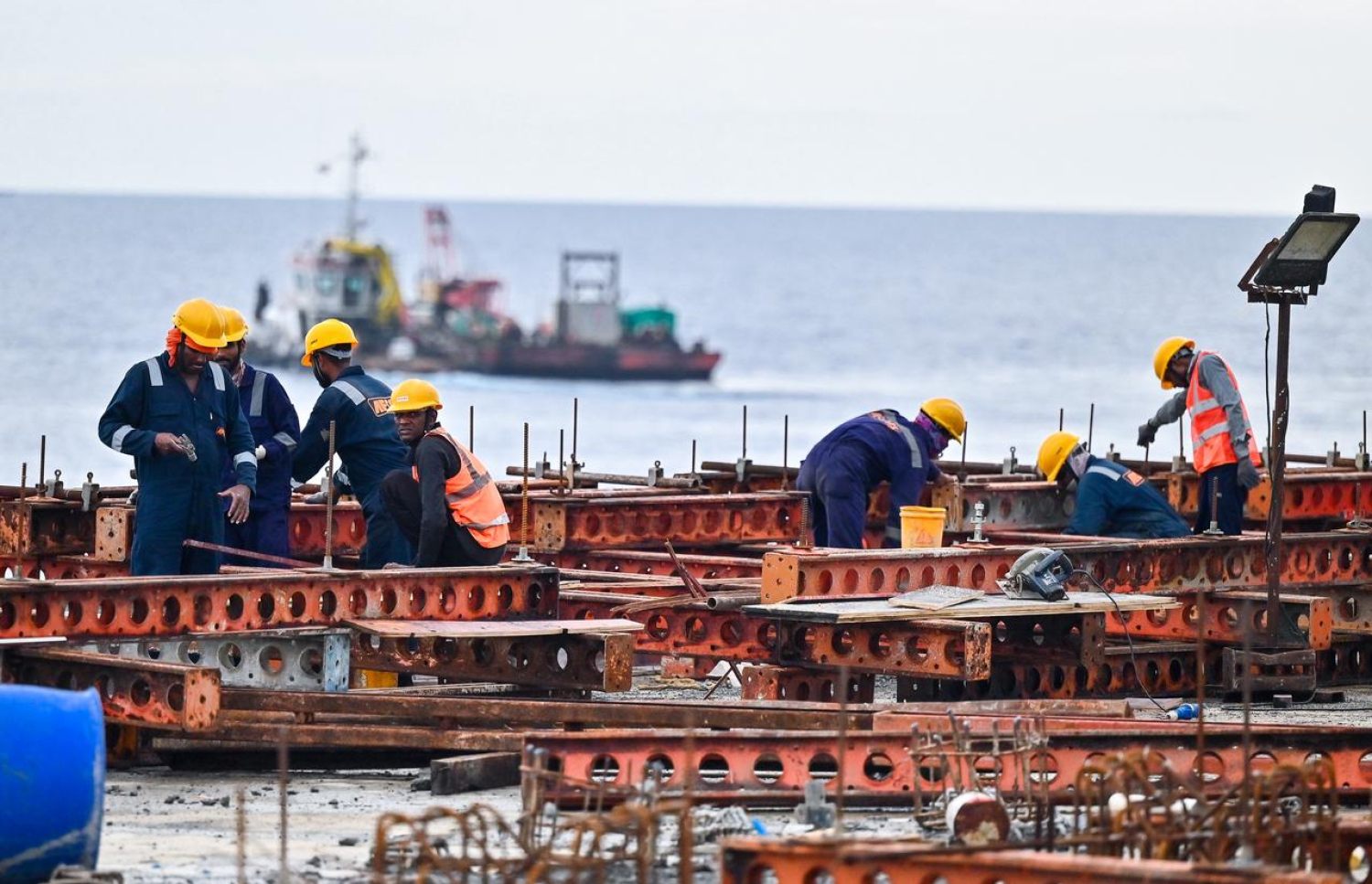
The bridge also features a two-level interchange where it connects to Vilimale'. Unlike the Sinamale' Bridge, the Thilamale' Bridge connects four separate islands, with a more complex traffic flow arrangement needed.
The Thilamale' Bridge is six times the size of the Sinamale' Bridge.
The bridge is being developed at a cost of USD 500 million (MVR 7.7 billion), including USD 400 million under a line of credit from the Exim Bank of India and USD 100 million in grant aid from the Indian government.


