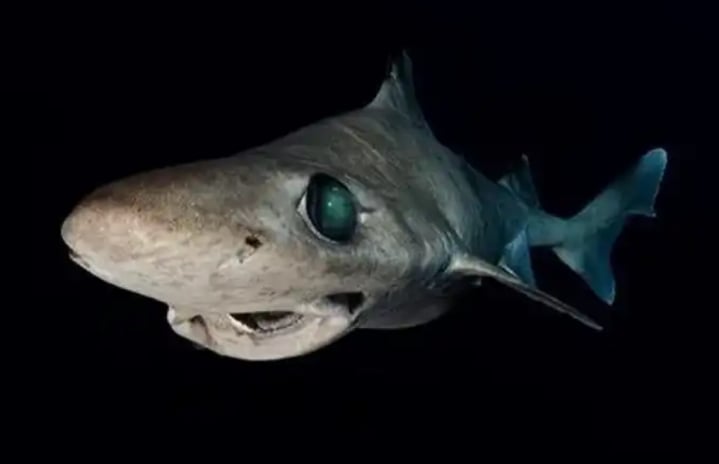
About Gulper Sharks and Why the Constitutional Case Matters
Gulper sharks are known to have a long gestation period, birthing just one to two pups every two to three years. Some species of gulper sharks tend to reach adulthood in more than 20 years.
This results in a low gulper shark population from the onset. The fishing of an already endangered species for the sake of revenue is being held in higher priority than conservation and Maldives as a recognized shark sanctuary, one of only 17 in the world.
Gulper Shark Press Conference
Petitioners environmental activist Humaidha Abdul Ghafoor (Save Maldives) and Mohamed Seeneen (a founding member of the Divers Association of Maldives) filed a constitutional case to the High Court on 9th December 2025, with lawyers Hassan Zaki and Ahmed Mohamed.
They wished to share information and various details regarding the case during the press conference held on 21st December 2025 straight from the horse's mouth.
Hassan Zaki proceeded to describe the introduction of the case filing, stating that the government’s decision to permit gulper shark fishing in the Maldives is in violation of the Constitution and is a constitutional issue against Article 22 of the Constitution - 'Protection of the Environment', which states that, “The State has a fundamental duty to protect and preserve the natural environment, biodiversity, resources and beauty of the country for the benefit of present and future generations. The State shall undertake and promote desirable economic and social goals through ecologically balanced sustainable development and shall take measures necessary to foster conservation, prevent pollution, the extinction of any species and ecological degradation from any such goals”.
Zaki also said that the government’s decision is also in violation of the Article 5 (Fisheries Planning and Management Objectives and Principles) of the Fisheries Act of the Maldives, which states that, “In exercising powers and implementing mandates under this Act and any regulations made pursuant to this Act, the Ministry and all persons implementing this Act shall have regard to the following objectives and principles:”, with 12 subsections describing the objectives and principles. Zaki said that these objectives and principles were not observed when the government made their decision.
Zaki went on to say that they referred to and took into account said articles when filing their case in the public interest. He also said that since there is a violation of the Constitution, the Maldives Gulper Shark Fishery Management Plan and the Regulation on the Planning, Operation and Management of Gulper Shark Fishery documents that were published to the Maldives Gazette by the government should be deemed null and void.
Zaki stated that they took four approaches regarding the case, with their primary target being proving that there is a violation of the Constitution and of the Fisheries Act of the Maldives. They also want to introduce new paths in Maldivian environment law and the judiciary, such as the Principle of Non-Regression to the court.
Zaki offered a brief description of their case filings. Article 22 of the Constitution is empowered by Article 16, the Guarantee of Rights. In order to challenge and win the case, they thought to submit a constitutional case to the High Court by interpreting the Constitution in such a manner and because action was taken in such a way that it would not bring about a benefit to the general public.
Zaki highlighted that the High Court Registrar has rejected the first submission of their petition. While he states that he does not challenge nor does he think the decision of the Registrar is wrong, Zaki also highlighted that the Registrar’s rejection was based upon the foundation that the Maldives Gulper Shark Fishery Management Plan is not part of the Regulation No. R-112/2025, "Regulation on the Planning, Operation, and Management of Gulper Shark Fishery." However, Zaki said that Article 2 of the regulation states that the purpose of the regulation is to enforce the plan.
Zaki went on to state that Article 17 of the Fisheries Act of the Maldives lists the types of fisheries permitted under the Act, with Article 18 stating that, “The Ministry shall prepare and keep under review fishery management plans for the planning and management of each of the fisheries determined pursuant to Section 17 of this Act, in accordance with the objectives and principles of this Act, and ensure the implementation of such plans.” Article 19 of the Act also states that, “Each fishery management plan made pursuant to Section 18 of this Act shall constitute a regulation made under this Act.” And so Zaki said that this can be viewed as part of the regulation, as per his capacity as a lawyer. He also said that they have requested the High Court review the case once more due to this.
Humaidha Abdul Ghafoor added on a point of concern that while the Registrar rejected their petition, they came to notice that the Registrar does not have the responsibility to come to a decision in such a case as that is to be decided at trial. She also said that the language that was used pointed to the Registrar coming to a decision, which is not how it should be.
During the Q&A portion of the conference, the question was posed as to who is buying and selling gulper sharks and where they are being exported to. Zaki said that a lot of this information is not available to the public. He said that their main issue is the required scientific research not being done on gulper sharks, which would lead to proper certifications, seeing whether fishing of any species should be done, amongst other things. 97 percent of the gulper shark population in the Maldives has seen a rapid decline, shark populations seeing a rapid decline by 2010 as well, which is research that has been done in the past and available, said Zaki. Research in 2024 by Science.org also showed that 11 of the 15 gulper shark species are now considered threatened. This would make them one of the most endangered shark species on the planet.
Zaki said that these factors, along with fishing methods which were quite destructive back then are important to consider. Zaki said that the government’s management plan perhaps states that the state is buying the gulper sharks or the factory the sharks are being taken to are privatizing the sales. He said that it is quite unclear as to what happens after the gulper sharks are fished and taken to land. There is also no solution to bycatch, with an Environmental Impact Assessment (EIA) report having not been done either, said Zaki.
Humaidha added on to this, stating that Japan had a commercial interest in gulper sharks in the past, which is why the fishing of gulper sharks occurred before. However, it is unclear who wants these sharks now, said Humaidha.
Mohamed Seeneen pointed out that while Maldives has become a sanctuary and been a sanctuary for marine life such as sharks, manta rays, etc, for the last 15 years, why should the country go backwards now. He also pointed out that these creatures bring in money to Maldives in the form of tourism. People from all over the world come to Maldives to swim with said creatures.
Zaki stated that PADI, Dive SSI and IUCN sent a letter directly to the President Dr. Mohamed Muizzu, which read that a shark that lives is more beneficial to Maldives than a deceased one.
Humaidha said that she had gone to Kulhudhuffushi, where gulper shark fishing used to take place as a source of income. She asked the fishermen and people there whether they want gulper shark fishing to be reimplemented, with their answer being that what they want is an ice plant.
To keep up with the ongoing constitutional case, head over to:
miveshi.com > Case Timelines > Gulper Sharks 2025


