The Indian Ocean is often described as the "heart of the world," a shimmering expanse of blue that facilitates global trade while masking deep-seated colonial ghosts. At its center lies the Chagos Archipelago, a cluster of 58 islands that has evolved into the most contested piece of "real estate" in international law. What began as a quiet Cold War maneuver has transformed into a high-stakes legal drama, pitting the David-and-Goliath struggle of a displaced people against the military imperatives of superpowers. For the Maldives, sitting just north of this geopolitical fault line, the resolution of this dispute is not merely a matter of historical record; it is a defining moment for its own maritime destiny and territorial integrity.
The Ghost in the Machine: A Tale of Displacement
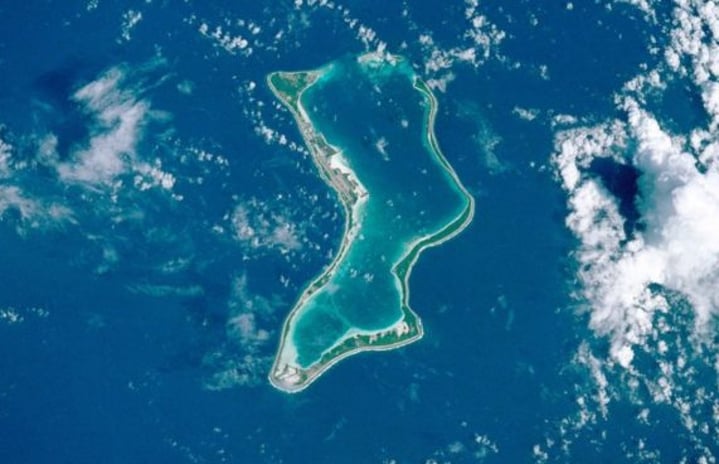
The story of Chagos is one where "strategic necessity" collided violently with human tragedy. In 1965, as the British Empire began its retreat, the UK "excised" the Chagos Archipelago from its colony of Mauritius just three years prior to Mauritian independence, a move the International Court of Justice later found was not based on the free and genuine expression of the will of the Mauritian people and therefore rendered the process of decolonization incomplete. This detachment created the British Indian Ocean Territory (BIOT) for the express purpose of leasing the largest atoll, Diego Garcia, to the United States. However, the islands were inhabited by thousands of indigenous Chagossians, or Ilois. Between 1968 and 1973, in an act described by scholars and human rights advocates as a grave violation of human rights and by UK courts as "shameful and unlawful" treatment of the Chagossians to make way for the roar of B-52 bombers (Welz, 2024). Today, Diego Garcia is often described as an "unsinkable aircraft carrier", functioning as a central hub of U.S. power projection across the Indian Ocean, including operations related to the Middle East and wider Indo-Pacific theatres (Allen, 2014; Gifford & Dunne, 2014).
Constitutional vs. International Realism
The legal battle for Chagos has shifted the foundations of maritime law over several decades. Following the 2015 ruling that the UK's "Marine Protected Area" violated Mauritian rights, the 2019 ICJ Advisory Opinion fundamentally altered the landscape by declaring the UK's occupation illegal. By 2021, the International Tribunal for the Law of the Sea (ITLOS) held that it had jurisdiction to delimit the maritime boundary between Mauritius and the Maldives on the basis that Mauritius exercises sovereignty over the Chagos Archipelago. A 2025 treaty saw the UK agree to transfer sovereignty over the Chagos Archipelago to Mauritius while leasing back Diego Garcia and its surrounding security zone for at least 99 years to maintain the existing UK-US base, the dawn of 2026 brought a seismic shift in Maldivian policy. President Dr Mohamed Muizzu's administration formally withdrew the previous government's 2022 recognition of Mauritius' claim, asserting instead that the Maldives holds superior historical and geographical rights to "Foalhavahi", and that any prior concessions were an unconstitutional surrender of Maldivian territory,
1. Constitutional Law: The "Unconstitutional Surrender" Argument
The current administration's primary domestic argument centres on Article 3 of the Constitution of the Maldives. This article defines the territory of the Maldives. The legal argument being posited now is that the Exclusive Economic Zone (EEZ) is an inherent part of the State's sovereign rights. Under this view, any agreement or legal "concession" that results in a loss of maritime territory requires a two-thirds majority in the Peoples' Majlis (Parliament). The current administration argues that the former President's 2022 letter to Mauritius (recognizing their sovereignty over Chagos) was an executive overreach. Legally, they contend that the President cannot unilaterally alter the State's territorial claims without parliamentary approval.
The President has a constitutional duty to protect the sovereignty and borders of the Maldives under the mandate of Article 115(d) of the Maldivian Constitution. By labelling the previous stance a "surrender", the current government is framing their pivot as a constitutional correction rather than a policy shift.
2. International Law: The Principle of Res Judicata
Under Maldivian law, the principle of Res judicata (the rule that a matter already adjudicated by a competent court may not be pursued further by the same parties) is primarily governed by the section 50 of Civil Procedure Code (Law Number 32/2021) and supported by the Judicature Act (Act No. 22/2010). The Maldives faces a steep uphill battle in the international arena due to the 2023 ITLOS Judgment. Under the United Nations Convention on the Law of the Sea (UNCLOS), decisions by ITLOS are final and binding between the parties. The principle of res judicata suggests that once a matter is adjudicated, it cannot be reopened simply because a government changes. While the Maldives is now emphasizing historical and geographical ties to "Foalhavahi" (the Maldivian name for Chagos), international law typically prioritizes effective occupation and treaty law over ancient historical titles.
The 2025 UK-Mauritius Treaty complicates the Maldivian "Pivot." Since the UK (the former colonial power) has now formally recognized Mauritian sovereignty, the Maldives' claim is no longer just against Mauritius, but is effectively challenging a bilateral settlement recognized by the UN framework.
3. The Maritime Boundary Conflict
The core of this legal "tug-of-war" centres on the overlapping Exclusive Economic Zone (EEZ), which has shifted from a policy of compromise to one of historical assertion. Between 2022 and 2023, the previous administration recognized Mauritius' sovereignty over Chagos and accepted the ITLOS ruling, which divided the contested waters using the standard UNCLOS equidistance principle.
By 2026, the current administration dismantled this framework, asserting that the archipelago historically known as "Foalhavahi" belongs to the Maldives. Citing 16th-century royal decrees, the government now rejects the ITLOS boundary as a product of "void" executive action that bypassed mandatory parliamentary consent. Consequently, the Maldives is challenging the ruling's finality, arguing that the tribunal ignored "special circumstances" and the nation's unique archipelagic geography.
4. Potential Legal Risks: "Estoppel"
In international law, the doctrine of Estoppel prevents a state from acting inconsistently with its previous conduct if another state has relied on that conduct. Mauritius will likely argue that the Maldives is "estopped" from withdrawing its recognition because the ITLOS proceedings and the subsequent UK-Mauritius treaty were predicated on the Maldives' formal diplomatic stance in 2022.
The Players: Interests and Entrenchments
For Mauritius, Chagos remains a matter of national integrity, argued on the basis that the 1965 deal was signed under colonial duress. Conversely, the UK and USA maintain a "Security Sentinel" approach; even as the 2025 treaty acknowledges Mauritian title, the 99-year lease ensures that the "Special Relationship" remains physically anchored in the Indian Ocean, with the U.S. leadership in 2026 publicly reaffirming its right to ensure the security and continued full operational use of the joint base on Diego Garcia. The Maldives has now emerged as a vigilant and assertive neighbour. By investigating the motives behind the previous administration’s handling of the dispute through a newly formed inquiry commission, the current government is seeking to re-establish a boundary that aligns with its own historical claims to the southern seas. This shift underscores a broader trend where small island nations are no longer passive recipients of international rulings but active agents in redefining their sovereign limits.
Why This Matters: Small States and Big Precedents
The Chagos dispute serves as a profound "canary in the coal mine" for the future of international law, signaling that the era of "frozen" colonial legacies is ending. By dismantling the argument that military necessity justifies the suspension of decolonization, the international community has reaffirmed that human rights and self-determination are non-negotiable. This shift underscores the supremacy of the United Nations Convention on the Law of the Sea (UNCLOS) as a shield for small island nations against the geopolitical interests of larger powers. Furthermore, the emerging settlement reflects a kind of “functional sovereignty,” in which formal title lies with Mauritius while the UK and US retain long-term rights to operate the Diego Garcia base under lease arrangements—a precedent that could redefine territorial lease agreements globally.
Strategic Advantages and the Way Forward
To translate these legal and historical complexities into national power, the Maldives must adopt a sophisticated and multi-layered strategy of "Active Sovereignty." This approach begins with the cold reality of regional power dynamics, where the Maldives must leverage its unique geography to ensure its voice is not drowned out by larger neighbours. By strengthening the MNDF Air Corps and deploying advanced surveillance to monitor its Exclusive Economic Zone (EEZ), the Maldives transforms legal boundaries into physical realities, deterring illegal fishing and asserting control over its "Blue Economy".
Simultaneously, the Maldives must champion a rules-based order that emphasizes the shared identity of "Large Ocean States." By fostering bilateral frameworks that focus on environmental preservation and maritime research, the Maldives can build a narrative of regional leadership that transcends mere boundary disputes. This involves framing the Chagos region not just as contested territory, but as a vital ecological corridor that requires collective stewardship (ITLOS, 2021). Furthermore, the Maldives can navigate the currents of Great Power rivalry by positioning itself as a pragmatic partner. By signalling an openness to maintain the stability provided by international security installations, provided they respect Maldivian constitutional and sovereign claims, the nation ensures it remains a vital, independent gateway rather than a pawn. Ultimately, by weaving together historical grievances with modern maritime enforcement and visionary ocean diplomacy, the Maldives can secure a future where its borders are respected and its prosperity is self-determined.