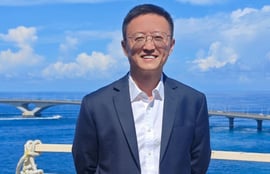
In September 2023, I had the privilege of serving as an international election observer in the Maldives, invited by the Elections Commission—an institution with which I’ve maintained a long and rewarding association. Watching Maldivians exercise their franchise with enthusiasm and confidence, I witnessed firsthand what I had studied academically: a nation that has, in barely 16 years, transformed itself from one of Asia’s most entrenched autocracies into a functioning multi-party democracy.
This transformation, which I chronicle in my book *Democracy’s Heartland: Inside the Battle for Power in South Asia*, represents one of the most compelling democratic transitions in our region. The peaceful transfer of power following that election—from Ibrahim Mohamed Solih to Mohamed Muizzu—marked the fourth democratic transition since 2008, a remarkable achievement for any nation, let alone one emerging from three decades of authoritarian rule.
The Maldives’ democratic architecture, established through its 2008 Constitution, deserves careful study. The document’s 301 articles established genuine separation of powers, an independent judiciary, fundamental rights protections, and critically, an autonomous Elections Commission. Having worked with election management bodies across 143 countries through my tenure at India’s International Institute of Democracy and Election Management, I can attest that the Maldives Elections Commission has developed institutional capabilities that rival far larger and older democracies.
The Commission’s professionalism was evident throughout the 2023 electoral process. From voter registration to counting, the institution demonstrated impartiality, transparency, and technical competence. International observers from the Commonwealth and European Union have consistently validated the integrity of Maldivian electoral processes—no small achievement for a nation whose elections were, until 2008, exercises in predetermined outcomes.
What strikes me most about the Maldivian democratic experience is the political maturity demonstrated by its citizens and leaders. Mohamed Nasheed’s historic 2008 victory broke centuries of monarchical governance. When his presidency ended controversially in 2012, rather than abandoning democratic processes, Maldivians deepened their engagement with electoral politics. Abdulla Yameen’s presidency was followed by Solih’s convincing 2018 victory, and now Muizzu’s 2023 win—each transition demonstrating that power could indeed change hands peacefully, building crucial democratic muscle memory.
Each transition has strengthened democratic institutions. Losing parties have accepted electoral verdicts. Winning parties have negotiated coalition politics. Civil society has found its voice. Media has carved out space for debate. The judiciary has asserted institutional independence on numerous occasions.
The Maldives faces challenges that would test any democracy. As an island nation of 418,000 people strategically positioned along critical Indian Ocean sea lanes, it navigates complex geopolitical currents with considerable diplomatic skill. Major powers naturally seek to strengthen ties with Malé, given its location along maritime routes carrying substantial global trade and energy supplies. The Maldives has shown impressive capacity to pursue its national interests while maintaining productive relationships with diverse partners—a balancing act requiring sophistication and confidence.
Economically, the nation’s dependence on tourism—approximately 30% of GDP—creates vulnerabilities, as COVID-19 starkly demonstrated. Yet the resilience shown during that crisis, with quick economic recovery, speaks to both governmental competence and private sector dynamism. Investments in healthcare and education have yielded steady improvements in human development indicators, while fishing and maritime services continue diversifying the economic base.
Climate change presents an existential challenge for this low-lying archipelago, making sustainable development a survival imperative. The Maldives has emerged as a powerful voice in international climate negotiations, punching well above its weight in advocating for vulnerable island nations—demonstrating political leadership’s capacity to think beyond electoral cycles.
The V-Dem Institute now ranks Maldives in the mid-range across most democratic indicators—a dramatic improvement from its “not free” classification before 2008. More tellingly, the country scores in the top 25% globally for electoral participation, suggesting genuine popular engagement with democratic processes.
As someone who has spent a career studying electoral democracy across Asia, I’m struck by how often we measure democratic success by centuries-old Western standards while ignoring the remarkable progress of younger systems. The Maldives deserves recognition not for achieving perfection—no democracy ever does—but for building functional democratic institutions in less than two decades while navigating pressures that would challenge far larger nations.
What lessons does the Maldivian experience offer South Asia? First, constitutional engineering matters—the 2008 Constitution created resilient institutional frameworks. Second, independent election management bodies, properly resourced and genuinely autonomous, are crucial democratic infrastructure. Third, small nations can assert agency and sovereignty even while navigating great power interests. Fourth, democracy requires patience—institutions need time to develop strength and legitimacy.
The Maldives Elections Commission’s invitation for me to observe their electoral process reflected confidence in their democratic institutions—a willingness to invite scrutiny that speaks volumes.
Having witnessed the process firsthand, I came away impressed not just by technical competence but by something deeper: a society that has genuinely internalized democratic values.
As the Maldives continues its democratic journey, challenges will arise. Political competition will remain intense. Economic pressures will persist. Geopolitical complexities will require diplomatic skill. Climate threats will demand innovative solutions. But the foundation is strong, the institutional architecture sound, and most importantly, Maldivian citizens have demonstrated their commitment through repeated participation and peaceful transitions.
For South Asia—a region where democratic backsliding concerns are real—the Maldives offers an encouraging narrative. Democracy can take root in unlikely soil. Constitutional frameworks can overcome authoritarian legacies. Small nations can navigate large pressures. Electoral institutions can earn public trust.
The small archipelago in the Indian Ocean has much to teach our vast, complex region about democratic possibility.