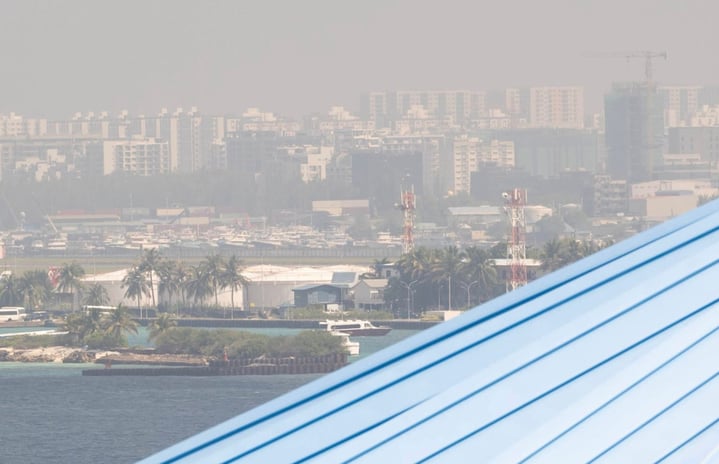
Air quality monitoring data shows that air pollution in the Male' area has reached dangerous levels, with the Air Quality Index (AQI) standing at 159.
Haa Dhaalu Kulhudhuffushi recorded the highest pollution level in the country today, with an AQI of 160, according to the monitoring system.
An AQI above 50 is classified as moderate and may require precautionary measures. Levels above 100 pose health risks to sensitive groups, while readings exceeding 150 are considered unhealthy for everyone.
While air quality in Male' area has become poor, smoke from a fire at the waste collection site in Hulhumale' Phase 3 yesterday spread to parts of Hulhumale' Phase 2.
Health Protection Agency (HPA) issued a request yesterday urging the public to take precautions.
Air pollution in Maldives is generally worsened during the Iruvai monsoon, when wind patterns carry polluted air from parts of northern India. With the Iruvai monsoon expected to begin in December, the impact of air pollution on Maldives is likely to increase again.
The polluted air contains dust and factory smoke, as well as emissions from burning agricultural waste, coal-fired power generation and dust and smoke from major construction projects.
Studies have found that around 75 to 80 percent of the substances affecting air quality in the region originate from human activities in South and Southeast Asian countries.
HPA statistics also show that respiratory illnesses in the Maldives have been increasing year on year during periods of poor air quality.