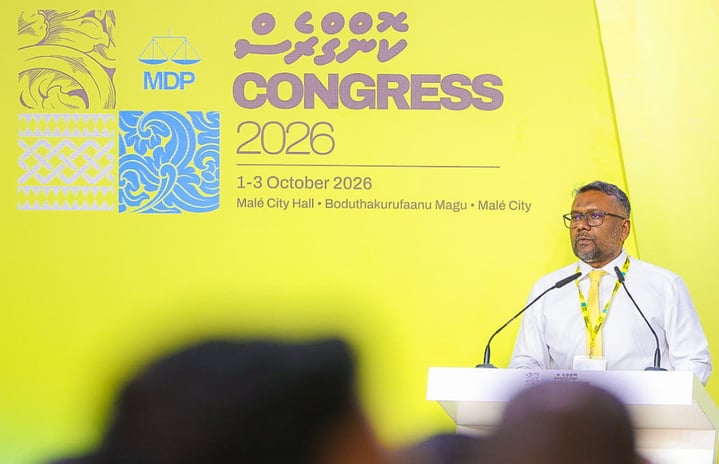
The "Bodhu Badhalu" (Big Change) resolution, which proposes major amendments to the constitution, including having two separate figures as heads of state and government, and changing the method of electing the Parliament was passed today by the MDP congress.
Stating that major changes need to be brought to the governance system of the Maldives, former President Mohamed Nasheed and former Economic Minister Fayyaz Ismail had announced a reform roadmap under the name "Bodhu Badhalu."
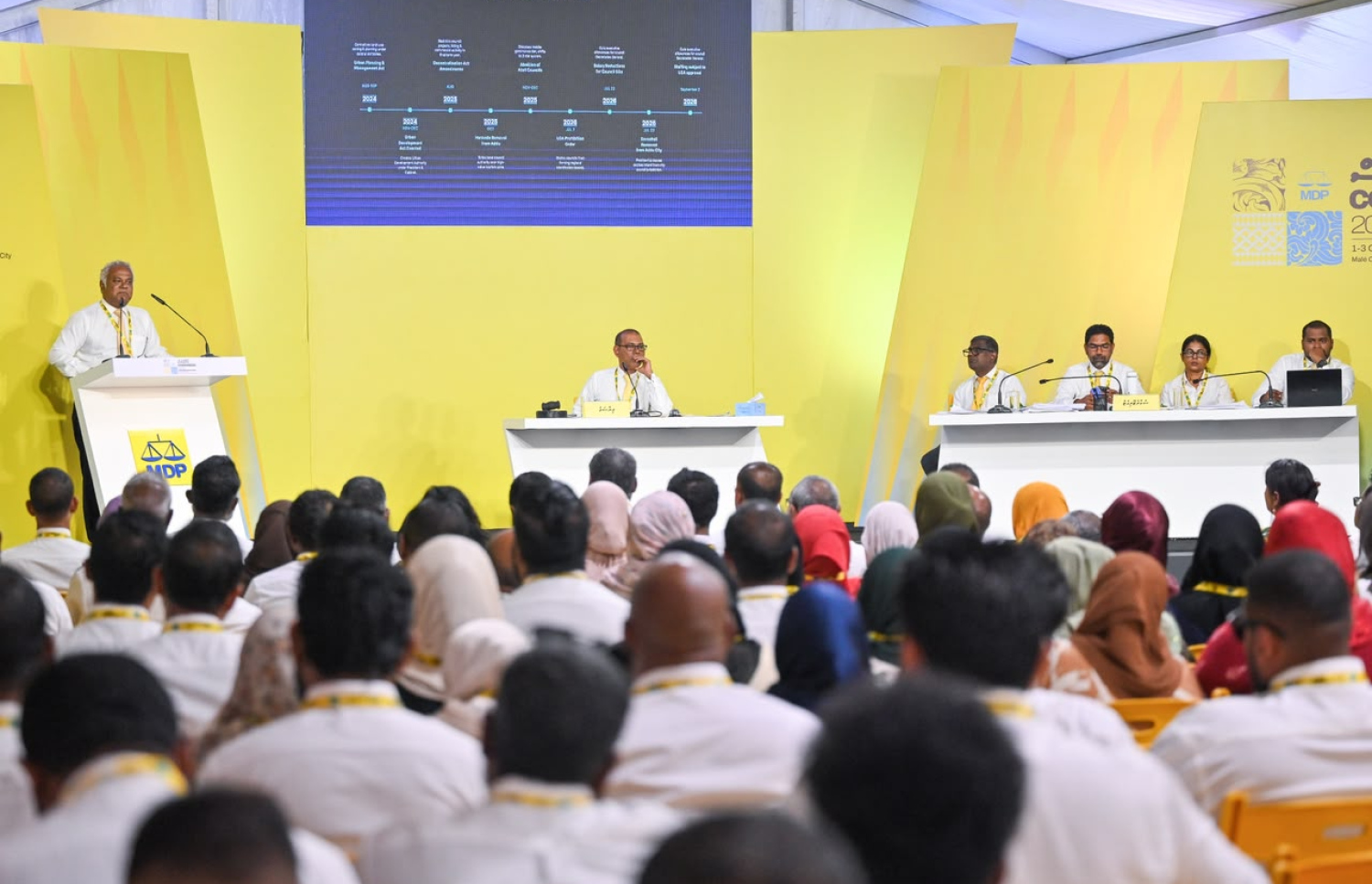
To gain the MDP's endorsement for that roadmap, Fayyaz submitted a resolution to the congress. While the resolution was debated at the MDP congress this afternoon, many delegates participating in the congress supported the resolution, stating that changes need to be brought to the Maldives.
When put to a vote following the debate, out of 563 delegates present at the congress, 520 delegates voted in favor of passing the resolution. With that, the congress accepted the resolution.
Among those who did not vote for the resolution were former Hulhumalé constituency member and former President Ibrahim Mohamed Solih's brother Ali Niyaz, and former Hoarafushi constituency member Ahmed Saleem.
According to the resolution, since the extent to which citizens are represented in various state decisions and the direct voice of the people need to be increased manifold compared to now, a special Parliament comprising the Parliament and all elected councillors should be established.
Powers Assigned to the Special Parliament in "Bodhu Badhalu":
- Any amendments to the constitution must be passed by the special Parliament
- Making certain state decisions
- Appointing and dismissing individuals to certain state positions
- Appointing and dismissing the head of state
- Appointing and dismissing members of the special commission established to hold independent institutions accountable
The resolution also noted that this special Parliament would not be a frequently meeting assembly, but rather an assembly with no remuneration set, which convenes when work needs to be undertaken.
In addition to the special Parliament the resolution also proposed removing the responsibility of holding independent institutions accountable from the Parliament and establishing a commission dedicated to that purpose.
The resolution stated that making these changes is important for ensuring true independence of independent institutions, and for creating fully accountable commissions trusted by the public. This commission would consist of members chosen from among the public.
It was also proposed to change the jurisdiction and composition of the Judicial Service Commission so that the practice of Supreme Court judges being dismissed at the will of the government, backed by the influence of the Parliament is altered.
A Two-Leader System
The biggest change presented in "Bodhu Badhalu" is altering the governance system. It completely changes the presidential system currently running in the Maldives and introduces a mixed system.
The resolution stated that because the President is both the head of state and the head of government, combining the responsibilities of that position allows the President to exercise immense power over the entire state.
It was noted in the resolution that these matters must be changed by introducing alterations to the style of running the state and government. Accordingly, it includes stipulating that the head of state and the head of government are two different positions, and those two positions will be filled by two different people.
"Bodhu Badhalu" dictates that the head of government shall be a person elected by a general public vote and dismissed by the Parliament, and the head of state shall be a person appointed and dismissed by the special Parliament.
Additionally, according to the resolution:
- Re-drafting the articles of the constitution in detail.
- Stipulating that any amendment to the constitution can only be made through a direct public referendum.
- Giving citizens the opportunity to recall any elected official to any state position during their elected term.
- Changing the voting principle so that instead of candidates running for the council of an electoral district where one has a permanent address, people can vote for candidates running for the council of the electoral district where they reside.
- Preventing the increase in the number of members of the Parliament, and making it so that members are elected to the Parliament from atolls and cities.
- Allocating reserved seats for women in the Parliament, and making the Parliament an institution consisting of two houses.
- Making the upper house a house consisting of people from various professions.


