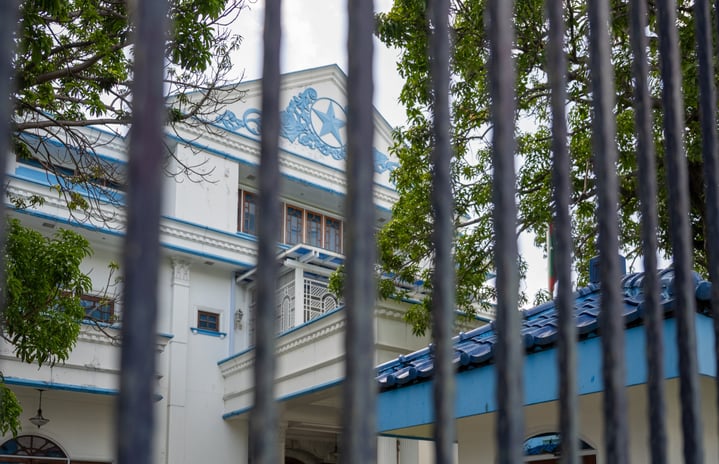
The Supreme Court has issued an important ruling towards protecting the confidentiality of Intelligence Officers' identities and their testimonies.
The State asked the Criminal Court for an order to protect the intelligence report and testimony of the intelligence officer who prepared the report in a trial against three persons charged with terrorism. The Criminal Court, however, refused to issue the order, stating that sufficient justification had not been provided to support concealing the officer's identity or taking confidential testimony from them.
The High Court also upheld the Criminal Court's decision, following which the State raised the issue at the Supreme Court.
The State argued that once the identity of the intelligence officer is compromised, the institution is forced to transfer them to a desk job as they can no longer work in the intelligence field.
A relatively low number of officers are working in intelligence in the Maldives, the State said, and having their identities compromised strongly affects the authority's capabilities in conducting intelligence and investigative operations.
In his verdict in the case, Supreme Court Judge Hussain Shaheed stated that there is ample justification to believe that compromising identities of intelligence officers poses possible risks.
To support the State's claims that compromising intelligence officers' identities pose risks, the State submitted a collective justification that such officers are in a similar circumstance, and in all such cases there is a possibility of risk when identities are compromised.
The Supreme Court's ruling conceded that under the circumstances, it's not necessary to provide individual reasons for separate intelligence officers, but rather that the collective justifications proving danger or risk to them through having identities compromised is sufficient.


