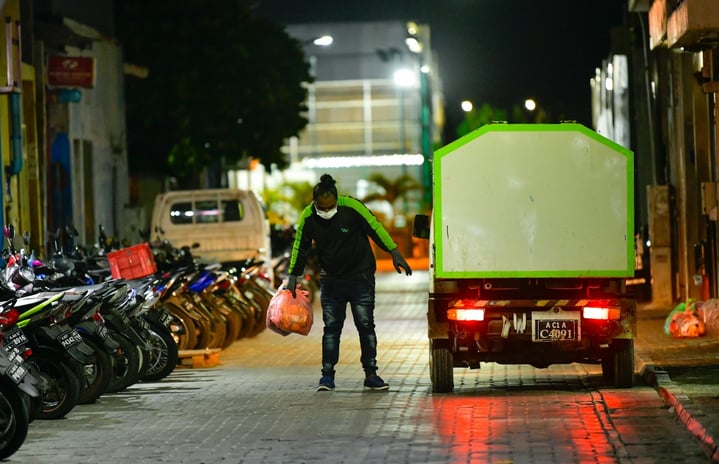
More than half of working Maldivians are in positions that do not match their education levels.
A job market runs properly when the education and skill of workers matches the level required at the position they are employed. If they do not match, it is damaging to both sides. A person with a higher certificate than the required results in their abilities being wasted. Both of these situations lower national productivity.
As per the Maldives Population and Housing Census 2022, 51 percent of Maldivians who are employed, or 85,025 people, are in that situation.
What was the research method used?
In Census 2022, the skill of workers and the mismatch of jobs were assessed using two international standards. The "International Standard Classification of Occupations" (ISCO) from the International Labor Organization (ILO) was used to classify job positions, and UNESCO's "International Standard Classification of Education" (ISCED) was used to classify education levels.
ISCO's framework determines the "skill level" (from 1 to 4) of each job. After the study compares the highest level of education achieved by individuals and the required job qualifications for their posts, it was split into three categories:
- Underqualified: Education level is lower than the job requirement.
- Matched: Education level meets the job requirement.
- Overqualified: Education level is higher than the job requirement.
This analysis is compiled based on information that has been acquired as per ISCO and ISCED from 167,202 Maldivian workers.
Results
- 82,177 people (49 percent): Education level and job position match.
- 56,673 people (34 percent): Education level is lower than the job requirement.
- 28,352 people (17 percent): Education level is higher than the job requirement.
Half of the people are in job positions that match their education level. The rest of the 85,025 people or 51 percent are in positions that do not match their education levels. Two mismatches occur due to two specific reasons. The lower education level may be due to barriers in receiving an education.
Working in an overqualified position shows challenges in the job market. Two policies are needed to solve these issues.
Job types and what it shows
The greatest mismatch is seen in the technician and associate professional category. There are 19,957 people who are underqualified in this category, which is 56 percent. Then there are professionals at 9,860 and managers at 9,759. These positions usually require certification. However, some who are employed are primary school graduates at best.
When looking into elementary occupations, 12,163 people or 64 percent within that category are overqualified. Being employed at such a position with a secondary or higher education certificate results in benefits lost when it comes to the time spent in obtaining the certification and the expenses it took.
The figures are the best in clerical support workers at 73 percent, and service and business workers at 69 percent or 18,036 people.
Level of education
This is not an issue of the education level being lower. Statistics from Census 2022 show that 35.6 percent of employed Maldivians have completed secondary education. 18.3 percent of people have a certificate or a diploma, with 14.9 percent of people having a degree or higher level of education. 2.1 percent of people were not officially educated.
These statistics show the results regarding the investment in the education industry in recent years. The main challenge is not the lack of an educational qualification. Rather, it is the lack of opportunities in the job market that are appropriate to the qualifications and education levels that have been achieved.
Another concern is the state of the youth. 19.5 percent (10,416 people) of the Maldivian youth aged between 15 to 24 are unemployed or are not undergoing any education programs or technical training. When looking at those aged between 18 to 35, this figure rises to 23 percent.
Relation to expatriate workers
According to Census 2022, 43 percent of the 300,422 people in the job market are expatriates, totaling 129,292 workers. Additionally, 38.6 percent (49,869 people) of expatriate workers do not have any official education qualifications.
These statistics show two challenges in the Maldives job market. One is the reliance on foreign workers for technical and specialized skill fields due to the lack of an adequate number of Maldivians who want to go into said fields. The other is the Maldivian youth who have higher education and certification not getting opportunities as per their skill level, leaving no other choice but to work low-level jobs.
How should policies be designed?
- Expanding Technical and Vocational Education and Training (TVET) courses: Specifically, to increase job opportunities aimed at technician-level positions, where people are sorely needed. This industry is where the highest level of difficulty is being observed.
- Putting arrangements into place where people can work and study at the same time: It is important to facilitate a path where the 56,673 staff that are employed without the adequate certification can become certified based on work experience.
- Creating jobs appropriate to education level: Specifically, facilitating high-level job opportunities at atolls. This is because the issue does not lie in a lack of training for the 28,352 people who have higher education qualifications and are working in low-level jobs. It is because there is a lack of opportunity.
- The reality of the Census 2022 results is that half of the workforce in Maldives are employed in positions that do not match their capabilities and their education levels. This will negatively affect the quality of the lives of individuals and the productivity of the nation. The solution to this is not just to build more schools or give out more certificates. The real solution is to come up with a strong national policy that will properly connect the skills gained from the education system and technical requirements in the job market.
Editor's note: This was written based on the "Skills Mismatch" study by former Chief Statistician Aishath Hassan from the Maldives Bureau of Statistics included in the Census 2022's research report "Mapping the Employment Landscape: A Comprehensive Analysis of the Situation in the Maldives".


