High Court has said requiring the heirs of murder victims to appear before the court at every stage of the appeal process to state whether they seek the death penalty or wish to pardon the offender is neither fair nor compassionate.
The observation was made in a judgment upholding the death sentence imposed by the Criminal Court on Adhuham Mohamed, who was convicted of murdering taxi driver Gasim Hassan.
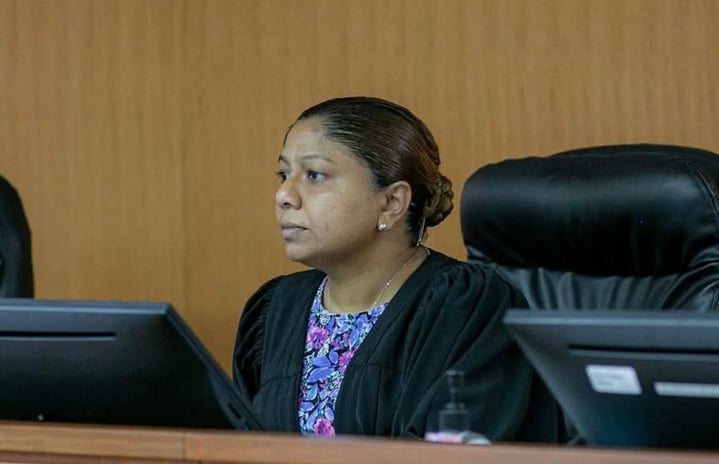
In the judgment, Judge Dheebanaz Fahmy said the court did not consider it necessary to repeatedly summon heirs during appeal proceedings simply to reconfirm their position on capital punishment.
"Forgiveness is not an obligation on the heirs. Both execution and forgiveness are rights held by each heir," the judgment states.
The judge said heirs should exercise those rights in accordance with legal and judicial procedures, but criticized the practice of repeatedly questioning them during appeals without any fresh issue requiring their testimony.
She said the procedure was inconsistent with principles of fairness and compassion, noting that while the natural death of a parent causes profound grief, the emotional impact of a brutal murder is often accompanied by anger, injustice and lasting trauma.
"It is like removing the scab from an unhealed wound. Asking heirs at every stage of the appeal whether they still seek the execution of the offender or wish to forgive them causes additional injury," Judge Deebanaz wrote.
Under current practice, both High Court and the Supreme Court hear testimony from victims' heirs during appeals in murder cases.
Most recently, Supreme Court heard from the parents of Abdulla Shuhad in the appeal of Hassan Fareed, who was sentenced to death by the Criminal Court in 2015 for Shuhad's murder.
Shuhad was killed during an altercation between two neighborhoods in Fuvahmulah City in January 2010. Sixteen years after the killing, his parents again appeared before the court and reaffirmed that they sought the death penalty.


