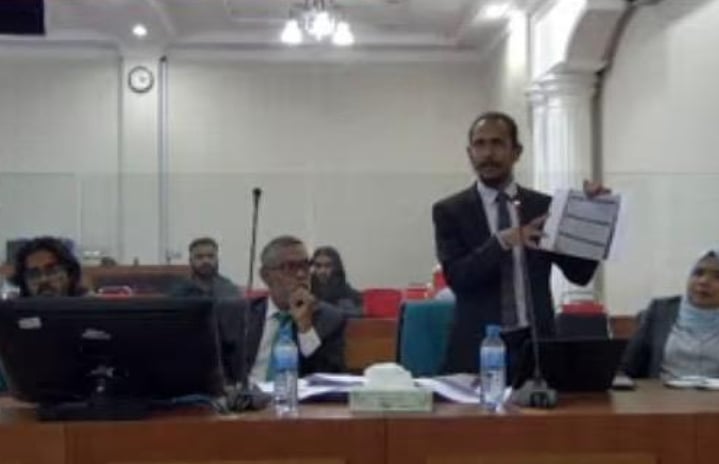
Supreme Court has accepted an appeal filed by the Maldivian Democratic Party (MDP) challenging a High Court ruling that invalidated ballot papers in a local council election resulting in the election of a candidate from the People’s National Congress (PNC).
The issue was brought forward by Mohamed Nazeeh, who contested for the Meemu Veyvah Council on PNC ticket. He submitted the case to the High Court after three vote papers, which were considered invalid, were later determined to be valid by the Elections Commission after reopening and re-examining a ballot box,
The lawyer for the Elections Commission stated that the marks on those three papers were not dots placed by the person who went to vote, but were dots that occurred during printing, and that the votes should not be voided. In the election, an MDP candidate had secured victory over Nazeeh by a margin of two votes.
In the judgment delivered by the High Court, it stated that the marks on the three vote papers involved in the case were marks that made the papers identifiable even upon a superficial inspection. Therefore, the court ruled that these were not votes where the secrecy of the vote could be guaranteed.
Consequently, the judgment declared those three vote papers invalid. It also ordered the Elections Commission to announce the election results again after deducting those three votes. By following this order, the election victory shifted to Nazeeh instead of the MDP candidate.
The case was appealed by Ahusham to the Supreme Court, with it having been accepted and registered.
MDP proceeded to intervene when the case was being heard in the High Court. MDP proceeded to appeal the ruling that was made, but it is yet to be accepted.
As the case is still in court, the Veyvah Council seat remains vacant.
High Court delivered this judgment with a majority of two judges. Judge Ibrahim Mahir, who was on the bench, held a dissenting opinion. In his opinion, he stated that he does not believe that the ink spots on the vote papers would lead to compromising the secret ballot.


