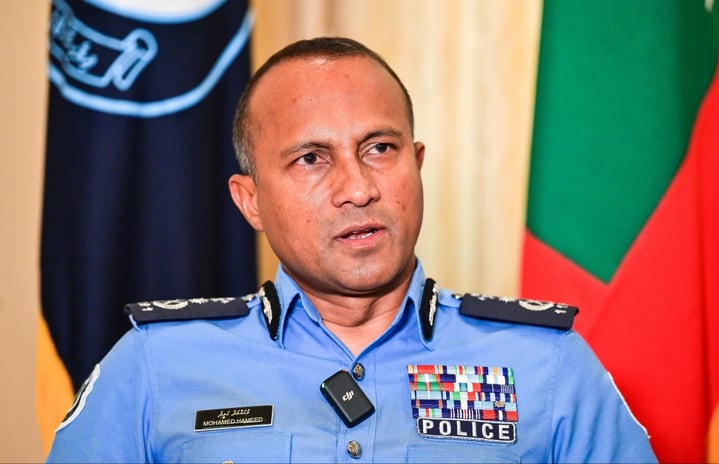
Former Commissioner of Police Mohamed Hameed (MC Hameed) stated last night that it is a mistake to change the police's intelligence units name to the National Intelligence Service.
This name change was brought about as part of the changes to the police's administrative framework that were brought about on Monday.
Hameed, who served at the head of the police's intelligence unit, wrote in his blog that changing the name of a part of the police that does some of their most important work is a mistake.
He said that the police intelligence should be strong and professional in order to conduct investigations and to protect the public. However, he said that the police Intelligence Function and the National Intelligence Service are two very different names.
"Changing the name within the government does not have much meaning. But, the names in the security sector carry weight. The name symbolizes the agency's power and mandate, reach and responsibility," said Hameed.
Hameed went on to say that he sees the addition of "National" to the police's intelligence unit as having the highest responsibility in intelligence. As Hameed wrote in his blog, this means that a law enforcement agency will become the nation's central intelligence body.
However, Hameed highlighted that even if such an institution is created with mandates and responsibilities, Maldives currently does not have a national intelligence regulation that dictates how the work should be carried out.
"It will become a major issue as the name does not have a legal foundation. This will not be an issue just for Maldivians. This will cause confusion amongst foreign parties that take part in Maldives' intelligence and security efforts," said Hameed.
Hameed, who was the Commissioner of Police during former President Ibrahim Mohamed Solih's government, said that intelligence efforts in Maldives have been conducted by various agencies under their own mandates. According to him, the police has its role in gathering intelligence for police work, with the Maldives National Defense Force (MNDF) being responsible for gathering defense intelligence. Similarly, Customs, Immigration and other administrations gather important information for national security, said Hameed.
"No singular institution can see the full picture. Concerns surrounding crime, terrorism, drugs, cyber threats, foreign influence, border risks, maritime security and public order do not fall under one agency. They are split amongst various institutions," Hameed said.
"And so, the right path is not to make one institution into a national body. The most beneficial way would be to have a proper national intelligence coordination network."
Hameed stated that if it is thought of and seen through the lens of the police, this change was brought about to expand the police's intelligence function, to increase trust and strengthen relationships. However, he also stated that the "credibility" of intelligence does not come from its name but from professionalism.
"If an institution makes use of a name that is outside of its legal powers, it will create friction between the other institutions. Because of this, people will question the authority, reporting lines and intelligence ownership," said Hameed.
"Maldives does not need intelligence administrations that compete for national status. Every single institution is needed to share in the picture of national security."


