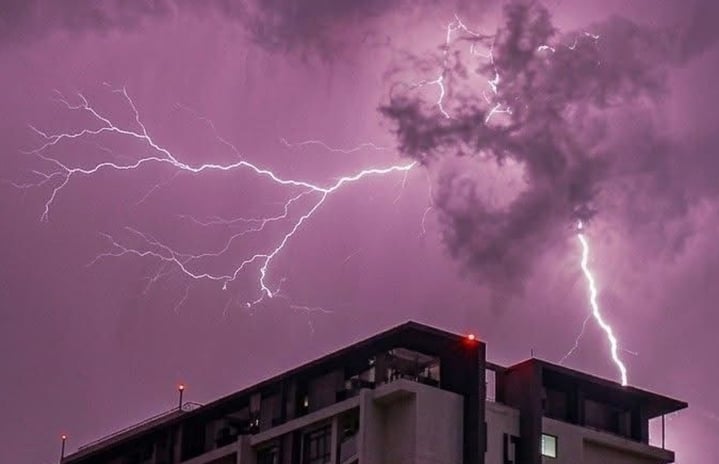
Residents of the Greater Male; area endured a night of intense thunderstorms, as a sudden change in weather broke a prolonged period of heat.
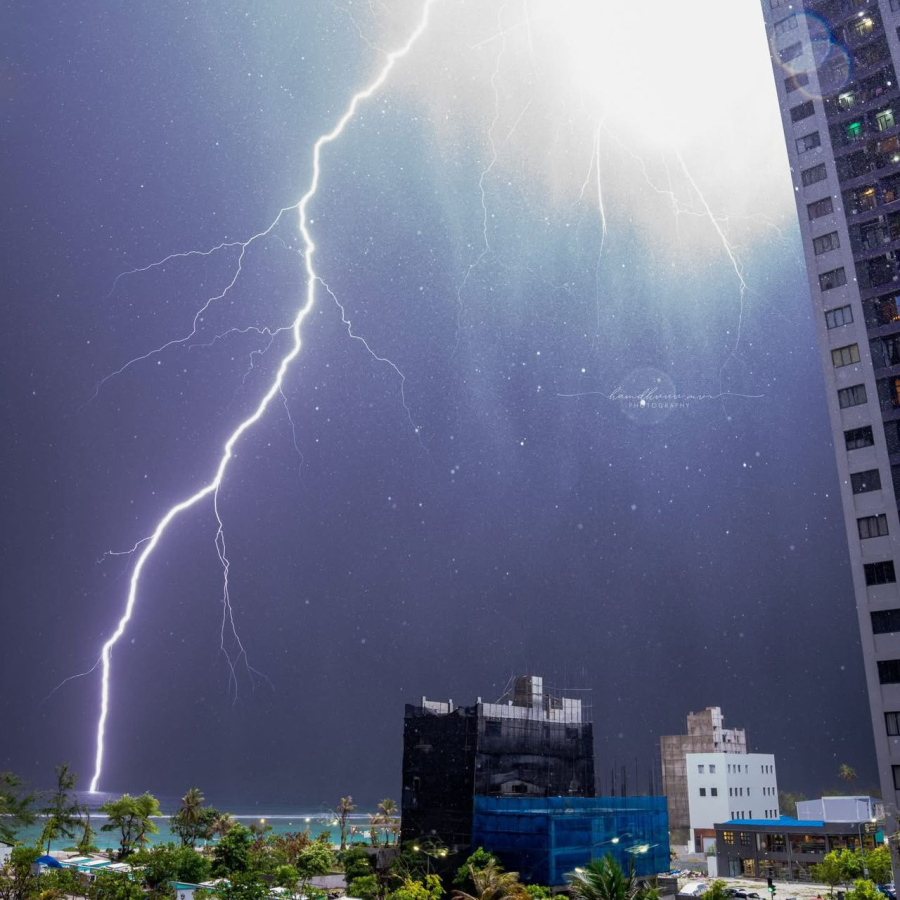
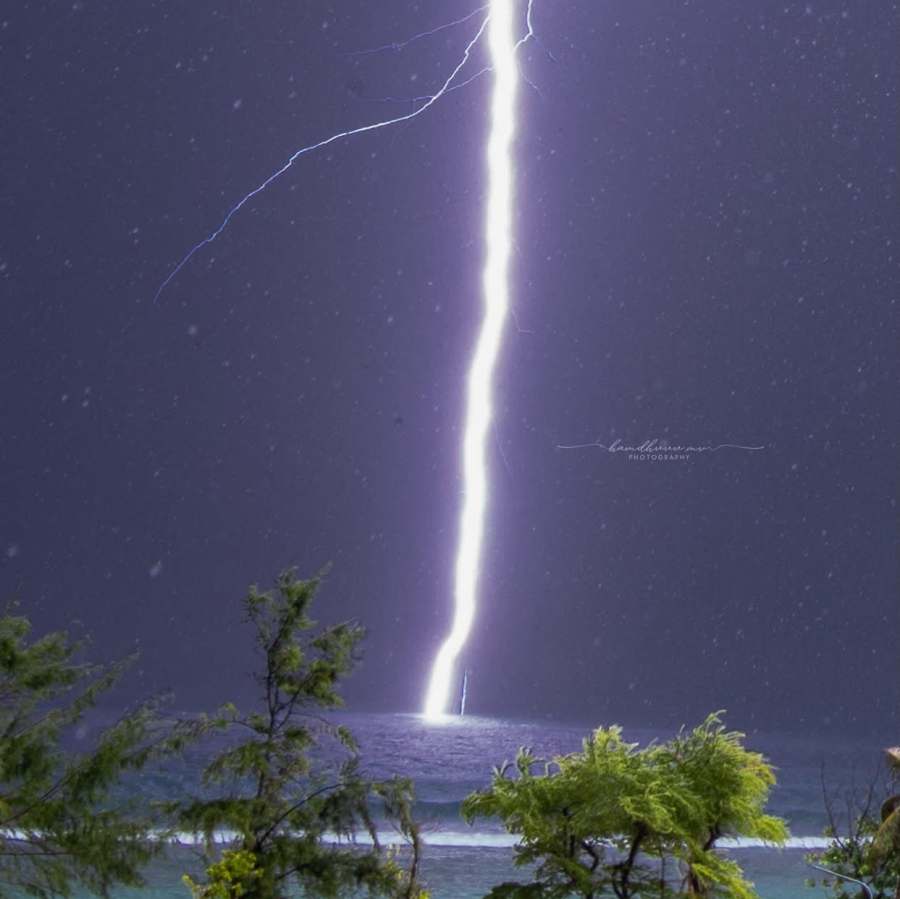
Storm clouds gathered close to midnight, followed by frequent lightning and loud claps of thunder that woke many from their sleep. The storm intensified through the night, with several reports of lightning strikes and power outages across Hulhumale'.
In Hulhumale' Phase 2, particularly in high-rise buildings, electrical breakers tripped during the storm, cutting power to some households. Many residents said they were unable to fall back asleep for hours due to the noise.
Witnesses reported that lightning struck parts of buildings in Hulhumale', dislodging sections of exterior concrete. No injuries or major property damage have been reported. Videos and images of the storm have since circulated widely on social media.
State Electric Company (Stelco) said some households experienced power interruptions after earth leakage circuit breakers (ELCBs) were triggered. The utility advised residents to check their distribution boards if outages occur.
An official from the Maldives Meteorological Service (MET) said thunderstorms are common in April, the hottest month of the year, particularly during the transition from the dry Iruvai monsoon to the wet Hulhangu season.
“We are not forecasting the intensity of individual storms, but this is typically a period of increased thunderstorm activity,” the official said, adding that similar conditions are likely in the coming days.
The shift between monsoon systems creates unstable atmospheric conditions. As hot air rises from the heated surface, moisture builds rapidly; a process known as convection, forming large thunderclouds.
During the seasonal transition, humid Hulhangu air collides with the drier Iruvai air, increasing electrical activity in the atmosphere. Lightning occurs when this built-up charge is released, heating the surrounding air rapidly and producing the shockwave heard as thunder.
Calm winds and high humidity allow the sound of thunder to travel further, making storms appear more intense.
Precautions during thunderstorms
Authorities urged the public to take precautions during lightning activity:
- Switch off electrical appliances such as televisions and refrigerators to prevent damage from power surges
- Avoid beaches and the sea
- Do not use landline phones or devices connected to power sources
- Stay away from open areas and tall structures
- Avoid bathing or washing dishes during storms
April typically marks the transition between monsoons in Maldives, bringing heat, humidity and increased storm activity. Rainfall usually becomes more consistent with the onset of the Hulhangu monsoon in early May, beginning in the southern atolls before spreading nationwide.
However, forecasters say traditional seasonal markers are becoming less reliable. Variability driven by global climate change and phenomena such as El Niño can shift the timing and intensity of monsoons.
Last year, the Hulhangu monsoon began on 26 May, highlighting the growing unpredictability of seasonal weather patterns.


