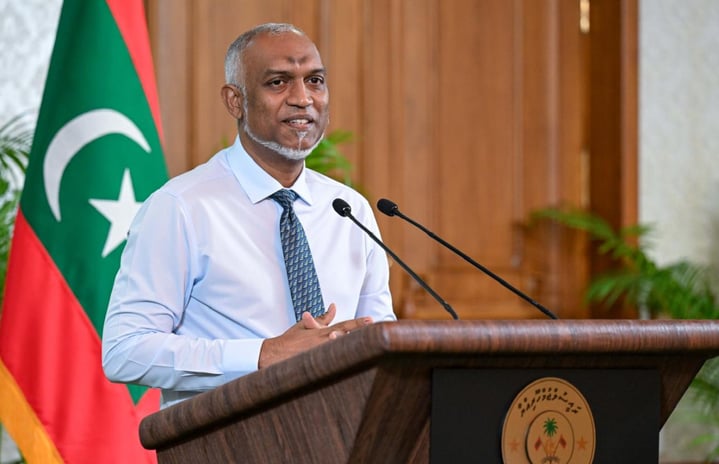
President Dr. Mohamed Muizzu stated today that the level of education held by State Ministers and Deputy Ministers will be considered in ministry appointments moving forward.
Speaking at a press conference at the President’s Office, President Muizzu said ministers and political appointees would be dismissed as part of planned changes in line with the will of the people, in response to a question by a journalist on the government’s next steps.
The President said that moving forward, the quality of education and experience will be strongly considered when appointing people to political positions.
In line with that, President Muizzu went on to say that State Ministers who are appointed to ministries will be those who have Masters Degrees, with Deputy Ministers to hold Degrees.
"In the future, I will take into consideration merit, their level of education and experience. For example, my intent moving forward is to see whether someone who may be appointed as a State Minister has a Masters Degree, even in the case where someone absolutely has to be appointed," said the President.
"In the situation a Deputy Minister absolutely has to be appointed, they have to be checked whether they have a degree in the relevant field. This is the type of rough framework I have in mind."
In addition, President Muizzu said that along with the level of education, relevant experience will also be a factor for political appointees, with the power to do so being granted under the Constitution.
While highlighting that the government has begun their efforts to lower expenditure, the President said that they will move to relieve people from positions based on their performance, along with reducing the number of employees in state-owned enterprises by 33 percent.


