
The Supreme Court today concluded hearings on the constitutional amendment under which Members of Parliament would lose their seats if they are dismissed from or resign from their political party, following extensive debates and numerous questions from the justices.
The case seeking to invalidate the amendment, which mandates the vacation of a parliamentary seat if a member changes parties or is removed from their party, was submitted to the Supreme Court by former Kendhoo MP Ali Hussain. The MDP has also intervened in the matter.
During the hearing, which lasted from this morning until evening, both sides engaged in heated debates regarding the validity of the constitutional amendment, facing a barrage of questions from the bench.
Lawyers for Ali Hussain and the MDP argued that the amendment contradicts the fundamental principles of the Constitution. They stated that while the Constitution declares all power originates from the people, making members lose their seats upon leaving or being removed from a party violates this principle and allows parties to exert undue influence over members.
However, the State argued that the Supreme Court does not have the jurisdiction to review a constitutional amendment brought by the Parliament, asserting that the Constitution does not grant this power to the courts.
The State further argued that even if the court decided it could hear the case, the amendment does not contradict the core tenets of the Constitution. Additionally, the State noted that the doctrine suggesting constitutional amendments cannot be made if they conflict with fundamental principles is not one accepted by many countries.
The State Opposes a Stay Order
Ali Hussain’s side requested a stay order to prevent members from losing their seats due to party dismissal or resignation until the case is concluded, as well as an order to prevent any action from being taken against any Supreme Court justice until the matter is settled.
The State opposed the issuance of both orders. The State argued that, based on previous Supreme Court decisions regarding stay orders in constitutional matters, there is no reason to issue these two orders.
The State argued that issuing an order to stop actions against judges would obstruct the legal powers granted to other institutions.
Ali Hussain’s lawyer, Mahfooz Saeed, noted that although the Anti-Corruption Commission (ACC) announced it was investigating criminal matters involving three justices who previously presided over this case many days ago, those matters have not been pursued. Mahfooz remarked that the ACC is not a commission so overwhelmed with cases that it cannot attend to them.
He stated that the request for a stay order against taking action against justices was made after considering all surrounding circumstances, and that these factors must be taken into account.
Numerous Questions from the Bench to Both Sides
Since it was argued that the amendment violates the fundamental structure of the Constitution, the bench questioned whether there is a universally agreed-upon constitutional structure.
In response, lawyer Mahfooz said that there is no universally agreed structure and that constitutional structures vary across countries. However, he stated that the reasons why the amendment causing members to lose their seats upon changing or being removed from a party violates the core structure of the Constitution have been outlined in the case.
The bench asked whether members are elected to Parliament based on their party or based on the individual. The State responded that while individuals are generally considered, people also vote based on the party to which the individual belongs.
Lawyer Mahfooz argued that the debate over whether people vote for the party or the person is one that will never end. However, he stated that even if parties support an individual, the vote is ultimately cast for the person.
The bench questioned whether the rights of the people are affected when a member is elected on a party ticket by showing a party manifesto, only to switch to a different ideology.
Ali Hussain’s lawyers stated that members should work by prioritizing the nation and the people over their own thinking or personal benefit. They argued that prioritizing party policy over all else is something that would lead to the loss of citizens' rights.
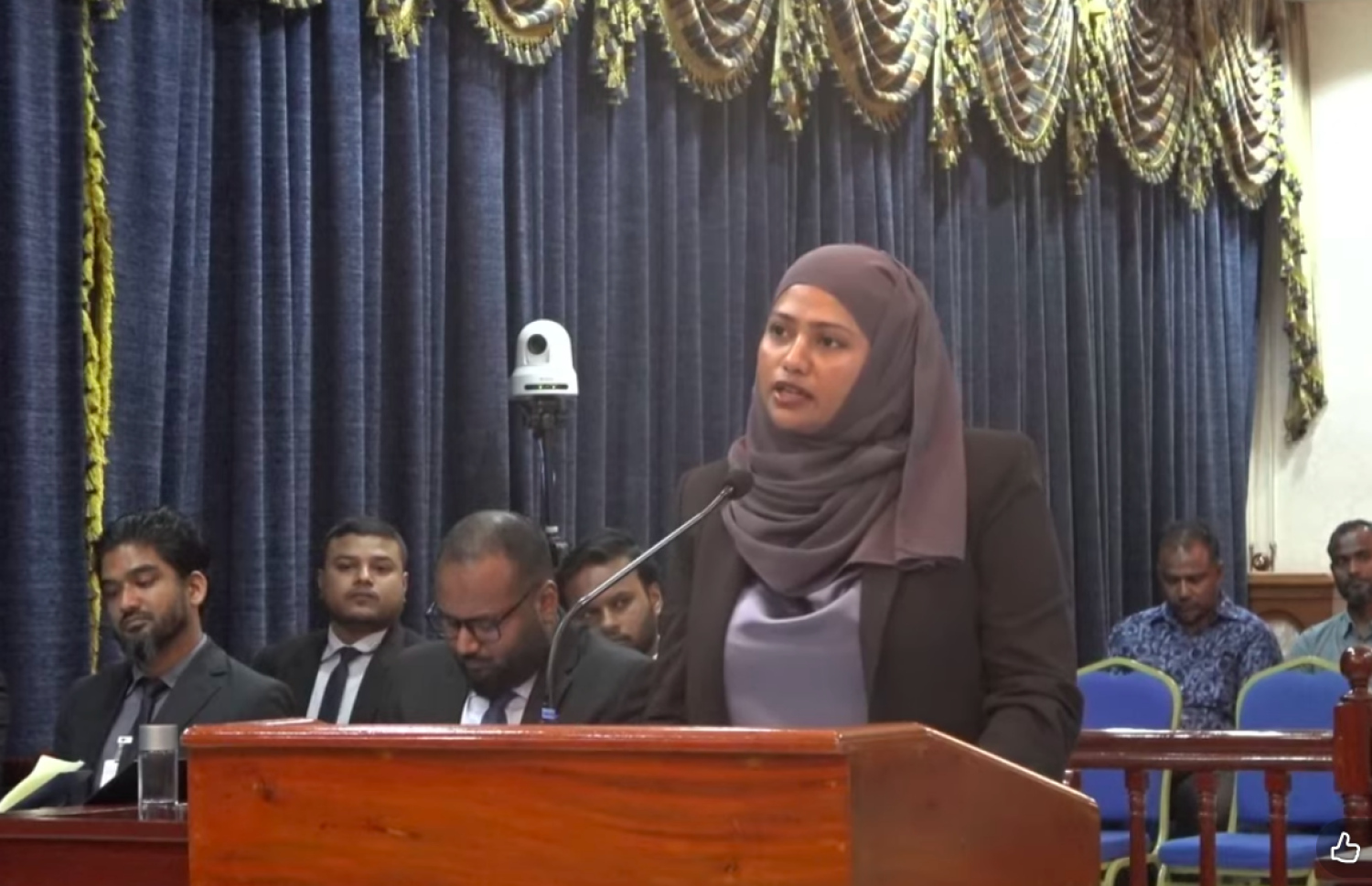
The bench asked why they were seeking to invalidate the constitutional amendment without questioning the validity of the Anti-Defection Act, which existed before the amendment and already dictated that members would lose their seats upon changing or being removed from a party.
Ali Hussain’s lawyer, Aishath Sheena Mohamed, said that seats are not automatically lost under the Anti-Defection Act; rather, members who change or are removed from a party are required to resign themselves under that law.
However, the State countered that in both scenarios, the result is a vacated seat.
The bench asked whether a member who loses their seat under the constitutional amendment due to party dismissal or resignation could approach the Supreme Court for a decision on the matter.
In response, Sheena said that, as the amendment stands, the member would not have the opportunity to go to the Supreme Court. However, the State argued that in such a situation, even if not the member who lost the seat, another party could still approach the Supreme Court.
The bench also questioned the procedure followed by the Parliament in bringing the amendment. In response, Ali Hussain stated that a constitutional amendment had never been brought within approximately nine hours before. He said that because the amendment was brought within a single day, it cannot be said it was done properly.
The State responded that bringing an amendment in a rushed manner does not constitute a violation of procedure. The State asserted that all procedures stated in the Constitution and the Parliament’s standing orders were fulfilled in passing the amendment.
Concluding today’s hearing, Chief Justice Abdul Ghanee Mohamed, who presides over the bench, stated that unless further clarification is required, the next step in the case will be the delivery of the verdict.
In addition to the Chief Justice, the case is being heard by a full bench of seven Supreme Court justices, including Justice Aisha Shujune Mohamed, Justice Dr. Mohamed Ibrahim, Justice Ali Rasheed Hussain, Justice Hussain Shaheed, Justice Abdulla Hameed, and Justice Mohamed Saleem.


