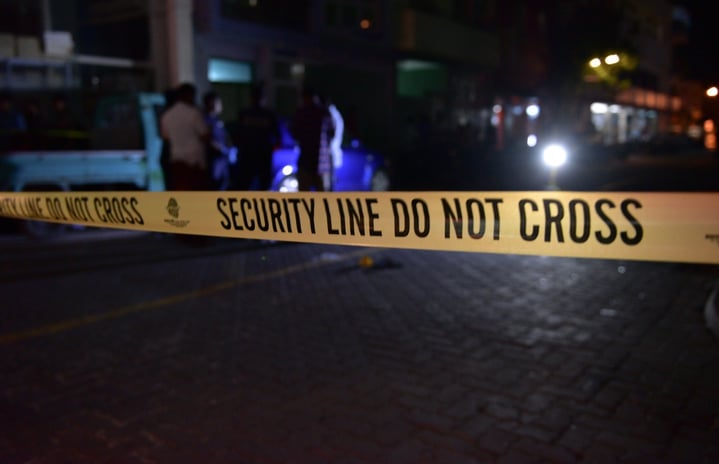
Questions were raised in the Supreme Court today regarding the police conduct and the court's acceptance of a statement made by a person's dying declaration, in the first case where such a statement was accepted as evidence in the Maldives.
In the case of the April 2011 stabbing and murder of Ahsan Basheer, Varudheege, S. Hithadhoo, near the junction of Majeedhee Magu and Alikilegefaanu Magu, the Criminal Court had initially ruled that the charges against Ibrahim Shahum Adam, G. Cosy, were not proven. However, in 2021, the High Court sentenced him to death after the state appealed the case.
This case is the first instance where a dying declaration was accepted, as Ahsan had stated while in the hospital that it was Shahum who attacked him.
During today's hearing, held at the state's request to confirm the validity of the sentence, one of the issues raised by Shahum’s side was the High Court's acceptance of this dying declaration made shortly before Ahsan’s death.
Shahum’s lawyer stated that those who testified to Ahsan giving a dying declaration naming Shahum were exclusively police officers, and no testimony was obtained from the doctors or nurses involved in his treatment.
The lawyer further noted that although Ahsan reportedly gave this declaration to the police on three separate occasions, the police did not video or audio record his statement to any extent.
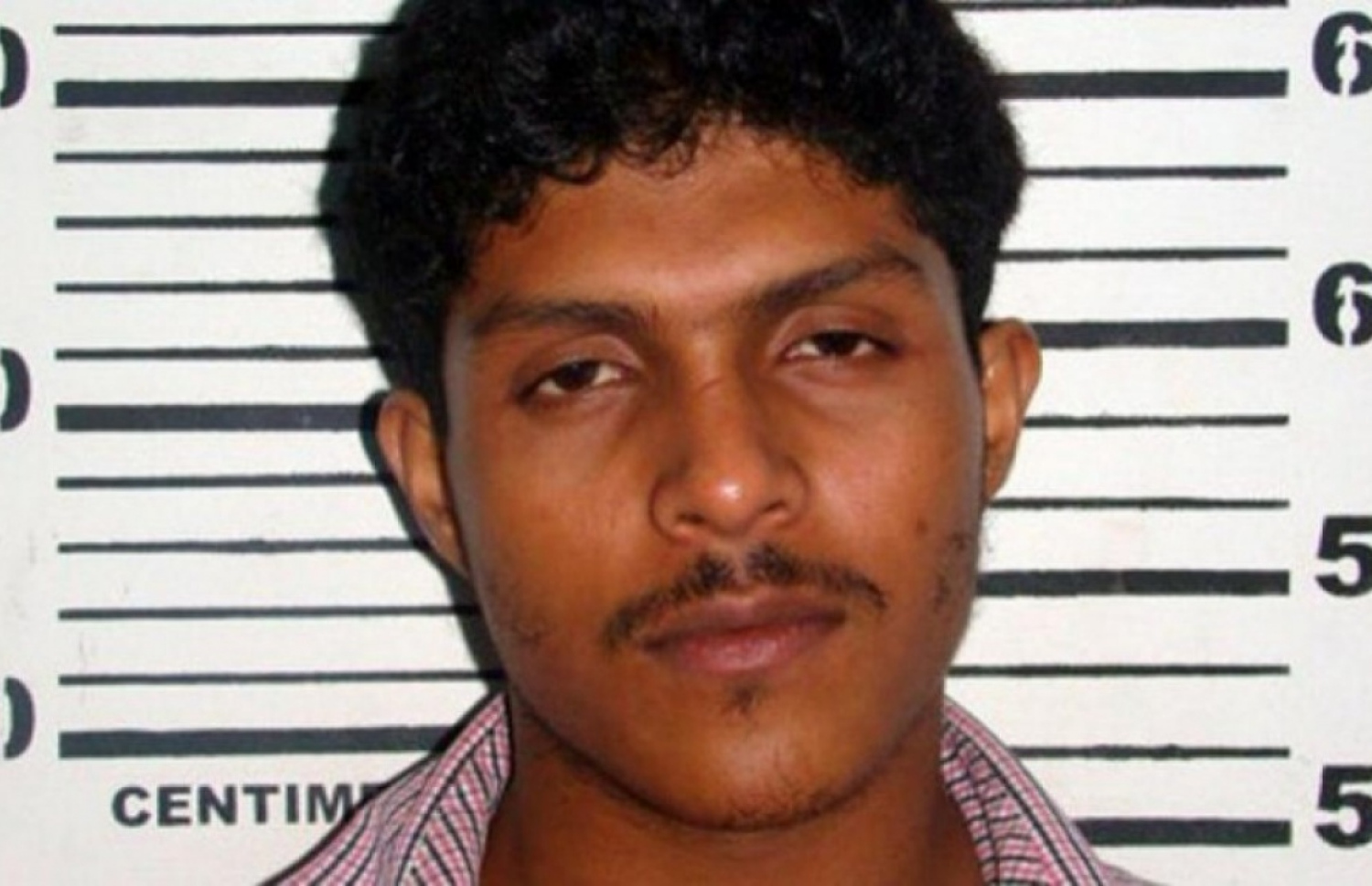
Citing rulings from foreign courts that emphasize the need for special caution when accepting dying declarations, the lawyer argued that witnesses had claimed Ahsan previously mentioned Shahum might attack him, which reveals a pre-existing enmity. The lawyer pointed out that under Islamic Shari’ah, the testimony of an enemy is not permissible, and noted that the High Court had not made a determination on these matters.
Additionally, the lawyer argued that since Ahsan had a prior criminal record, a conviction could not be based on the words of someone whose testimony might be unacceptable.
Furthermore, it was noted that the High Court had accepted the appeal nearly a year after the deadline had expired. Shahum’s lawyer stated that while the state claimed the delay was due to the late receipt of the lower court's case report, the state had not even filed a notice of appeal with the High Court.
The lawyer argued that the state failed to provide a valid reason for not filing before the deadline or explain its efforts during that period, and asserted that the High Court had not sufficiently stated its reasons for deciding to proceed with the case.
Based on these points, Shahum’s side requested the court to rule that the High Court's judgment was flawed. However, the state maintained that the High Court’s death sentence was issued in accordance with legal principles.
Today's hearing concluded after announcing that another session would be held to clarify further matters and allow both parties additional opportunities to speak.
The case is being heard by a five-judge bench of the Supreme Court, presided over by Judge Dr. Mohamed Ibrahim. The bench also includes Judge Aisha Shujune Mohamed, Judge Ali Rasheed Hussain, Judge Abdulla Hameed, and Judge Mohamed Saleem.
In this case, the state also charged Hassan Shimaz Mohamed Suvad, Ma. Venusthari, alongside Shahum; the High Court has sentenced him to 15 years in prison.
Prior to this death sentence, Shahum had also been convicted and sentenced to life imprisonment for a 2010 murder during a confrontation at a football ground near the Maafannu Youth Centre.


