The government has acknowledged that poor air quality in Maldives is a serious threat to public health and the environment, according to the Ministry of Environment.
Responding to a Right to Information (RTI) request from Mihaaru News on whether the government is taking the issue of haze and air pollution seriously, the ministry said last week that transboundary haze and pollution pose a significant risk to the country. The government is giving the issue special attention, the ministry said.
According to the Ministry of Environment, transboundary air pollution studies are being conducted by Maldives Meteorological Service’s Climate Observers stationed at Haa Dhaalu Hanimaadhoo. Findings from these studies have been published in several international scientific journals.
“To strengthen air quality monitoring, a project to establish regulatory reference-grade monitoring stations is underway. Work is currently in progress to set up air quality monitoring stations under this project,” the ministry said.
The ministry added that it is working with regional and international partners to obtain technical and financial assistance to improve national capacity in air quality management.
“Transboundary haze and pollution is not an issue that can be addressed by a single country alone,” the ministry said, noting that Maldives participates in various regional and international consultations to identify effective solutions.
The ministry also said it works closely with relevant agencies, including the Ministry of Health, to share timely information with the public during peak haze periods. Updates on air quality conditions are disseminated through social media, television and radio, along with public guidance on how to monitor pollution levels and reduce health risks.
Air pollution in Maldives worsens during the Iruvai monsoon, as polluted air masses from parts of northern India move southwards. This pollution includes dust, industrial emissions, smoke from large scale construction activities, coal based power generation and the burning of agricultural waste.
According to the Maldives National Action Plan on Air Pollution, released by the Ministry of Environment in December 2024, around 70 percent of air pollution affecting Male' is transboundary in nature. The remaining 30 percent originates locally, mainly from vehicles and other domestic sources.
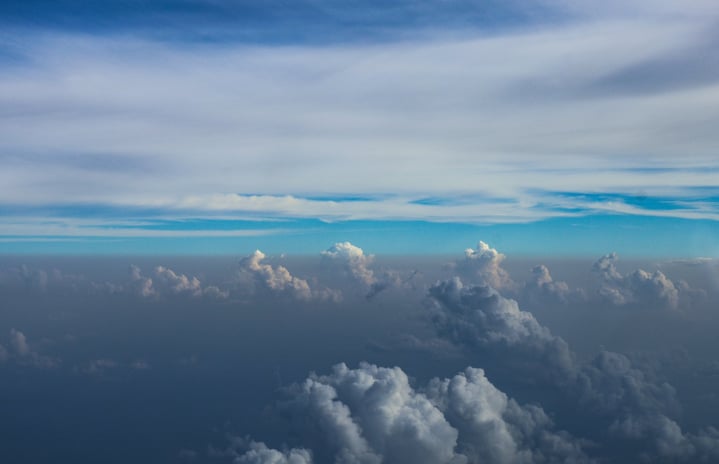
The ministry also referenced the “Indian Ocean Experiment” conducted in 1999, which involved more than 200 scientists from Europe, India and the United States. The study identified a persistent “brown cloud” of pollution over the northern Indian Ocean, including the Maldives.
The experiment concluded that approximately 75 to 80 percent of atmospheric pollutants in the region are generated by human activities in South and Southeast Asia.


