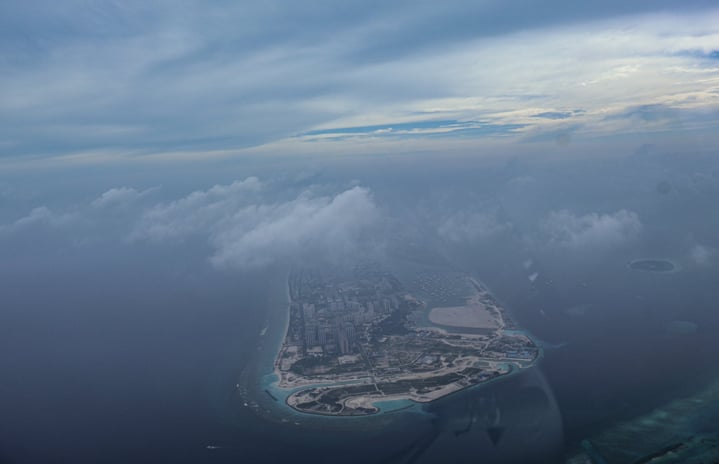
Respiratory diseases have increased sharply in Maldives during periods of haze, according to data released by Health Protection Agency (HPA).
Statistics shared with Mihaaru News show a steady year-on-year rise in respiratory illnesses reported during the Iruvai monsoon season, which runs from December to April, over the past five years.
According to HPA data, reported cases were:
- 44,750 in 2020–2021
- 85,597 in 2021–2022
- 160,876 in 2022–2023
- 154,783 in 2023–2024
- 149,259 in 2024–2025
While there has been a slight decline in reported cases over the past two seasons, HPA notes that the Iruvai monsoon began unusually late in both years, which may have contributed to the lower figures.
March consistently recorded the highest number of respiratory illness cases during haze periods across the five-year span.
Health experts warn that haze exposes people to fine particulate matter known as PM2.5; microscopic dust particles small enough to bypass the body’s natural defenses. These particles enter deep into the lungs and pass directly into the bloodstream, triggering inflammation throughout the body.
Such exposure can cause serious damage to the respiratory and cardiovascular systems and has also been linked to neurological illnesses.
The figures highlight the need for heightened public health precautions during haze periods. Authorities advise the public to limit outdoor activity, wear protective masks, and use air purifiers indoors, warning that stronger protective measures may be necessary as air quality deteriorates.


