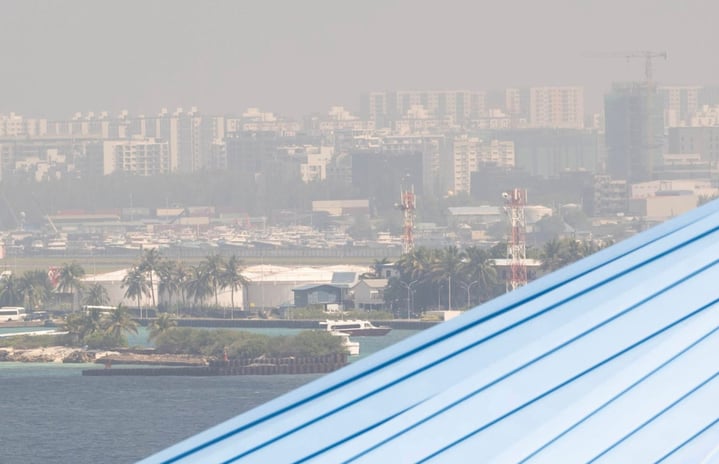
Air quality in the Greater Malé region reached hazardous levels today, triggering a Red Alert as pollution levels became dangerous for the general public.
Monitoring stations at the Maldives National University’s Centre for Maritime Studies in Villimalé recorded an Air Quality Index (AQI) of 170. According to standard health indices, any reading between 151 and 200 is classified as "Unhealthy," indicating that people may begin to experience adverse health effects.
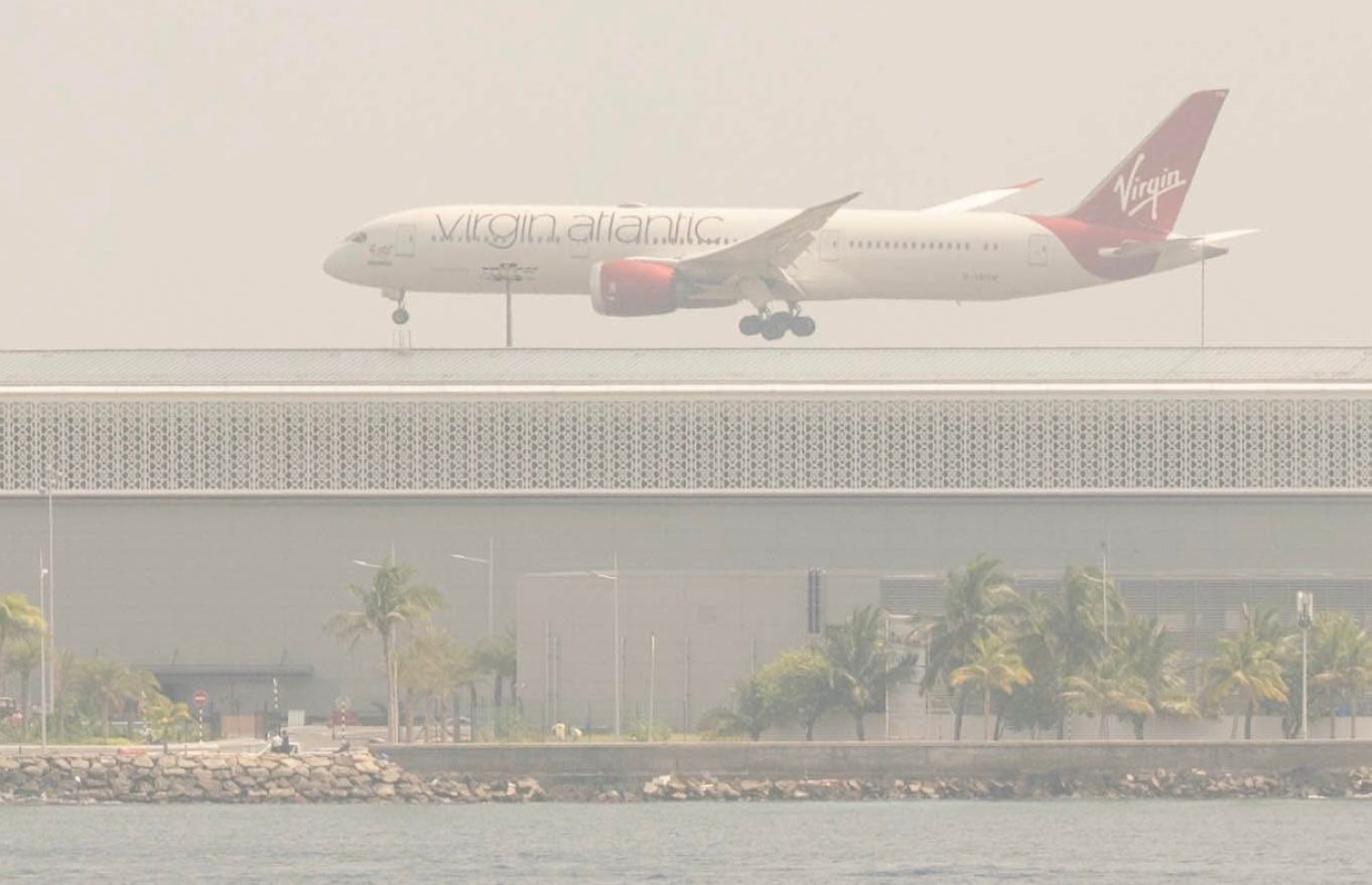
The primary pollutant driving this alert is PM2.5, which was measured at 82 micrograms per cubic meter. This concentration is approximately 16.4 times higher than the annual safety guidelines established by the World Health Organization (WHO).
According to the air quality monitoring system located at the Sh. Funadhoo Council, the air quality in that area currently stands at 73. In contrast, the monitoring system at the Dh. Kudahuvadhoo Council indicates a much poorer air quality reading of 163. Meanwhile, L. Gan recorded a level of 97, Fuvahmulah stands at 84, and Addu Hithadhoo is currently at 96. These figures demonstrate that air quality is significantly degraded across all regions of the Maldives today.
Based on the latest data from “IQAir”, the unhealthy air quality currently affecting the Maldives is projected to persist through today and tomorrow.
The current "haze" or foggy atmosphere is a seasonal phenomenon caused by trans boundary pollution. During the transition to the Iruvai Monsoon, which began earlier than usual this year on December 17, prevailing winds carry dust, industrial emissions, and smoke from agricultural burning in northern India across the Arabian Sea to the Maldives.
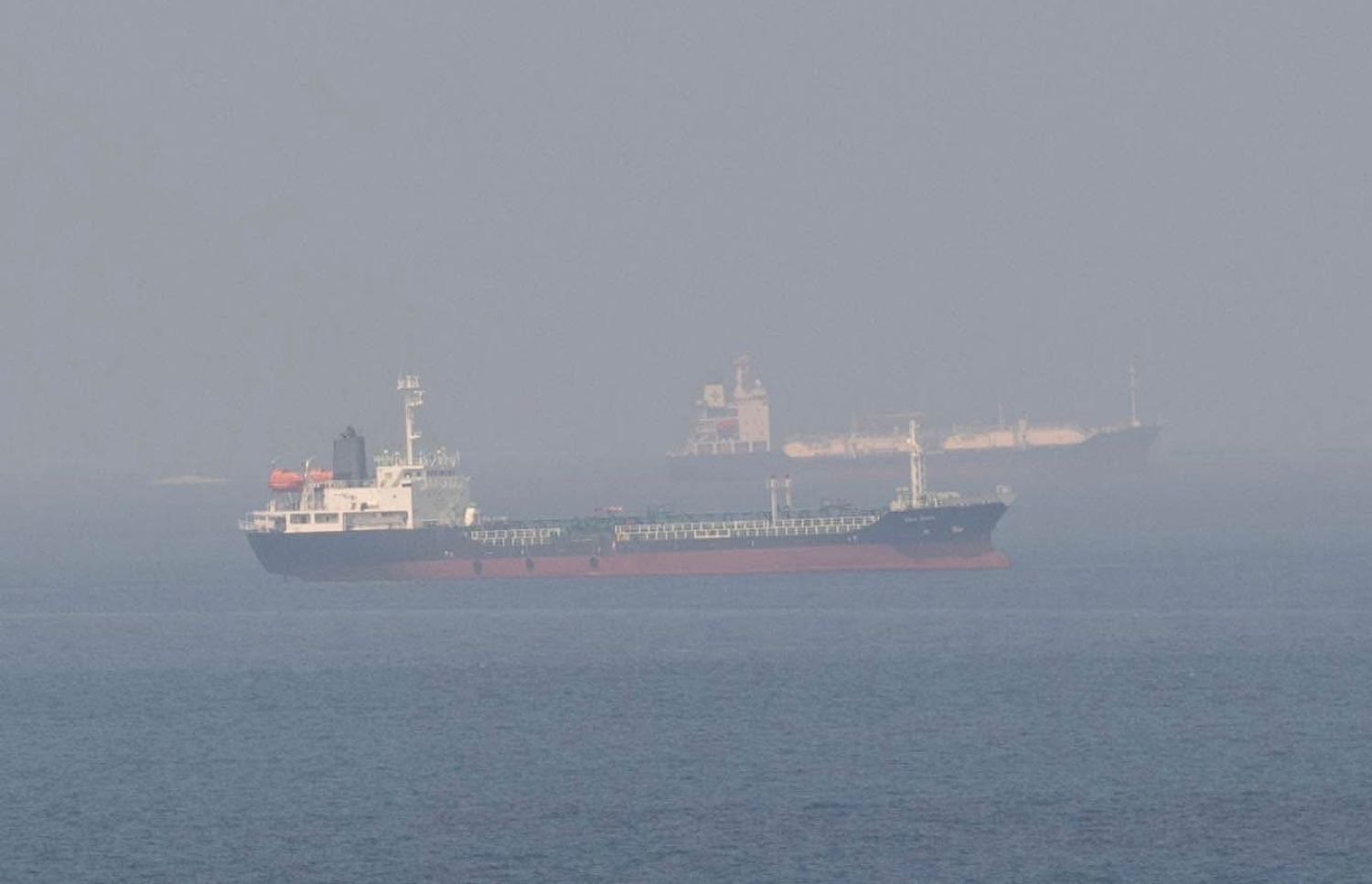
This seasonal haze has significantly reduced horizontal visibility in the capital, lowering visibility.
To protect your health during this Red Alert, authorities recommend the following:
- Minimize Outdoor Exposure: Stay indoors as much as possible, especially children, the elderly, and those with pre-existing heart or lung conditions.
- Wear Protective Masks: If you must go outside, use an N95 or similar high-filtration mask to filter out fine particles.
- Seal Indoor Spaces: Keep doors and windows closed to prevent polluted air from entering your home.
Use Air Purifiers: If available, run an air purifier equipped with a HEPA filter to maintain clean air indoors.


