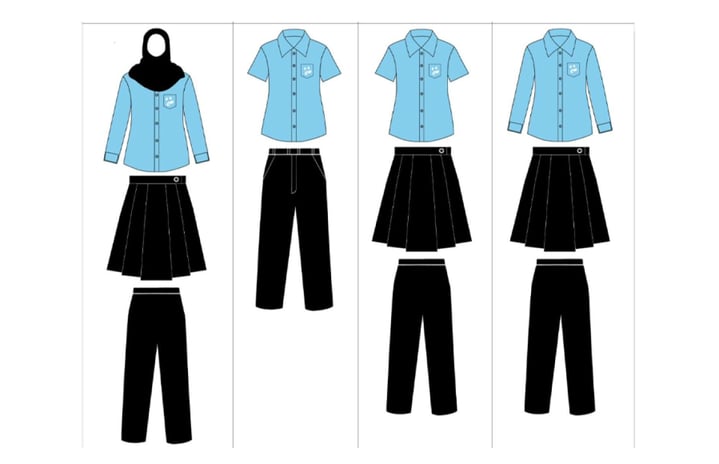
The Ministry of Education has announced changes to the official and activity uniforms for government schools, effective from 2027. The new policy will require female students in Grade 4 and above to wear trousers with their uniforms.
To ensure consistency, the new standardized uniform will feature four colors: the three colors of the national flag (green, red, and white), plus the Ministry of Education's color (blue). Schools have been given one year to prepare for these changes.
The Ministry has sent guidelines and design diagrams of the new uniforms to all schools.
Key Changes for Female Students (Key Stage 2 / Grade 4 and Above):
- Trousers Mandatory: The new rules mandate that female students in Key Stage 2 (Grade 4 and above) must wear trousers with their uniform.
- Top (Shirt/Blouse): Girls must wear a shirt with either long or short sleeves. The length of the shirt must be long enough to cover the hips, extending 2 to 4 inches below the hip line.
- Skirt: Students wearing a skirt must also wear trousers under the skirt.
- The skirt length must be two inches below the knee.
- The skirt design requires two pleats on both the front and back.
- The width of each side pleat must be two inches, with a box pleat in the middle.
- Tucking-in shirt: The option to tuck in shirts is only available to students who wear the skirt; those who wear trousers alone are not permitted to tuck in their shirts.
- Headscarf Option: Students who wear the headscarf and those who do not are both given options under the new rule.
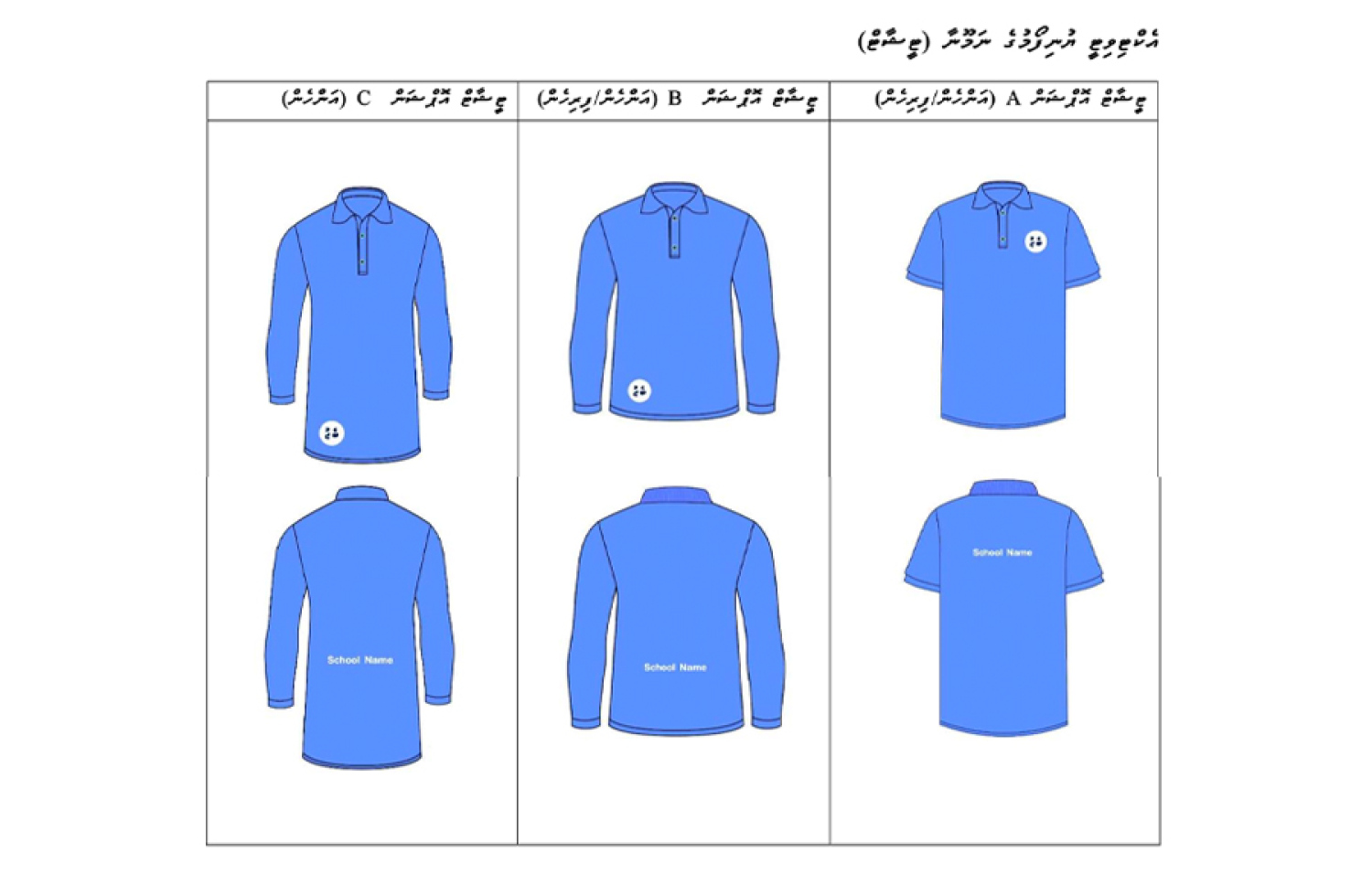
Activity Uniform Changes:
- For the activity uniform, if a skirt is worn, it must be a black, three-inch wide, normally pleated skirt that reaches the knee.
- The Ministry specified that the skirt cannot feature any logos.
- All female students, except those in Key Stage 1, must wear long pants or tracksuits if they opt to wear a skirt with their activity uniform.
The Ministry's circular stated that the decision to change the uniform was made after extensive consultations with school principals.
Minister of Education, Dr. Ismail Shafeeu, said the decision to introduce major uniform changes was due to significant complaints from both schools and parents. He believes the new policy will make uniforms more affordable and help prevent monopolization in their supply.


