On some mornings, Male’ disappears.
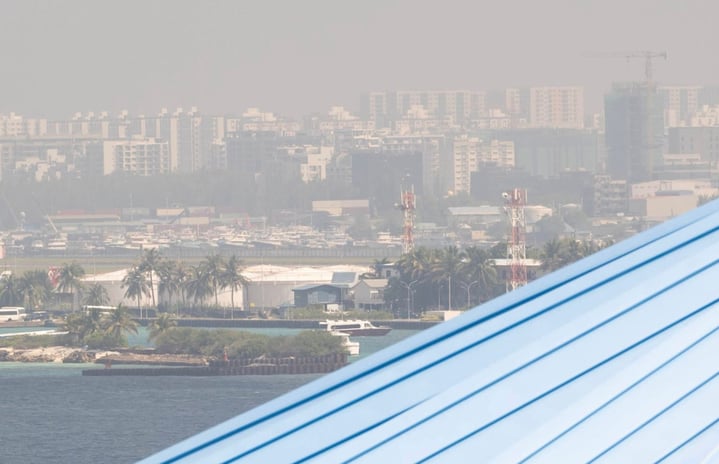
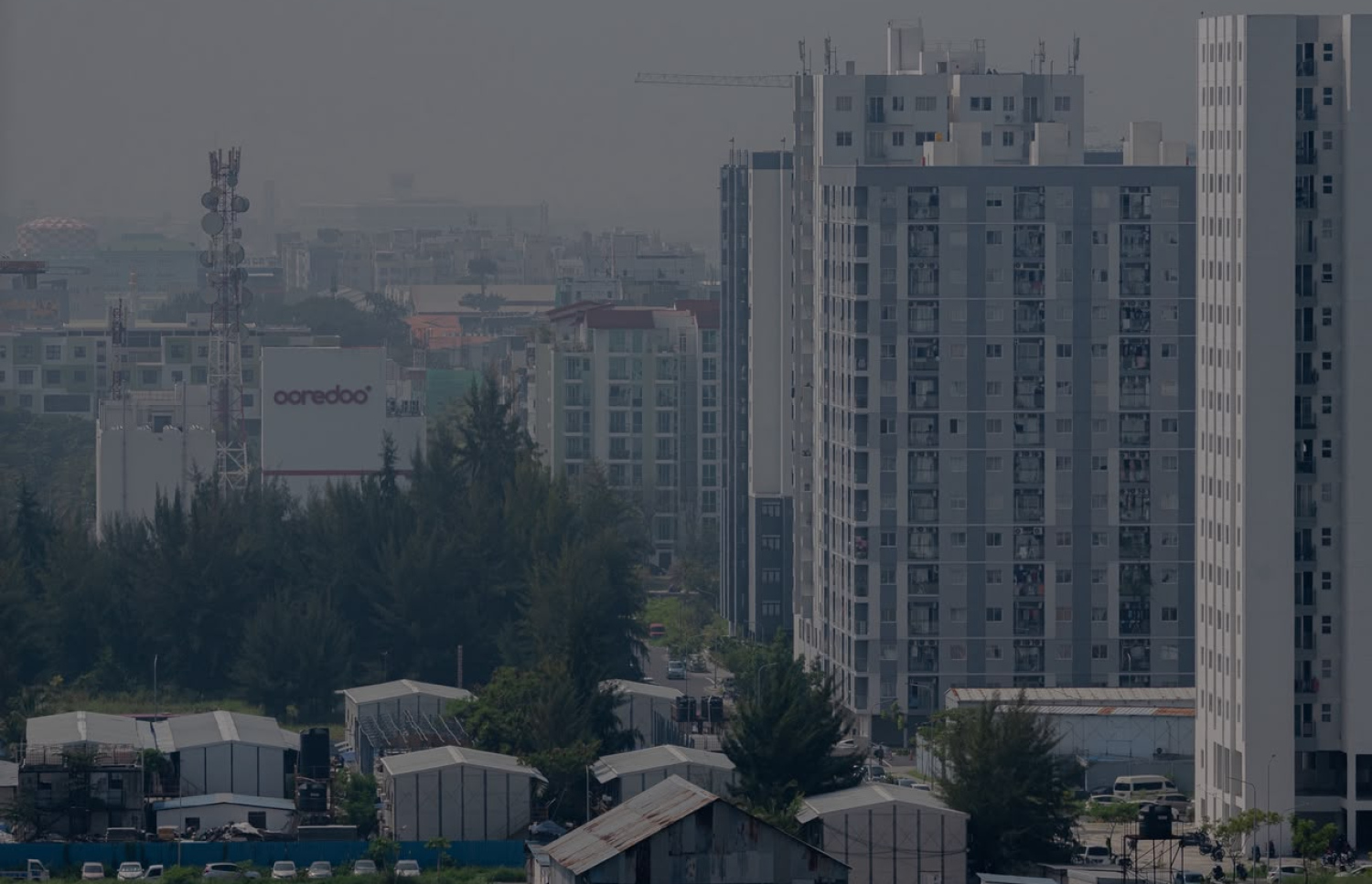
Not beneath a storm surge or a rising tide, the threats that have long defined the country's environmental anxieties. Instead, it vanishes into a pale grey haze.
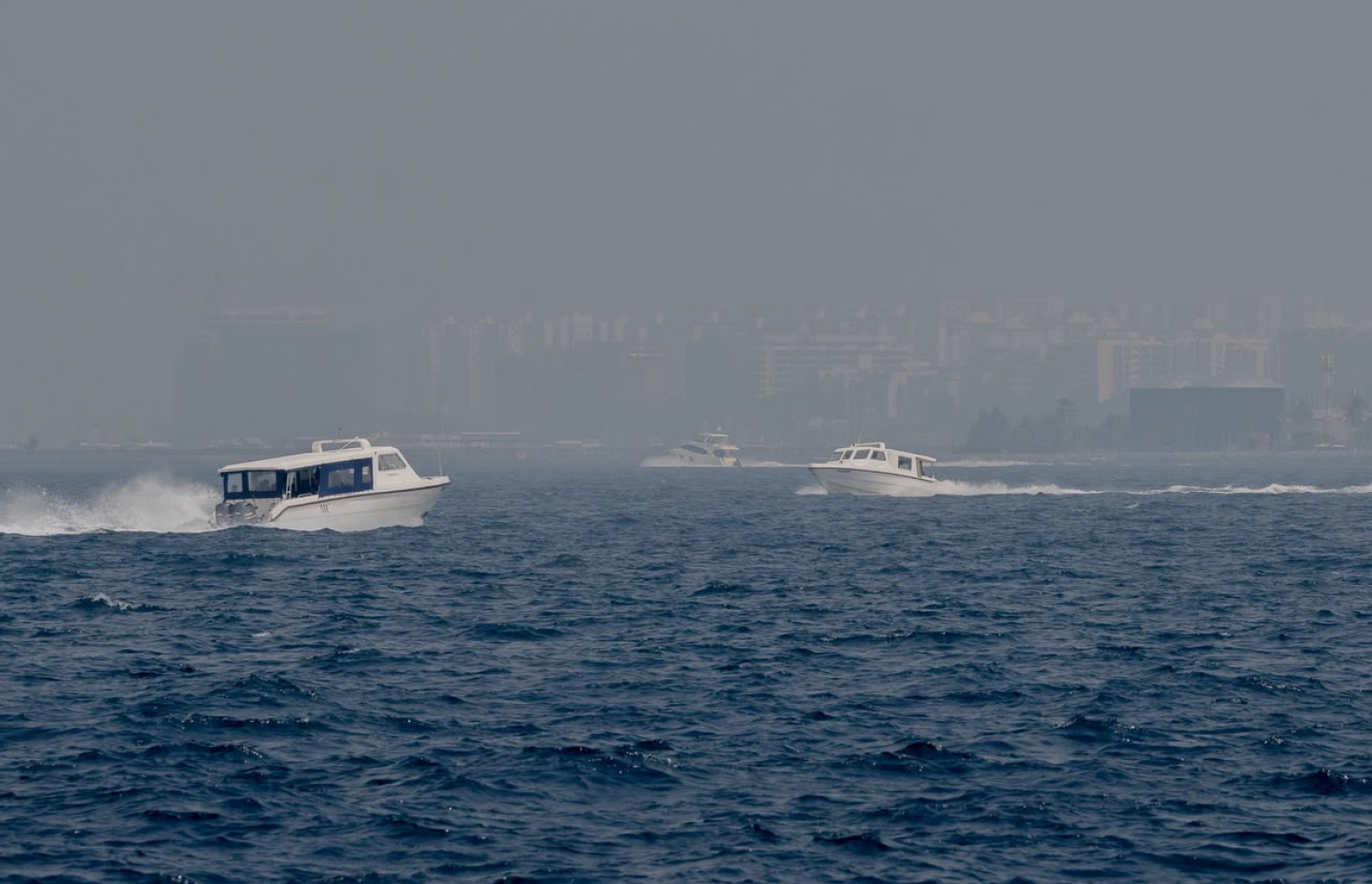
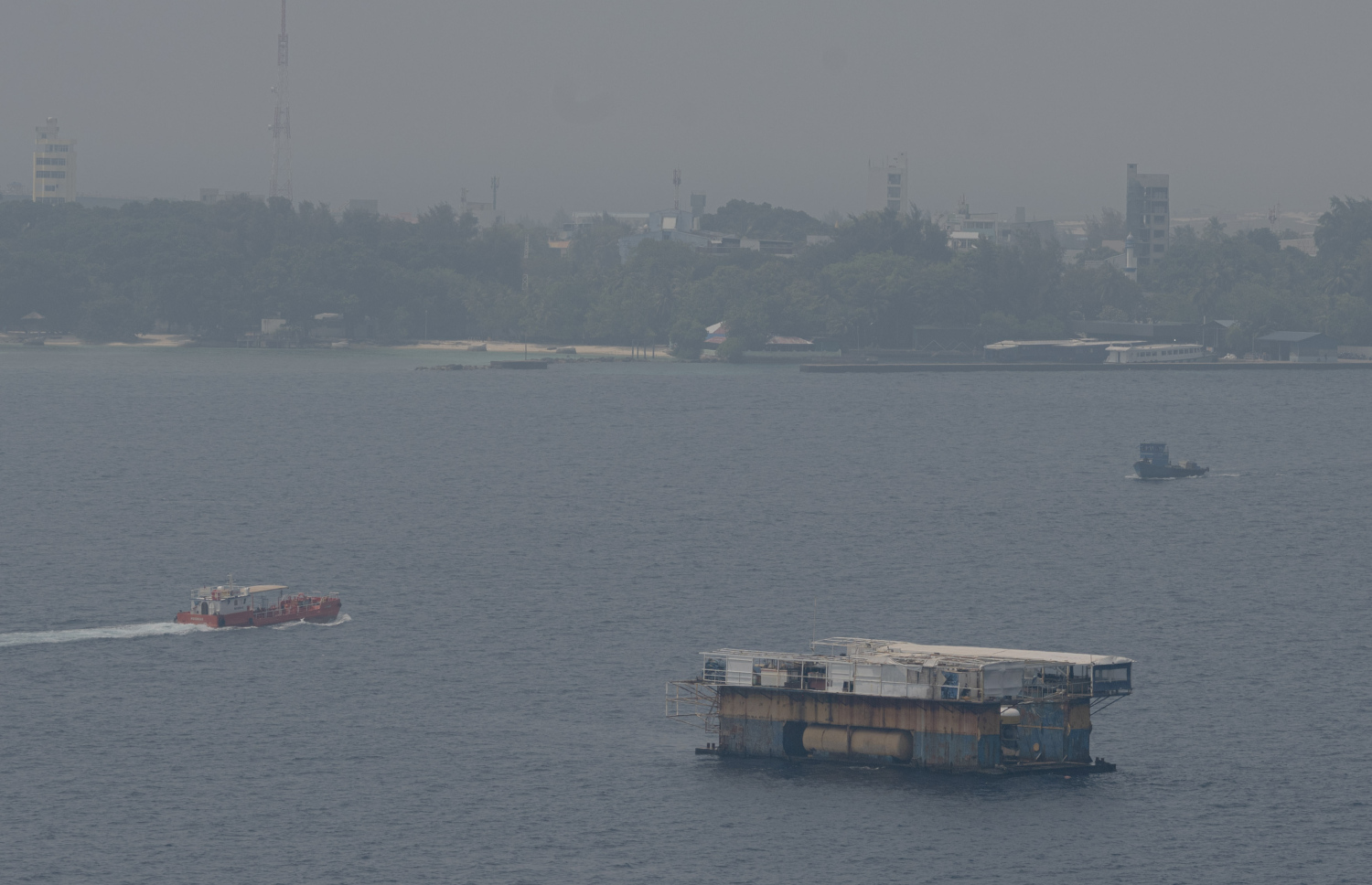
The horizon softens. Buildings that should be sharply etched against the tropical sky blur into silhouettes. Ferries emerge from a mist that is neither rain nor sea spray. Across islands famed for their clear air and endless ocean views, people find themselves checking air-quality indices before stepping outside.
For a nation internationally known as one of the frontline victims of climate change, a new environmental crisis is becoming harder to ignore.
Maldives is struggling to breathe.
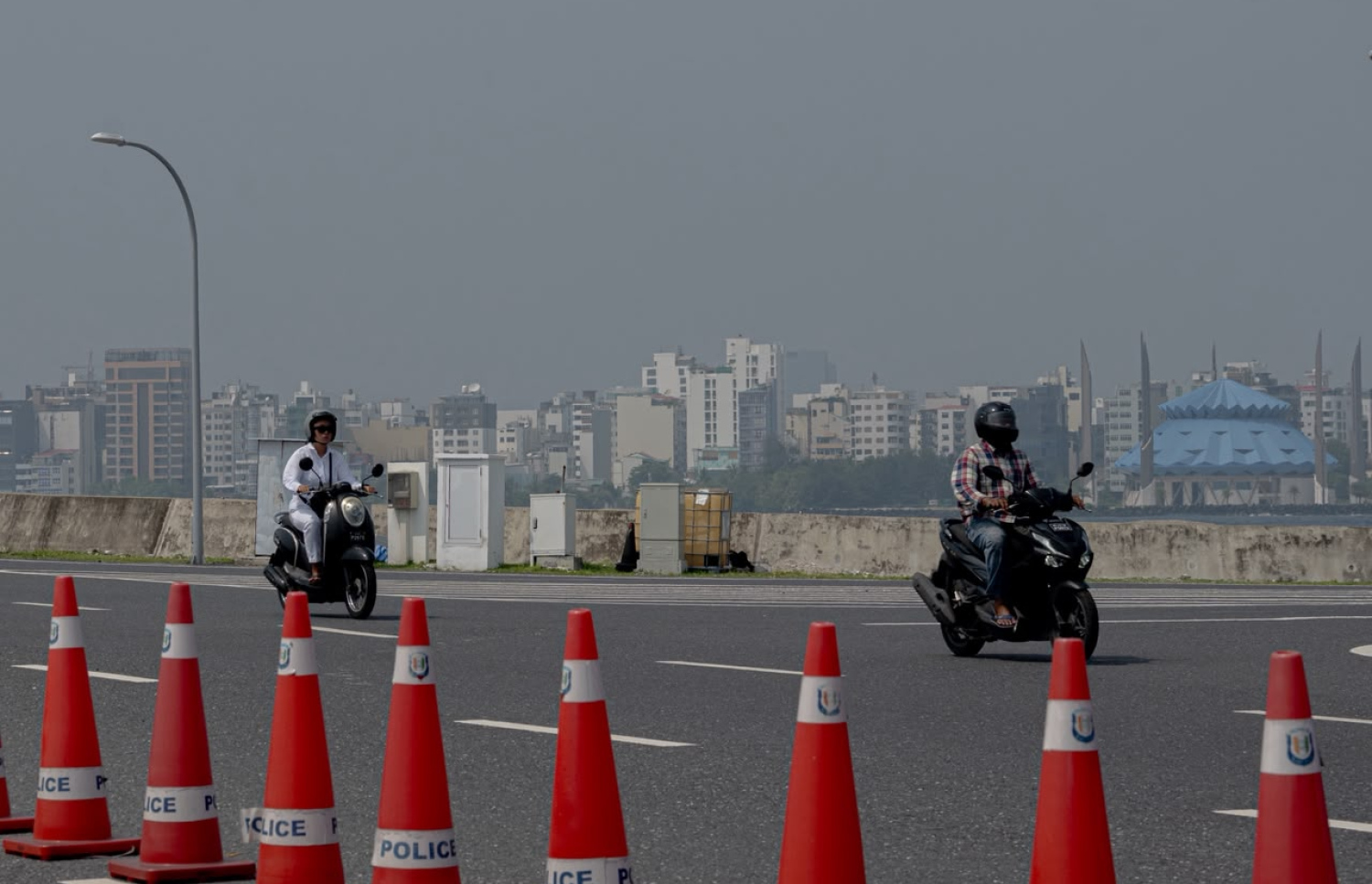
In November, air-quality readings reached unhealthy levels across parts of the country. The Air Quality Index (AQI) in the Greater Male’ region reached 159, while Kulhudhuffushi recorded an AQI of 160, levels considered unhealthy for the general population.
At the same time, the Maldives Meteorological Service (MET) warned that polluted air had spread across the country. Visibility in northern and central atolls dropped to around two kilometres as haze blanketed the island nation.
Health Protection Agency (HPA) responded with public advisories urging people to reduce outdoor activities and take precautions against the deteriorating air quality.
For many Maldivians, particularly younger generations, haze has become an increasingly familiar seasonal occurrence. Yet its presence raises a troubling question.
How does a country with virtually no heavy industry find itself engulfed by pollution severe enough to threaten public health?
The answer lies far beyond its shores.
An Imported Crisis
Maldives may be a small island nation, but it sits within one of the world's largest atmospheric systems.
Every year, during the northeast monsoon (Iruvai), wind patterns shift across South Asia. As they do, they carry polluted air southward over the Indian Ocean.
The Edition reported that the haze affecting Maldives is linked to polluted air transported from northern India during this seasonal weather pattern.
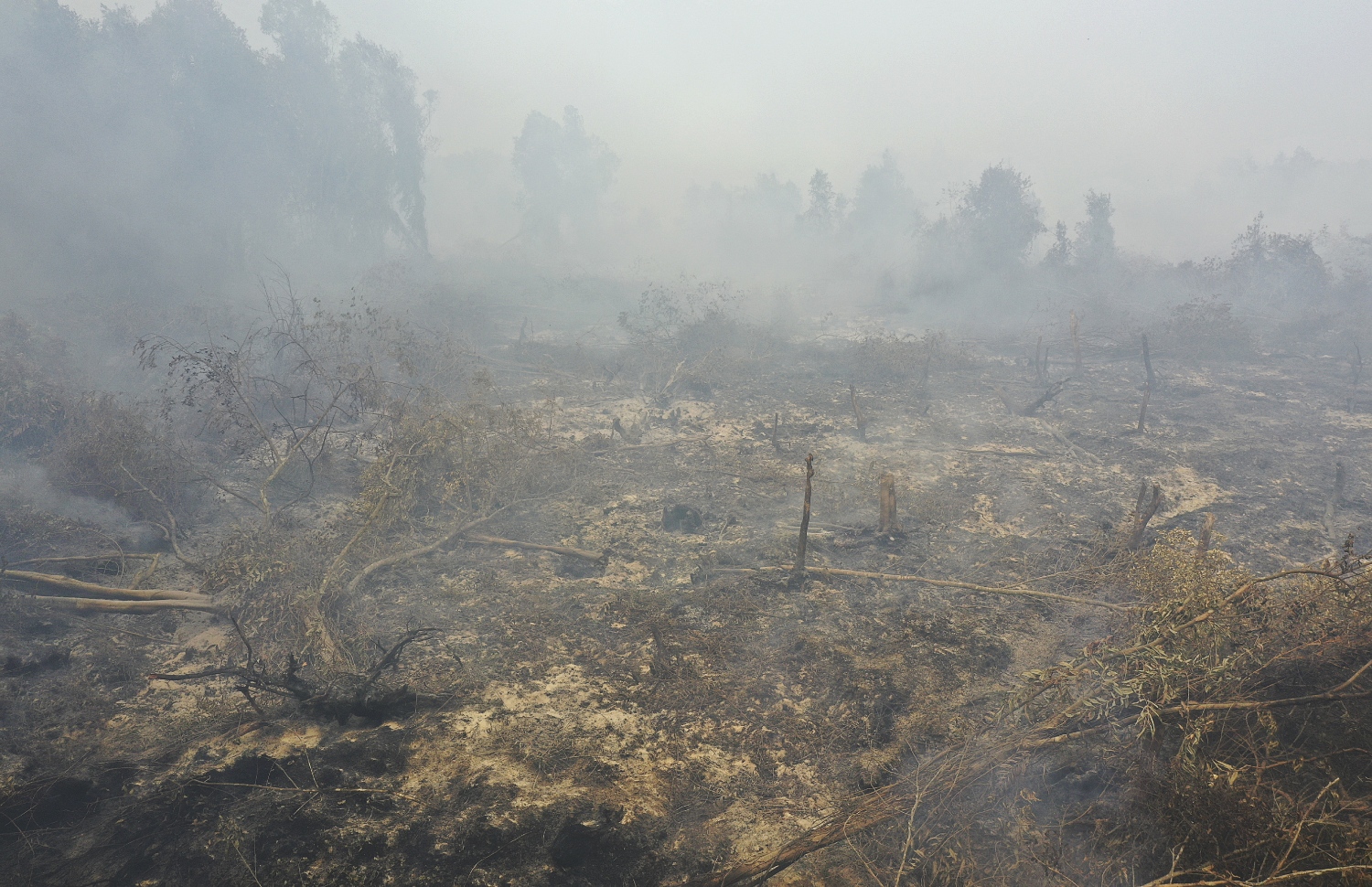
The particles travelling with those winds originate from numerous sources including industrial emissions, coal-fired power plants, vehicle exhaust, agricultural burning and construction activity.
Studies indicate that approximately 75 to 80 percent of the pollutants affecting air quality across the region originate from human activities in South and Southeast Asia.
The Maldives therefore finds itself in a contradictory position.
It contributes relatively little to the regional pollution burden, yet experiences some of its consequences.
The haze hanging over Male’ is often not produced in Male’.

It can begin hundreds or even thousands of kilometres away.
This reality challenges traditional ideas about environmental responsibility. Air pollution is commonly viewed as a local problem, generated by local traffic, local factories or local development. But the haze over the Maldives demonstrates how environmental harm increasingly ignores political boundaries and physical borders.
The atmosphere does not recognize passports.
Pollution follows the wind.
The Invisible Threat
Unlike floods or storms, air pollution is easy to underestimate.
It arrives quietly.
There are no emergency sirens. No dramatic evacuations. No immediate destruction visible to the naked eye.
Yet public-health experts regard air pollution as one of the world's deadliest environmental hazards.
That concern is reflected in HPA advisories issued during recent haze episodes.
Authorities urged residents to reduce strenuous outdoor activity and follow safety guidance as air quality deteriorated.
Concern especially surrounds vulnerable groups, including people with respiratory illnesses, cardiovascular conditions, the elderly and children.
Poor air quality can exacerbate asthma, increase respiratory distress and place additional stress on the cardiovascular system. These impacts become more pronounced during prolonged exposure.
HPA statistics show a yearly increase in reports of respiratory illnesses during periods of poor air quality over the last five years.
Those figures suggest that haze is not simply a temporary inconvenience.
It is becoming a recurring public health issue.
The impacts are often unequal.
An office worker may spend most of the day indoors. A fisherman, construction worker, delivery driver or police officer may have little choice but to remain outside.
For them, exposure becomes part of the job.
Parents worry about children playing outdoors. People with asthma carry inhalers more carefully. Outdoor sports become riskier. Daily life subtly changes.
The costs are difficult to measure, but they accumulate.
Life Under a Grey Sky
Maldives has built its identity around nature.
Tourism advertisements portray crystal clear waters, cloudless skies and limitless visibility. The country's economic success is deeply tied to this image.
Visitors do not travel thousands of miles to experience smog.
Yet as haze episodes become more prominent, they introduce an unsettling inconsistency.
Maldives remains one of the world's most desired tropical destinations, but even paradise cannot isolate itself from regional environmental degradation.
A hazy skyline may not deter a tourist booking a luxury resort. However, recurring pollution events challenge assumptions that remote island destinations are automatically protected from broader ecological crises.
Environmental vulnerability has always shaped the Maldivian experience.
Historically, that vulnerability was expressed through rising seas, coastal erosion and coral bleaching.
Now it is appearing in the air.
The shift is important because it demonstrates how environmental risks are becoming increasingly interconnected.
Climate, pollution, health and economics are no longer separate conversations.
They are parts of the same story.
Climate Change's Overlooked Companion
Discussions about Maldives almost inevitably focus on climate change.
The country has become a global symbol of the battle against rising sea levels.
Its presidents have addressed international forums warning that entire communities could be threatened by warming oceans.
Those warnings remain valid.
But climate change is not the only environmental challenge crossing borders.
Air pollution offers a parallel example of what happens when one country's actions affect another country's future.
Researchers studying seasonal haze over the northern Indian Ocean have found that these pollution plumes influence not only air quality but also broader atmospheric processes, including regional warming and rainfall patterns.
This is where the haze becomes more than a health issue.
It becomes a geopolitical one.
The same pollutants that degrade air quality can also influence climate systems.
The same emissions that harm lungs can affect weather patterns.
The same activities driving economic growth in one region can create environmental costs elsewhere.
For Maldives, this means confronting another consequence of a global system over which it has limited control.
The nation is not only receiving rising seas from abroad. It is receiving polluted air.
The South Asian Connection
The Maldives exists downstream of one of the world's most densely populated and industrially active regions.
South Asia has experienced extraordinary economic growth over recent decades. Millions have escaped poverty. Cities have expanded. Industries have flourished.
But that growth has come with environmental consequences.
Many South Asian cities routinely rank among the world's most polluted urban areas. Industrial emissions, coal combustion, vehicle exhaust and agricultural burning continue to contribute significantly to regional air quality challenges.
The haze reaching Maldives is part of this larger picture.
The Edition reported that polluted air reaching the Maldives contains dust and factory emissions, alongside pollution generated by agricultural burning, coal-fired electricity generation and major construction activity.
What happens on farms, highways and industrial zones across the subcontinent does not remain there.
Eventually, some of it arrives over the Indian Ocean.
This creates a policy challenge that no country can solve independently.
Maldives can improve local environmental management. It can strengthen public health responses. It can monitor air quality more effectively.
What it cannot do is stop pollution before it enters the atmosphere elsewhere.
That requires regional cooperation.
Not all pollution comes from abroad.
While transboundary pollution is central to haze, local factors cannot be ignored.
The Edition reported that smoke from a fire at a waste collection site in Hulhumale’ contributed to air quality concerns during a recent period of elevated pollution.

The incident illustrates how imported pollution and domestic environmental problems can interact.
When regional haze arrives alongside local emissions, overall air quality deteriorates further.
For policymakers, this presents both a challenge and an opportunity.
The Maldives cannot control seasonal wind patterns.
However, it can reduce local pollution sources that make haze episodes worse.
Improved waste management, tighter environmental enforcement and better urban planning can help reduce additional burdens on already-stressed air quality.
Such measures will not eliminate imported pollution.
But they can make communities more resilient when it arrives.
A Glimpse of the Future
The growing visibility of haze raises uncomfortable questions.
Will these episodes become more frequent?
Will they become more intense?
Can public health systems adapt?
The answers remain uncertain.
What is clear is that environmental threats are becoming increasingly transnational.
The old assumption that geography provides protection is eroding.
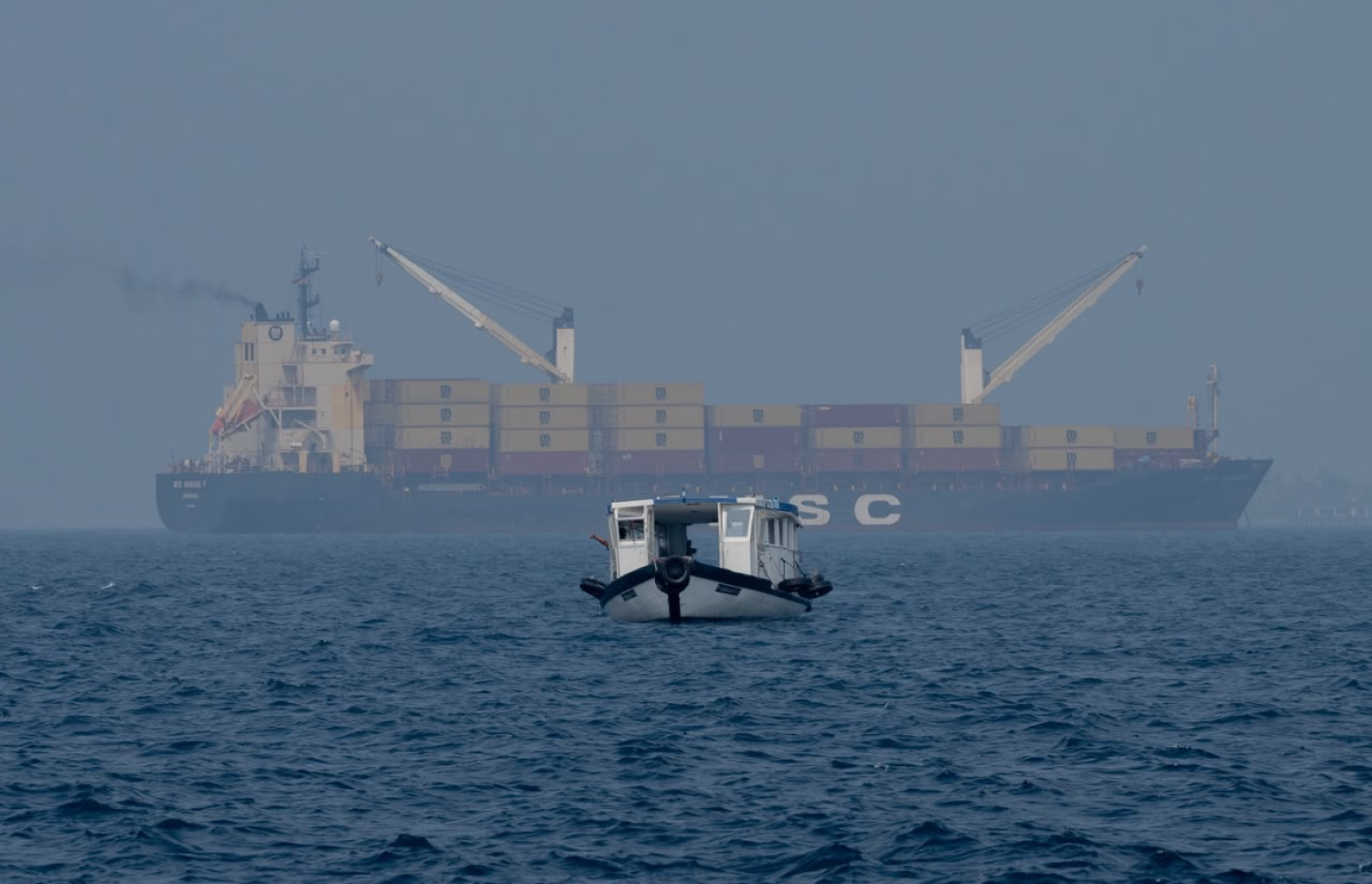
The ocean surrounding the Maldives may be vast, but it is no longer a reliable barrier against environmental harm generated elsewhere.
The haze demonstrates this with remarkable clarity.
A person standing on a beach in Male’ can look toward a horizon obscured by emissions produced in another country, carried across the sea by seasonal winds and concentrated by atmospheric conditions beyond anyone's individual control.
That is environmental globalization in its most visible form.
The Lesson in the Haze
For years, the Maldives has warned the world that environmental crises do not respect national borders.
Its arguments focused largely on climate change, but the haze reinforces the same message from a different direction.
What happens elsewhere matters here.
The polluted air drifting over Maldivian islands is not merely a weather event. It is evidence of a larger truth about the modern world.
Ecological systems are interconnected.
Economic growth in one region can have health consequences in another.
Pollution generated on the mainland can affect communities far out at sea.
And countries that contribute little to a problem can still bear significant costs.
Maldives has often been portrayed as a victim of distant forces, whether rising carbon emissions or warming oceans.
The haze reveals yet another manifestation of that reality.
A tropical paradise famed for its clear skies is finding those skies increasingly obscured by someone else's smoke.
And in that grey horizon lies a warning not just for the Maldives, but for the world.
The air above us is shared.
What enters it anywhere can ultimately arrive everywhere.