
Information had historically been treated as a privilege, held by a few and shared at their discretion. This shifted with the introduction of the Right to Information Act.
The Maldives saw the Right to Information Act come into effect on July 12, 2014.
This alone, however, was not enough. People embrace a right only when they know it well and recognize it as something they deserve and are entitled to. Information-seeking had to be seen as a right, and not be mistaken for overstepping the boundaries of a citizen’s role.
Today, the public’s perception of right to information has seen a radical shift. And this is owed in no small part to the work of outgoing Information Commissioner Ahmed Ahid Rasheed, and the team that worked behind him.
Ahid’s five-year term as Information Commissioner came to an end on September 5, but his commitment to RTI advocacy began long before his appointment and extends far beyond.
As the International Day for Universal Access to Information is marked on September 28, The Edition had a conversation with Ahid about the Maldives’ RTI journey; where it was, where it is, and where it should ideally go.
A watchful eye as RTI first took shape
Ahid spent nearly a decade at Transparency Maldives (TM), working with a focus on good governance, anti-corruption, and right to information.
Ahid shared that he had an interest in RTI even at the stage when the law was being initially drafted. Once it came into effect in mid-2014, he worked with TM to monitor how the law was being applied, areas for improvement and public awareness.
“The law was robust. Of course, there may be small factors that need to be gradually changed to fit in with the Maldives’ context, but overall it was a strong piece of legislation,” Ahid said.
“However, when it was being implemented, several primary features of the law were being ignored. While I was at TM, I continuously raised this issue with the ICO.”
Ahid recalled that the feedback was not always well received by the newly established Information Commissioner’s Office (ICO), but his team persisted.
Two key concerns were raised at the time.
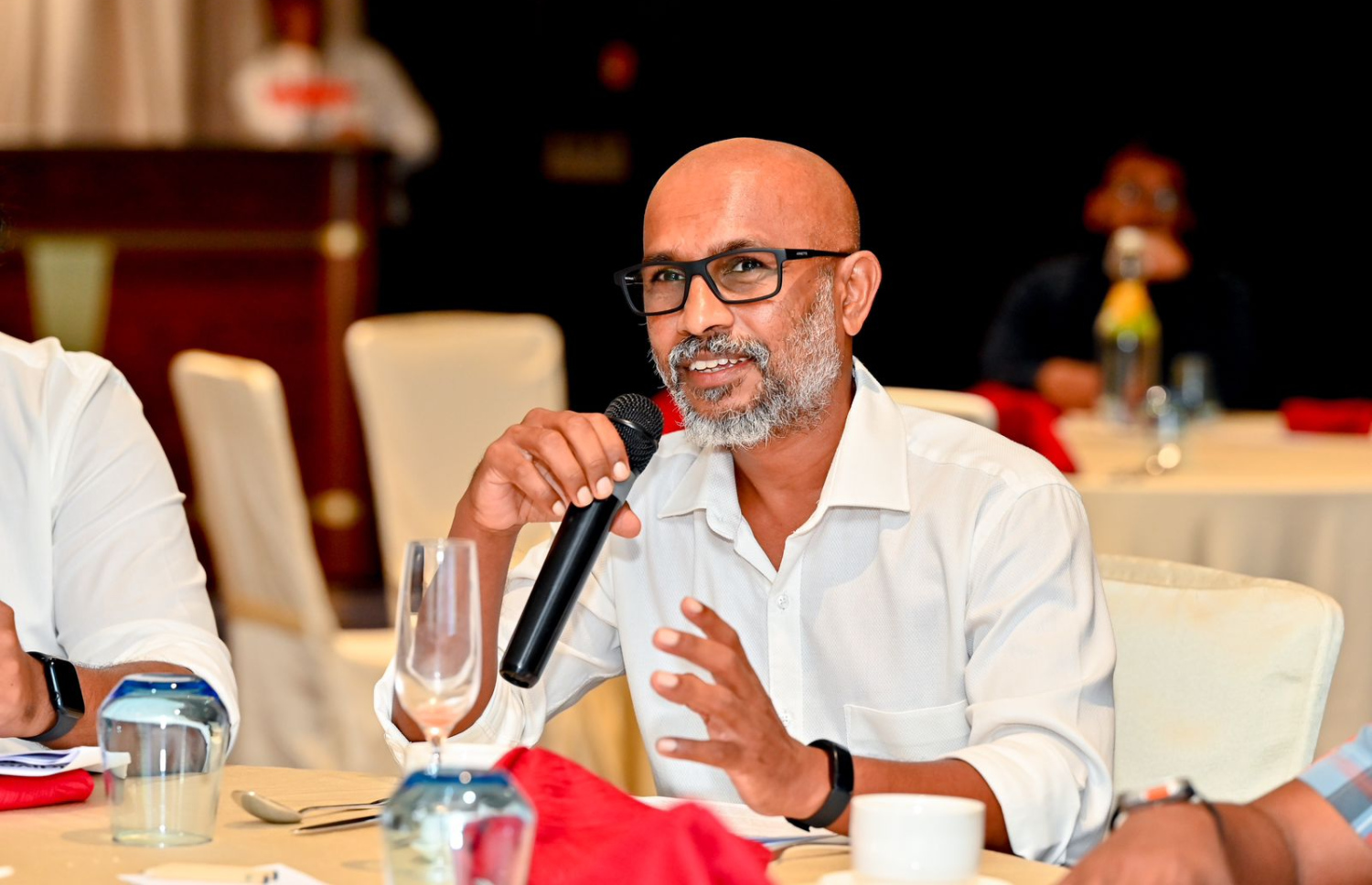
The first is, the RTI Act clearly states that a person requesting information is only required to provide minimal information: who they are, and how they would like to receive the response – either a physical mailing address or an email address, and a contact number.
“However, at the time, the ICO required ID card numbers, ID card copies and a fingerprint. So we were telling them that this is excessive, that this is not required by law. We asked them to explain the reasons behind asking for these details, and their response initially was that it was for statistical purposes, to which we argued that they cannot act outside the law even to collect data as such,” Ahid explained.
“However, they later conceded that it should not be done and made the provision of these details optional. We were not entirely happy with that either.”
The second issue raised was that the cases were being tackled in a very unilateral, administrative manner, without the public hearings stipulated in the Act. Due to this, the rationale behind rulings were not publicly available.
Just a couple of months before the end of the first Commissioner’s term, public hearings were introduced, a small step in the right direction.
As the term ended in 2019, Ahid decided to apply for the Commissioner’s post.
“I decided to apply, even though I had little expectation of being selected. I didn’t want them to say later that they had just chosen from the pool of applicants. Ultimately, I was amongst the three shortlisted candidates, but Fiyaz was selected.”
Veteran journalist Hussain Fiyaz Moosa was appointed as the country’s second Information Commissioner. He, however, later resigned in March, 2021.
“Fiyaz came with a very progressive approach, especially with his background in journalism. He promptly acted on improving several issues within the ICO. He immediately initiated open hearings, and amended the RTI request form as well,” Ahid said.
However, just months after he took office, the Covid-19 pandemic and its disruptive effects hit. This led to a decline in RTI requests, as well as challenges in holding hearings. Addressing this, Fiyaz moved the hearings online and began work on developing an online portal for RTI requests.
With Fiyaz resigning, Ahid recognized the risk that the positive trajectory on which RTI efforts were going could potentially be derailed. Shaping the system correctly in the early days mattered for its long-term success. To achieve this, he decided to apply for the post of Commissioner again, and succeeded this time.
Taking up the mantle
At the time Ahid assumed the role of Commissioner on September 5, 2021, online hearings had contributed to raising public awareness and building trust in the RTI process. The number of RTI requests had started to increase, and the six-month gap between Fiyaz’s resignation and Ahid’s appointment resulted in a considerable inherited backlog of cases. Ahid’s first priority in office was clearing this backlog, which was achieved in the three months left in the year.
By 2022, the online portal, Mahoali, was launched. Online hearings were continued, and physical hearings were livestreamed and available for the public to watch later as well. Fiyaz had streamed the hearings on Facebook, and, to expand the audience, Ahid moved the streaming to the more accessible platform, YouTube.
Public response to the changes were largely positive, with the feedback being that online applications via a portal, as opposed to physically filling out forms, had made the process less intimidating, more convenient and widely accessible. Media coverage of ICO’s work also significantly picked up, further strengthening public awareness.
These shifts are not simply anecdotal; they are reflected in the numbers.
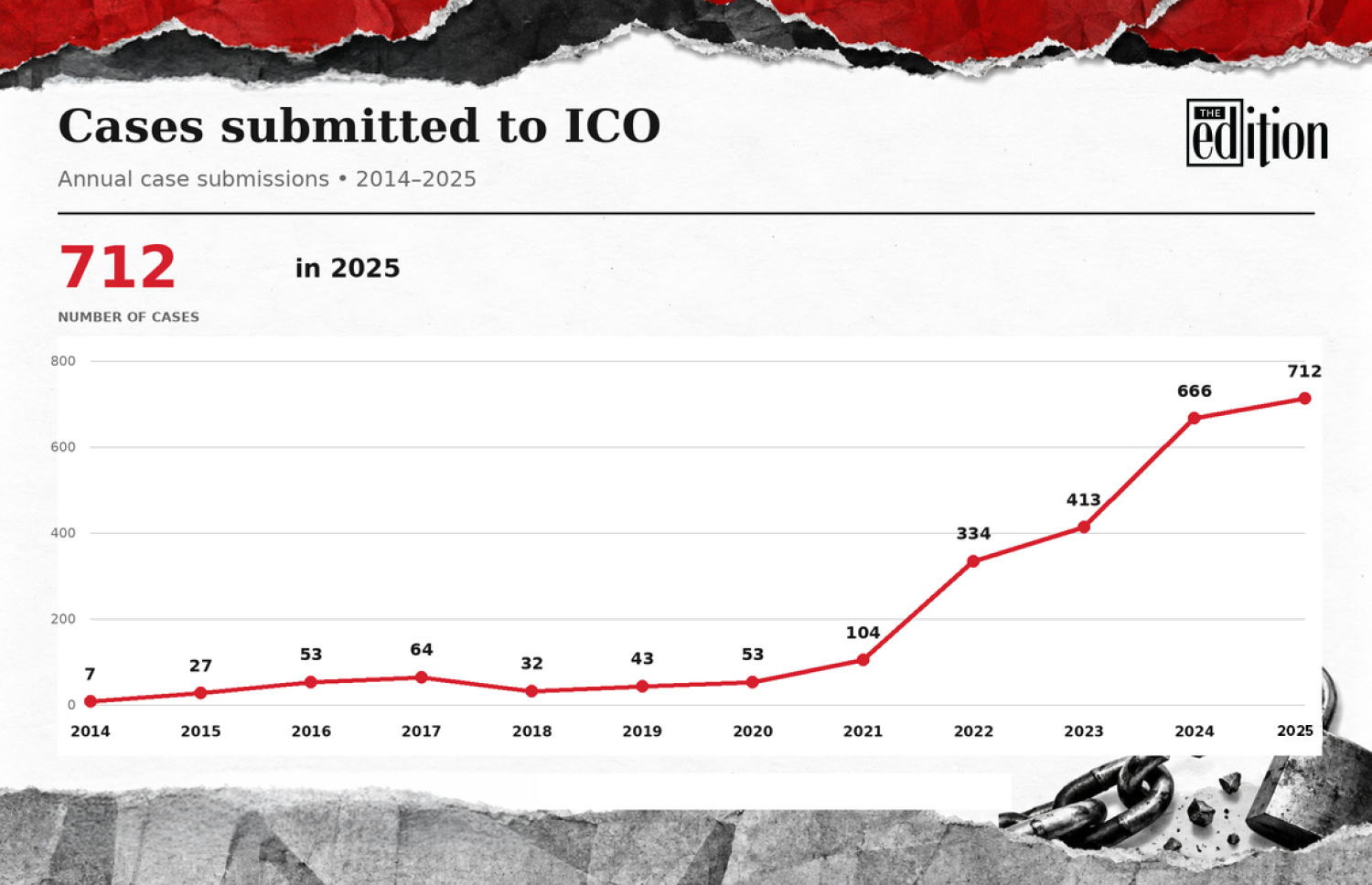
Before Ahid’s term, the ICO completed 41 cases per year on average. This number jumped to 376, nearly a tenfold increase, during his term. RTI requests to public authorities also increased from 1,450 before Ahid’s term to 3,426 during. Over 10,000 requests were submitted through the Mahoali portal between 2021 and 2026.
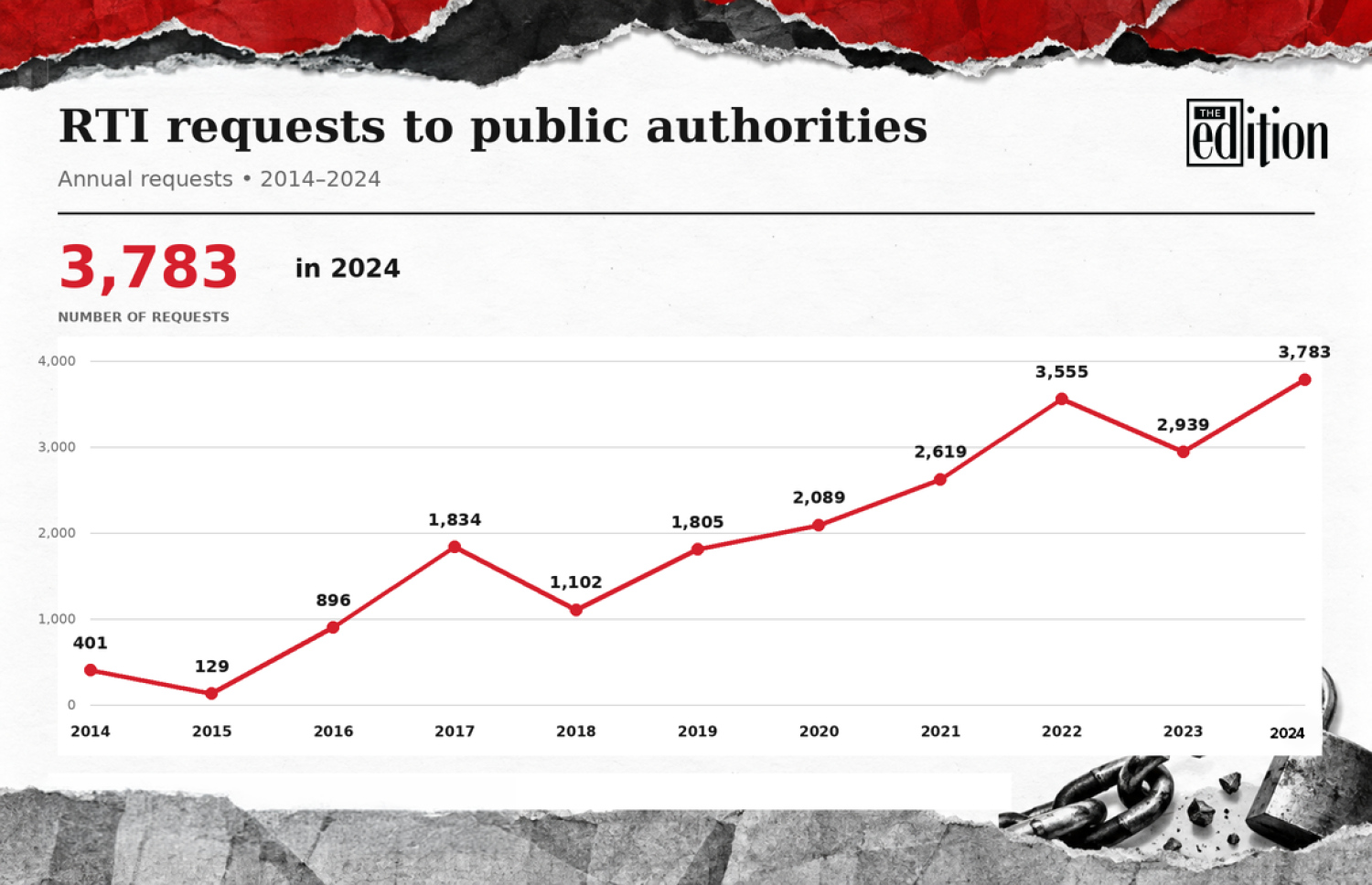
To appreciate the strength of growth, compare these numbers: 27 cases were submitted to the ICO in 2015. This rose over the years, reaching 712 by 2025. RTI requests to public authorities were recorded at 401 between RTI Act enforcement in July, 2014 until the end of the year, which dropped markedly to 129 in 2015. It picked up from this point, showing a steady increase, and in 2024, 3,783 requests were recorded.
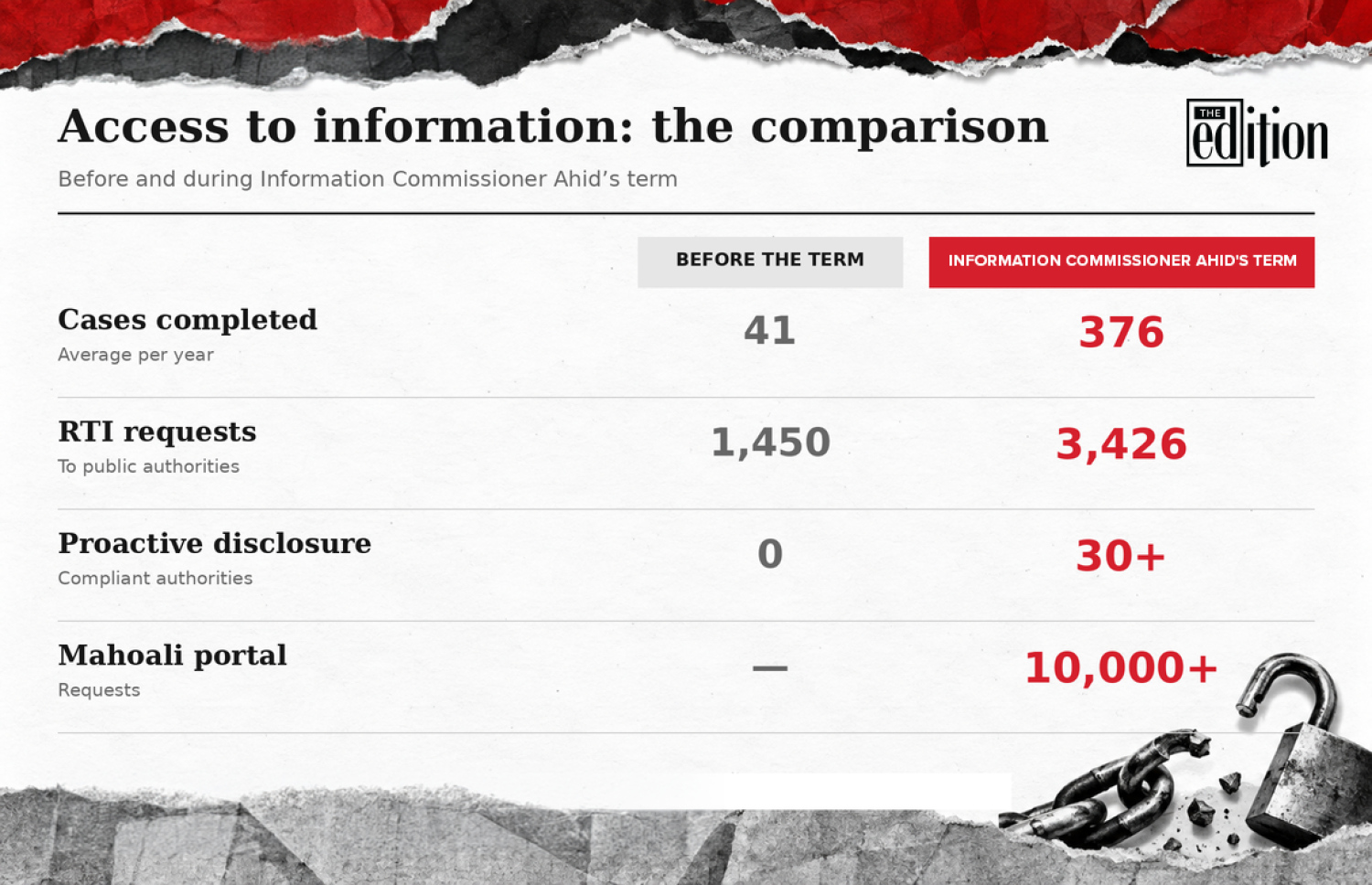
These numbers reflect not only strengthening of the ICO’s processes but also growing public confidence in RTI as a right.
The struggle to change the status quo
This rise in RTI requests was met with resistance from institutions. The ICO received complaints that the public were ‘abusing’ the RTI process, and that they were ‘seeking too much information, too frequently’. Increased engagement was viewed as misuse and governments considered RTI as no more than an administrative inconvenience.
“My response to this was, yes, exactly! RTI requests should be submitted whenever a person wants to. The public is just asking for something that belongs to them. As an example, I pointed out how it was a complicated process before to withdraw money from banks through using cheques. This is now so easy, with mobile apps and ATMs and whatnot. No one questions this ease of access. It is universally accepted that the money belongs to me, and I should be able to easily access it. The same principle applies here. The information institutions hold is not inherently theirs; they are just guardians. The information belongs to the public, and they must have easy access to it,” Ahid said.
To address this more practically, the ICO held regular training sessions with Information Officers. Through these discussions, they realized that the issue went much deeper. In several instances, regardless of the Information Officer’s outlook, seniors at institutions viewed RTI as a burden and displayed reluctance to comply.
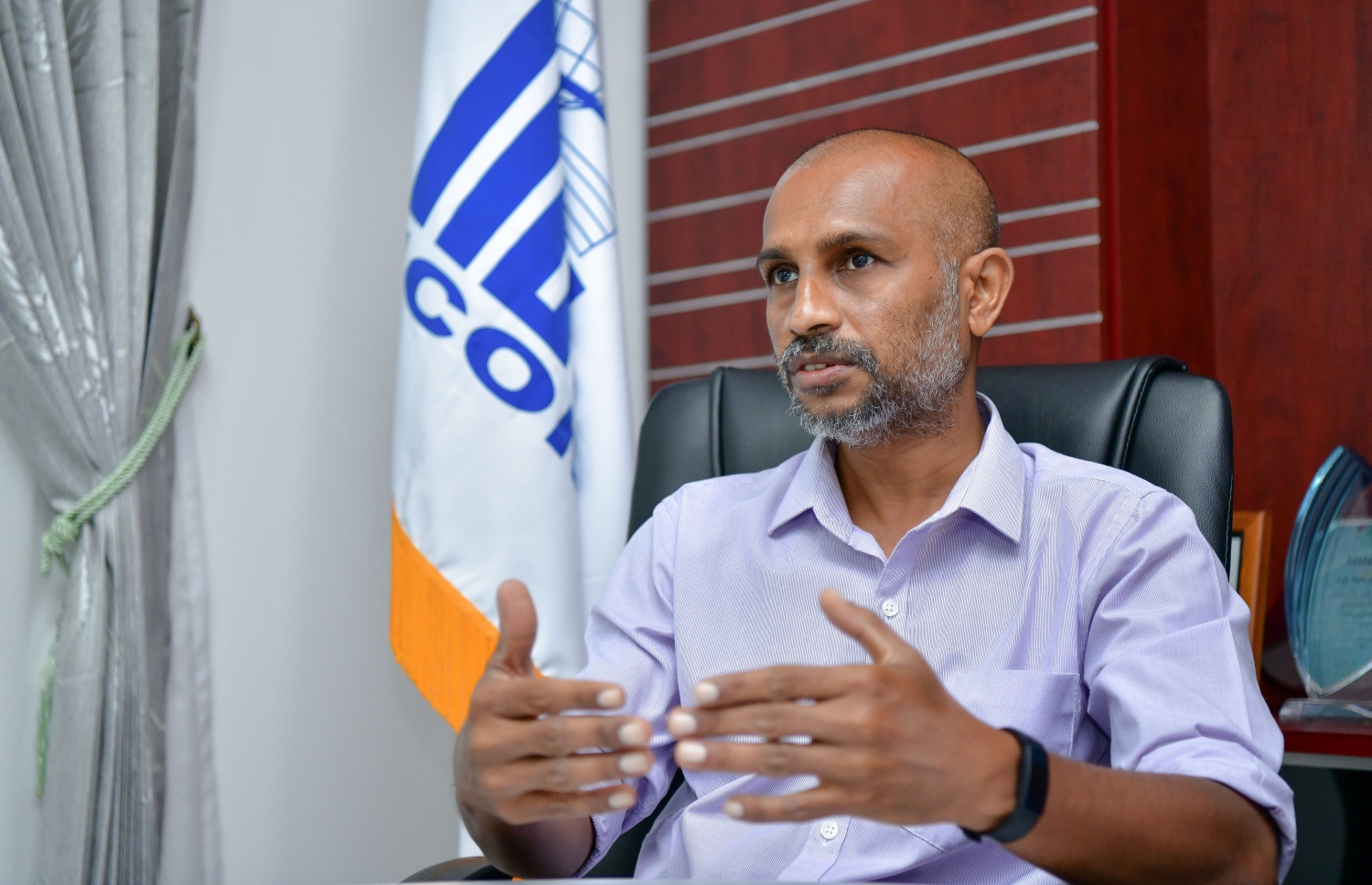
The ICO maintained consistent enforcement of the law, offering guidance and support to institutions to help them comply, and imposing penalties where compliance failed. Over time, this steady application of the law led to gradual improvements across many institutions.
“A government’s willingness to respect the right to information reflects their commitment to transparency. Complying with RTI shows that the government is ready to be accountable.”
Inside the real work and its challenges
The work of the ICO is reliant on cooperation from both parties involved in an RTI claim. Real-world disruptions – leaves, absences, other commitments from the two parties – often delayed the process, making it highly challenging for the ICO to close cases in the 30-day and optional 15-day extension provided in the law.
Retention of competent, qualified staff was also difficult, as the ICO has the lowest pay structure amongst independent institutions and the public sector. For years, the ICO had to operate out of extremely dilapidated offices, with mould becoming a serious health-risk which led to the commissioner having to shut down the physical office and transferring work online. Recently, the State has arranged a more conducive space for the ICO to work out of.

“The ICO did not face direct political pressure. However, independence means more than freedom from interference in individual decisions. Administrative and financial independence from the executive is also imperative to ensuring true independence of an oversight body,” Aahid said.
Putting Maldives on the map
Under Ahid, the ICO also conducted a comprehensive national RTI assessment with Transparency Maldives and Centre for Law and Democracy, carving Maldives’ place as one of a small number of countries where an evidence-based assessment of compliance across public authorities were completed.
At the time when Ahid took office as Information Commissioner, the Maldives’ ICO was isolated in that it had not joined any related international networks. Ahid took up the initiative to put Maldives’ on the map, with the ICO joining the International Conference of Information Commissioners (ICIC) and the Asian Access to Information Alliance (AAIA) by the end of 2022.
Through concentrated efforts to uphold quality and integrity in the ICO’s work, Maldives became recognized as a working model for RTI implementation across small island developing states, Ahid shared with pride.
The road ahead, for ICO and for Ahid
Ahid expressed confidence in the system and the team he has left behind. However, these alone cannot sustain the system, he said, emphasizing that the ICO must be granted full independence, resources and the political backing to function at its best.
The political will to support a robust RTI system will not come from governments alone, but rather through sustained pressure from an informed public that are aware of its rights and believes it is enforceable, Ahid said.
Increasing RTI literacy must be treated as a priority, with programs introduced across schools, communities and the media.
He recalled how this is the first time, since the RTI Act was enacted in 2014, that any institutions within the executive has complied with proactive disclosure, despite it being an annual commitment prescribed in the law.
“Over 30 institutions complied with proactive disclosure this year, though there are still many that haven’t. From 0 to 30 is a significant step in the right direction, and the focus now must be to build upon this.”
This compliance, however, was not organic. It was the result of sustained engagement, pressure and monitoring. It is important now that this is carried forward, and not allowed to slide back.
Ahid takes pride in the fact that the ICO earned a high level of public trust and confidence through its concerted efforts over his time in office.
On a personal front, Ahid suddenly has time to himself after five years of round-the-clock commitment to safeguarding a country’s key democratic right. Asked where he is going from here, he did not hesitate.
“My passion for RTI does not stop here. I believe there are ways I can continue to contribute, though I’m not yet sure what form that will take. Perhaps I can help institutions with building RTI systems, or offer consultations.”
“What I can guarantee is that I will continue to closely monitor the country’s RTI trajectory,” he added.


