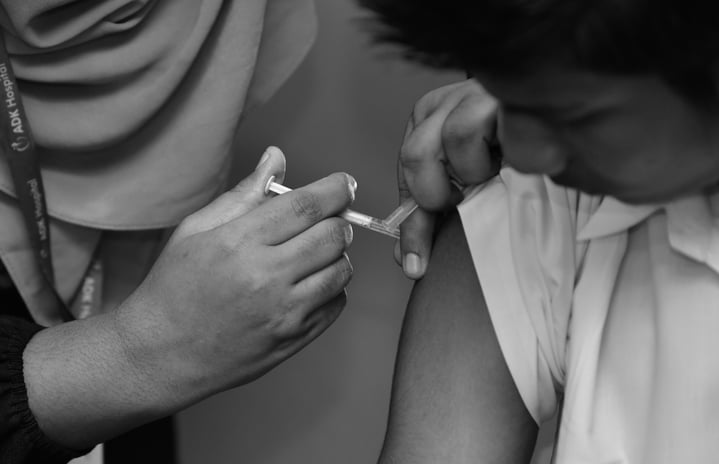
In 2017, the Maldives attained a historic milestone in public health when the World Health Organization (WHO) officially certified the nation as having eliminated endemic measles, following years of zero indigenous transmission. However, the highly contagious airborne pathogen has returned, exploiting structural vulnerabilities in population immunity. The present 2026 resurgence serves as a reminder that post-elimination status is not permanent in an interconnected world where global immunity gaps persist.
An overlook to the current local outbreak
The Health Protection Agency (HPA) of the Maldives confirmed that as of late August 2026, the country has recorded a cumulative total of 243 confirmed measles cases during the ongoing outbreak. The transmission spread rapidly throughout the months. After initial clusters emerged in May 2026, case numbers rose from 20 in mid-June to 121 by early July, eventually rising past 226 in mid-August and reaching 243 by the fourth week of August.
The main epicenter of this transmission remains concentrated within the Greater Malé Area, affecting both Maldivian citizens and foreign residents. Tragically, health authorities reported the death of a 24-year-old patient who suffered severe complications from the virus
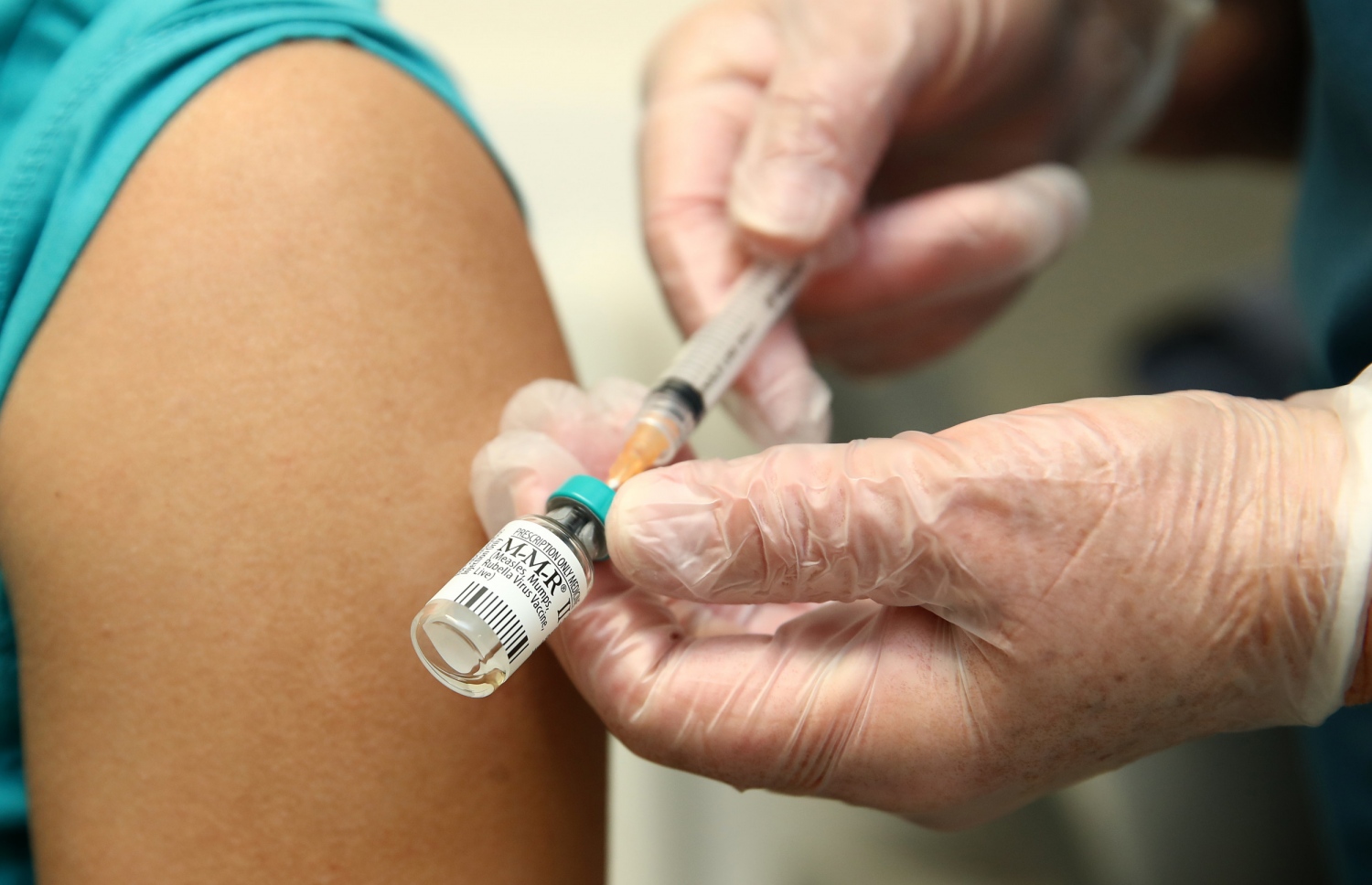
To understand the severity of the 2026 outbreak, it is important to observe the historical baseline of the past five years:
- 2021–2022: No indigenous cases recorded nationwide following sustained high routine childhood coverage and low travel velocity during global pandemic restrictions.
- 2023: Single-digit isolated cases detected. Primarily through international travelers, which were successfully contained with zero community transmission.
- 2024–2025: Annual case totals remained near zero, maintaining the WHO elimination verification standard through active epidemiological surveillance.
- 2026 (Present): A rapid escalation to 243 cases, representing the largest outbreak recorded in the Maldives since long before its 2017 elimination declaration.
Global and regions experiencing exponential growth
The current situation in the Maldives reflects a wider global resurgence of measles driven by post-pandemic disruptions to routine immunization. Global health authorities, including WHO and UNICEF, have flagged several regions experiencing exponential surges:
- United States: The U.S. Centers for Disease Control and Prevention (CDC) logged sharp quarter-over-quarter increases in imported and community-acquired cases across multiple states, primarily among un-vaccinated travelers returning from endemic regions.
- South-East Asia: Within South Asia, Bangladesh and India have recorded the highest raw case numbers, while the Maldives currently ranks among the highest in case rate acceleration compared to population size. Driven by major domestic transmission chains in Bangladesh experiencing a severe national outbreak across 58 out of 64 districts. WHO documented over 19,000 suspected cases and thousands of laboratory-confirmed cases in early 2026 alone, with significant fatality rates primarily among young children in dense urban settlements.
- European Region: Reporting diversified yearly increases in total infections across multiple eastern and western European nations where routine childhood uptake dipped below the 95 percent herd-immunity threshold.
- Eastern Mediterranean & African Regions: Continuing to report high case loads and severe health outcomes due to fragile health infrastructure and humanitarian disruptions.
Impact of Vaccine Hesitancy
Epidemiological analysis of the Maldivian outbreak highlights a distinct demographic pattern: out of the initial 121 confirmed cases, only four were young children. The vast majority of infections occurred among adults aged 15 to 35.
- The adult immunity gap: The demographic shift toward individuals aged 15–35 traces back to policy transitions in the early 2000s. During past schedule rollouts, a significant portion of this cohort received only a single dose (MR1) instead of the mandatory two-dose series required for long-term immunity.
- Vaccine hesitancy & misinformation: While primary infant coverage remains relatively strong, vaccine hesitancy and online misinformation have led to delayed booster uptake (MR2) and reluctance among young adults to receive catch-up shots.
- Mechanisms of spread: Single-dose immunity wanes over time. When imported cases enter high-density working and living environments in Malé, this under-immunized adult population creates a secondary chain of transmission. Because children are protected by recent routine immunization schedules, the virus spreads through adult networks instead.
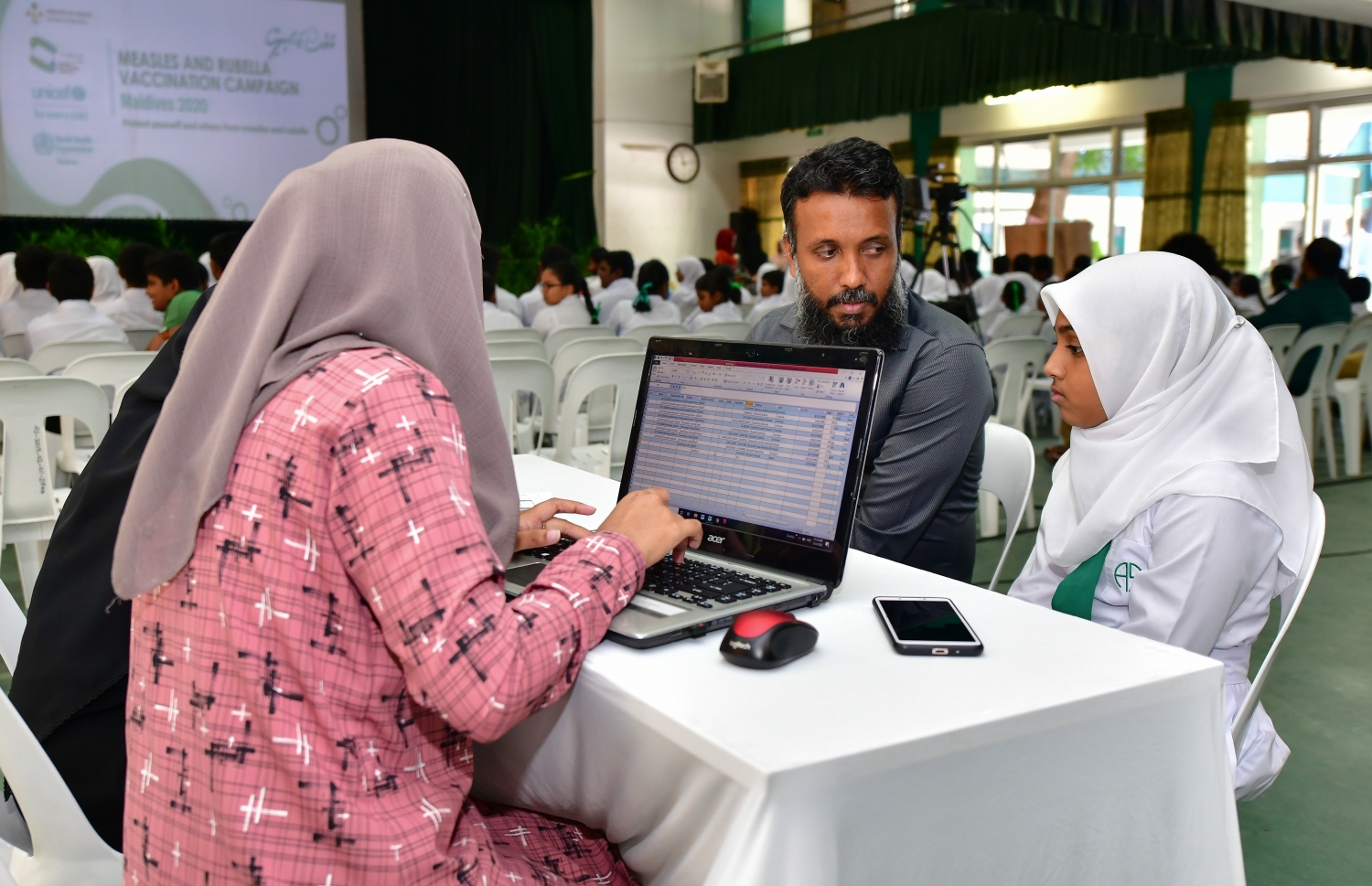
This pattern points to a historical cohort vulnerability. Many young adults in this age bracket missed their second booster dose (MR2) during past routine schedule updates over the last two decades. While outright vaccine hesitancy accounts for a smaller fraction of missed doses, growing digital misinformation and delayed health-seeking behavior have allowed this structural immunity gap to persist. When exposed to imported cases from high-burden countries, this under-immunized adult population created a chain of transmission that bypassed traditional pediatric defense lines.
Containment & response measures
To curb the accelerating spread, the Ministry of Health and the HPA launched a multi-phased public health intervention:
- Mass immunization drives: Health authorities initiated targeted Measles-Rubella (MR) vaccination drives. Supported by 20,000 doses dispatched from India and 28,000 doses provided by UNICEF, eligibility was expanded to include all individuals under 49 years of age. Over 16,000 individuals have been vaccinated under this campaign. Institutional drives were also conducted, such as the Maldives National University vaccinating over 8,000 students and staff.
- Contact tracing and isolation: Extensive contact tracing protocols were activated across healthcare facilities in Malé. Suspected individuals were instructed to isolate until laboratory confirmation, avoid public transportation, and wear masks when seeking medical evaluation.
- Public directives: Health advisories were issued urging any individual uncertainty of their 2-dose immunization status to seek immediate vaccination at designated centers.
The 2026 measles outbreak highlights that elimination does not equal elimination. Public health measures can interrupt local transmission, but the virus persists globally. High-traffic areas and tourist-dependent nations are vulnerable to re-importation by infected travelers. Imported cases can exploit immunity gaps in populations, particularly among under-immunized young adults, leading to rapid spread.
To maintain post-elimination status, health strategies must shift from reactive measures to proactive maintenance by addressing adult immunity gaps through catch-up drives and ensuring two-dose Measles-Rubella (MR) coverage. Comprehensive vaccination is essential until global eradication is achieved.


