
Beyond the turquoise lagoons and white sandy beaches of the Maldives lies a stark demographic and economic reality: foreign migrant workers, primarily from Bangladesh, India, and Nepal, account for roughly one-third of the nation’s total population, with estimates ranging between 145,000 and over 230,000 individuals.
These workers form the backbone of the Maldivian economy, physically building urban mega-reclamation projects, constructing high-rises, and providing operational labor across resorts and islands alike.
Yet, behind the postcard imagery, this vital labor force endures severe physical, systemic, and legal precarity. Trapped in a cycle of regulatory gaps, corporate negligence, and institutional delays, migrant workers live their daily struggles systematically exposed to hazardous living environments and fatal workplace accidents.
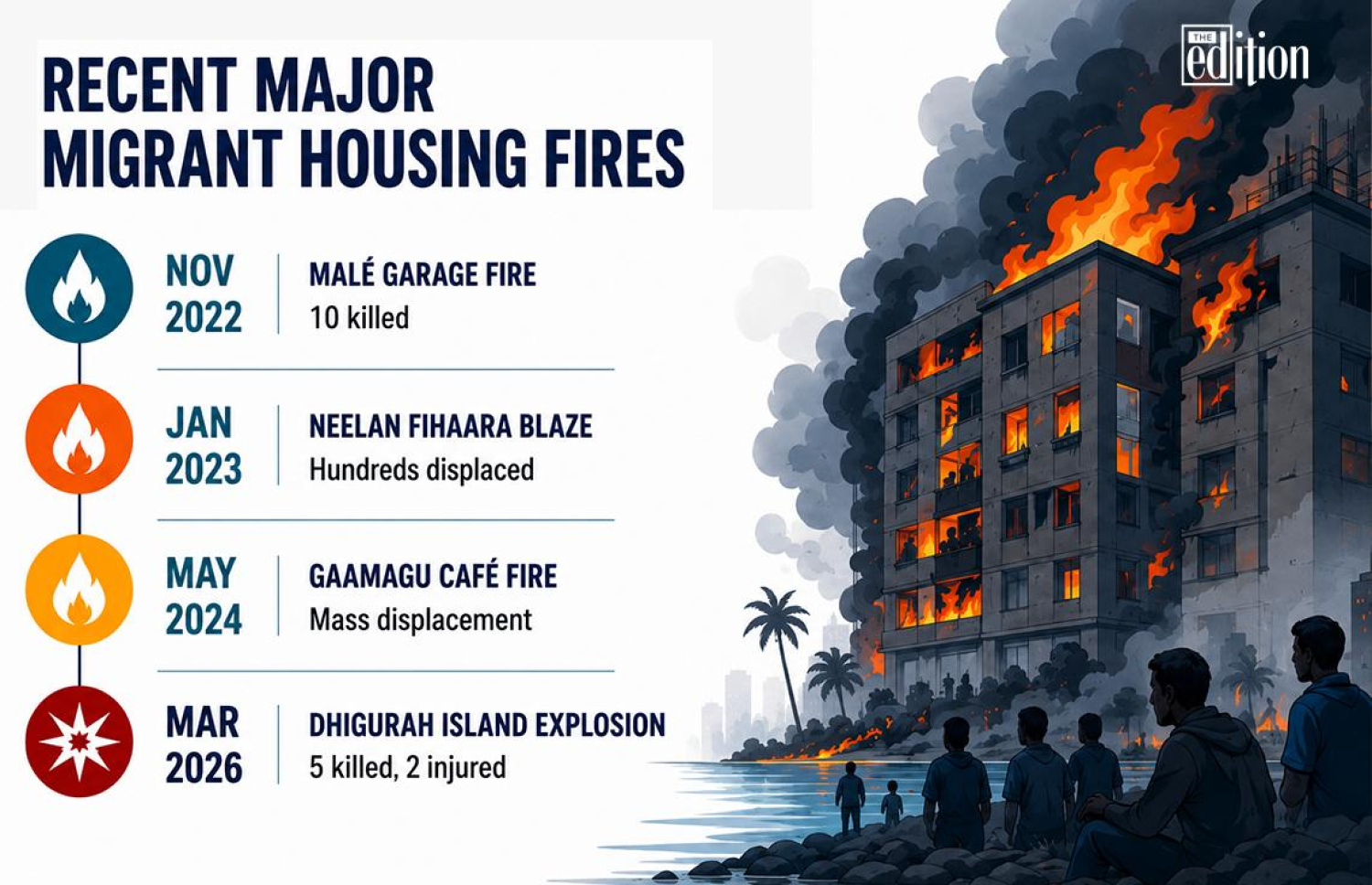
Substandard accommodation and lax safety standards turn routine living and working spaces into lethal hazard zones. On March 12, 2026, a devastating gas cylinder explosion at a guesthouse-turned-dormitory on Alif Dhaal Dhigurah Island cost five Bangladeshi workers their lives and left two others critically injured. The structure housed roughly 34 migrant workers under makeshift conditions. When the fire erupted near the building’s sole kitchen entry point, it sealed off the only escape route, leaving the workers trapped behind corrugated tin walls and concrete until rescuers knocked down an outer wall.
This tragedy aligns with a persistent pattern of residential blazes and workplace fatalities across the nation. Similarly, in November 2022, a horrific blaze in Malé killed 10 expatriates housed in cramped quarters above a garage, while subsequent fires at Neelan Fihaara (2023) and Gaamagu Café (2024) displaced over 200 migrant workers.
Comprehensive assessments conducted by national watchdogs and international organizations highlight the structural nature of this hazard:
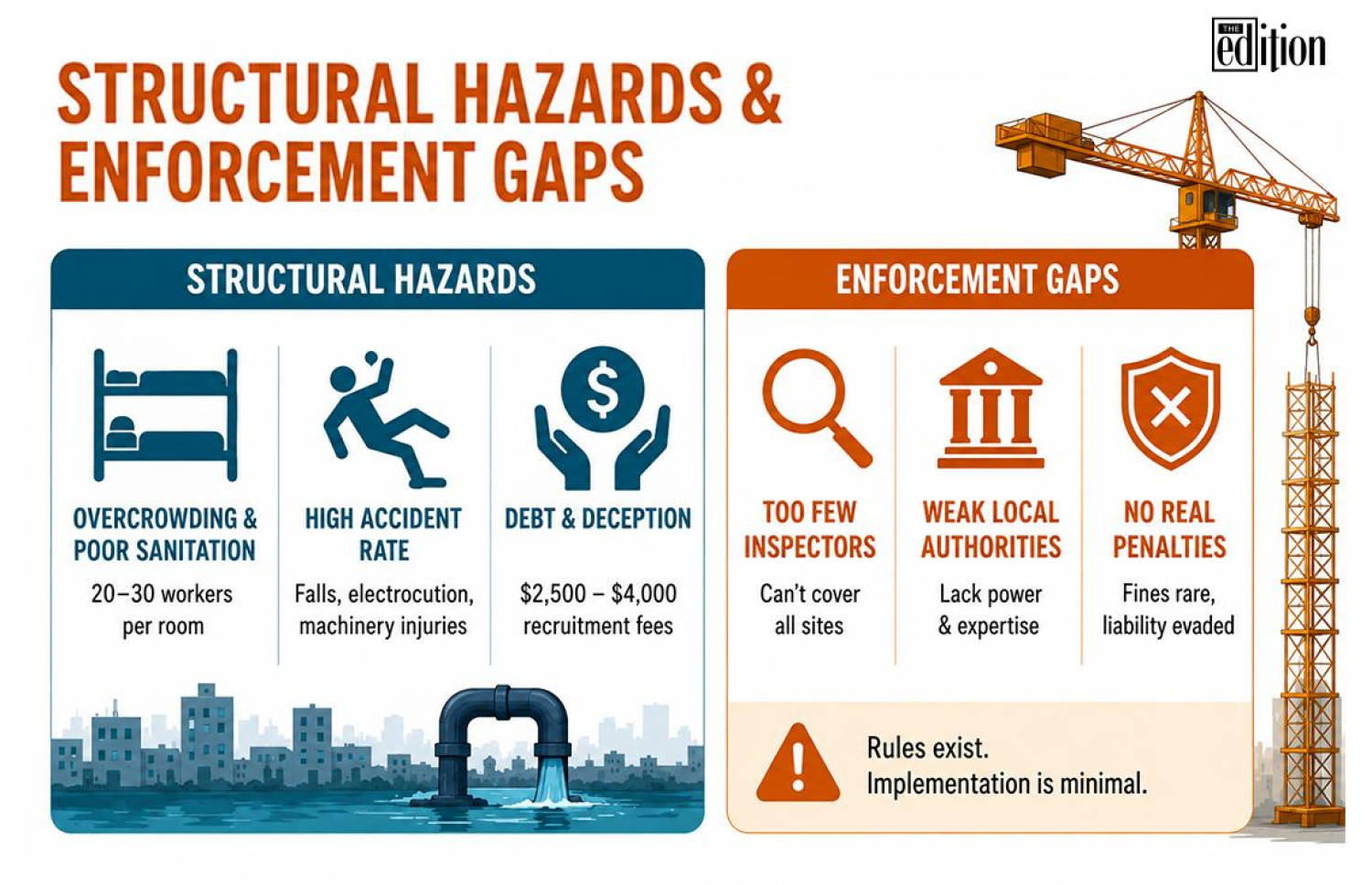
- Overcrowding and sanitation deficits: Surveys by the Human Rights Commission of the Maldives (HRCM) and International Organization for Migration (IOM) reveal that a majority of migrant worker quarters in Greater Malé fail basic habitability standards. Bunk beds are stacked three-tier high, with as many as 20 to 30 workers sharing single room quarters with inadequate ventilation and raw sewage exposure.
- High rate of accidental fatalities: According to national health indicators compiled by the World Bank and local health authorities, injuries account for approximately 6.66 percent of all recorded deaths in the country, with industrial workplace accidents, such as falls from un-scaffolded high-rises, electrocutions, and heavy machinery crushing, representing a disproportionately high percentage among male foreign laborers in the construction sector.
- Debt-bondage and deceptive recruitment: The U.S. Department of State Trafficking in Persons (TIP) Report and Transparency Maldives research indicate that migrant workers routinely pay recruitment fees ranging between USD 2,500 and USD 4,000 USD to land jobs in the Maldives. Trapped in severe debt bondage, workers accept dangerous, unmonitored working conditions without complaint.
Regulatory enforcement, accountability and institutional support
The persistence of these hazardous conditions highlights a severe gap between statutory labor protections and on-the-ground enforcement. Under Maldivian labor legislation, the Labour Relations Authority (LRA) and local island councils hold legal mandates to inspect workplaces and housing accommodation blocks to enforce safety regulations.
However, regulatory enforcement remains deeply compromised:
- Inspectorate capacity constraints: The LRA operates with a critical shortage of field inspectors, making proactive audits across hundreds of dispersed island developments logistically impossible.
- Jurisdictional overlaps: Island councils in outer atolls frequently lack the technical expertise, equipment, and administrative leverage necessary to penalize powerful private developers or construction subcontractors.
- Absence of strict employer penalties: Despite repeated warnings from Civil Society Organizations (CSOs) like Transparency Maldives, corporate entities rarely face criminal prosecutions or prohibitive fines following fatal accidents. Subcontractors frequently dissolve or re-register under new names to evade legal liabilities.
While the Ministry of Economic Development published updated migrant accommodation guidelines requiring minimum floor area per occupant, mandatory fire extinguishers, and clear emergency egress pathways, implementation across local sites remains minimal.
When fatal workplace or housing incidents occur, the immediate aftermath exposes severe systemic barriers for surviving victims and families seeking justice, medical care, and financial recourse. In the immediate aftermath, emergency response efforts depend on diplomatic liaisons, such as the Bangladesh High Commission, to assist with victim identification, coordinate emergency medical care at facilities like Indira Gandhi Memorial Hospital (IGMH), and oversee the repatriation of mortal remains. This is followed by institutional investigations, where bodies like the Human Rights Commission of the Maldives (HRCM) and local police conduct forensic inspections while the Labour Relations Authority (LRA) carries out workplace incident audits.
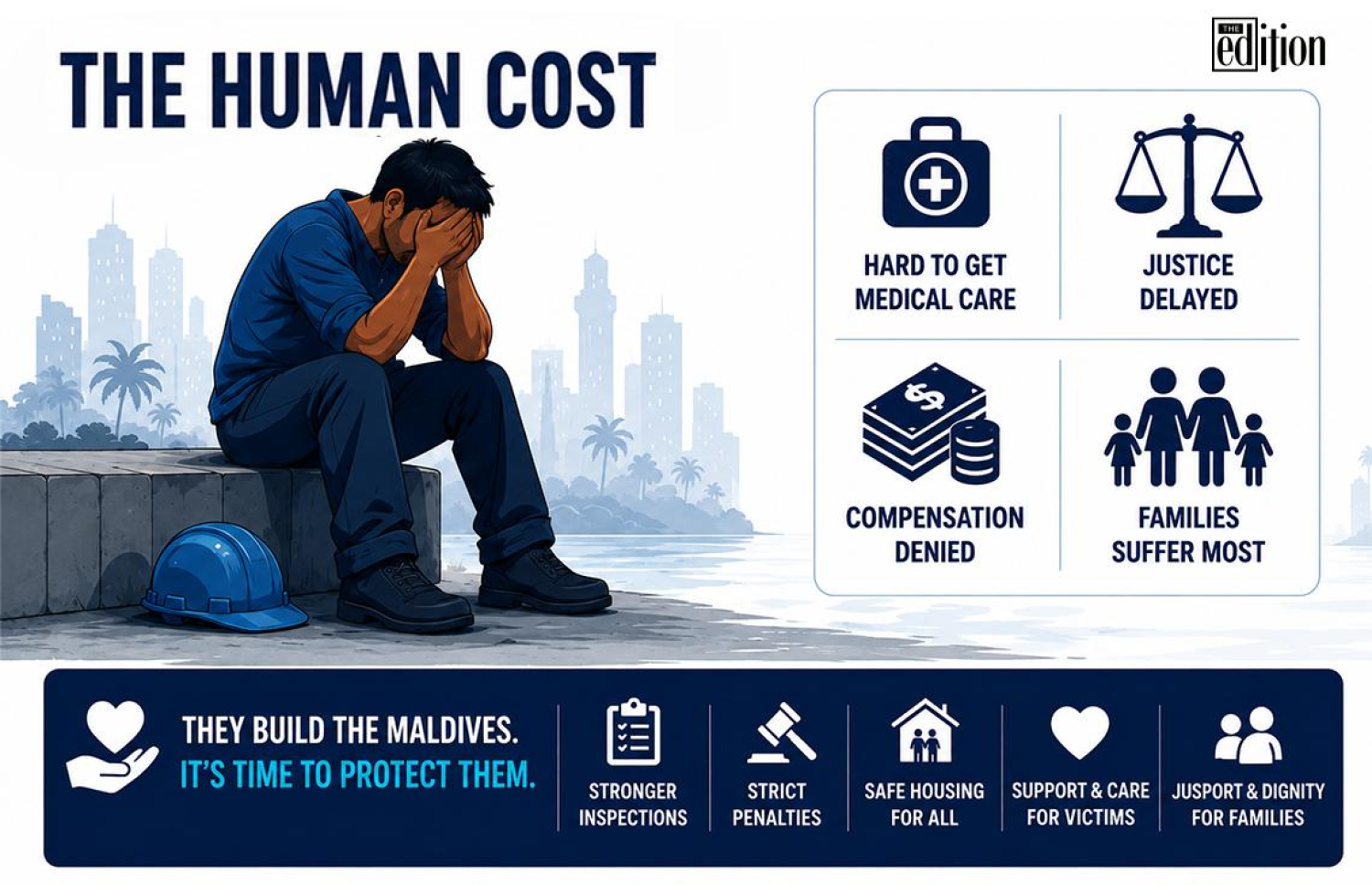
However, this framework routinely encounters significant obstacles to legal compensation and justice. With an estimated 60,000 or more undocumented migrant workers in the country, many victims and witnesses face severe vulnerabilities, including non-existent employer insurance, unpaid compensation, and pervasive fears of retaliatory detention or deportation if they attempt to formally pursue legal recourse.
In the wake of incidents like the Dhigurah explosion, diplomatic missions, such as the Bangladesh High Commission, and national watchdogs like the HRCM mobilize to manage immediate crises. They assist in identifying victims, securing treatment at medical centers like Indira Gandhi Memorial Hospital (IGMH), and facilitating the repatriation of remains.
However, long-term legal restitution remains largely out of reach for victims' families due to structural obstacles:
- Precarity of undocumented status: Human rights watch estimates that over 60,000 migrant workers in the Maldives are undocumented. Fearing immediate arrest or deportation during police investigations, injured workers or surviving witnesses often refrain from testifying or pursuing legal claims.
- Protracted legal battles for compensation: Overseas dependents rarely possess the financial resources or legal representation required to sue negligent construction firms in Malé courts.
- Inadequate mandatory insurance: Although labor rules mandate health insurance coverage, employers frequently purchase minimal policies that exclude comprehensive death benefits, critical injury payouts, or long-term disability cover.
The systemic marginalization of foreign workers underscores a profound economic contradiction within the Maldivian development model. The rapid expansion of the nation's multi-billion-dollar luxury tourism industry and its massive land-reclamation projects (such as RasMalé) rely almost entirely on physical labor that the domestic workforce does not fulfill.
While young Maldivians predominantly seek white-collar civil service roles or urban office jobs, expatriate laborers perform the high-risk, physical work required to keep the island nation running. They dredge sea floors, erect concrete high-rises, handle municipal waste, and operate power generation grids on isolated islands.
This dynamic creates three tier realities on the same small coral islands: an upper tier where international tourists and residents enjoy world-class luxury, a middle tier for locals, and a hidden lower tier where the workers who build and maintain those facilities survive in cramped, hazardous quarters under constant threat of accidental death.
Until regulatory frameworks are strictly enforced, housing safety standards universally audited, and corporate negligence rigorously penalized, the Maldives’ economic expansion will continue to carry an unacceptable human cost. A sustainable national progress cannot be measured by luxury resort openings or reclaiming land from the sea, but by the safety, dignity, and legal protection guaranteed to every worker who makes that progress possible.


