
For generations, the ultimate benchmark of adulthood was simple: building a life on your own terms. But for today’s young Maldivians, that benchmark feels less like a milestone and more like a just out of reach dream.
In the densely packed Male’ and its sprawling, reclaimed sister island Hulhumale’, a generation of twenty- and thirty-somethings is asking a collective, anxious question: When will we ever be able to afford a home of our own?
To understand why a young couple earning decent salaries can still find themselves trapped in perpetual rent cycles or stuck sharing a single bedroom in an overcrowded family apartment, we have to look deep into the numbers behind the Maldivian housing puzzle.
The Math That Doesn't Add Up: Salaries vs. Real Estate
The core of the crisis lies in a widening gap between average earnings and the skyrocketing cost of real estate. The Maldivian economy has grown rapidly, but wage progression has a drastic disconnect from property appreciation.
A young Maldivian professional entering the workforce; whether in civil service, corporate private firms, or the tourism sector typically earns between MVR 10,000 to MVR 20,000 per month. For dual income couples, a combined monthly income might hover around MVR 30,000 to MVR 40,000.
A two bedroom apartment in Male’ or a mid-range complex in Hulhumale’ easily comes at the price tag of between MVR 2.5 million to MVR 4 million, while luxury residential units frequently exceed MVR 5 million to MVR 7 million.
Because buying is out of reach, people are forced to rent. A decent 2 bedroom apartment costs between MVR 15,000 and MVR 22,000 per month, creating a financial chokehold.
When up to 50 to 70 percent of a young couple’s combined income is swallowed by rent alone, it leaves virtually zero room to accumulate the significant savings required to jump onto the property ladder. They are trapped paying someone else's mortgage instead of building their own equity.
This mismatch is not unique to Maldives, but the country’s geography makes it that much harder. Land is scarce, demand is concentrated in the hyper-inflated Greater Male’ region, driving prices far beyond the reach of ordinary families.
Banking Barriers
If saving up millions in cash is impossible, the logical alternative is a housing loan. However, until recently, the financial sector functioned more as a gatekeeper than a gateway, presenting high hurdles that the young working class simply couldn't clear.
Typically, commercial banks require a minimum 20 percent down payment (equity) depending on the type of loan acquired. However, the reality is that for a standard MVR 3 million apartment, a buyer has to have MVR 600,000 upfront.
For a couple managing to save a disciplined MVR 5,000 a month after paying rent and bills, it would take around 10 years just to save the down payment; assuming property prices didn't rise further in the meantime.
On the other hand, commercial mortgage interest rates traditionally range around 20 percent. Compounded over a 20 year repayment term, the monthly bank commitment often exceeded a young persons’ entire monthly take-home pay.
This made it impossible to pass the banks' strict debt-to-income ratio assessments, which mandate that loan repayments cannot consume more than a fixed percentage of your verified monthly salary. The result was a generation locked out of ownership, condemned to pay rent indefinitely.
Turning the Tide: What the Government is Doing
Recognizing that a frustrated, housing-deprived youth population is a ticking social time bomb, successive administrations have attempted to intervene. The current government has launched a series of reforms aimed at breaking the cycle of unaffordable housing.
Hiyaavehi Financing Scheme
The government's latest push to make homeownership more attainable centres on the Hiyaavehi Financing Scheme, a concessionary housing programme designed to lower some of the biggest barriers facing first time buyers and homebuilders.
Delivered through the Bank of Maldives (BML), Housing Development Finance Corporation (HDFC) and Maldives Islamic Bank (MIB), the scheme offers housing and home construction loans at a 5 percent interest rate, with repayment periods of up to 25 years and an 18-month grace period.
Borrowers are required to contribute 20 percent equity, although that contribution can be made either by the homeowner or, in eligible cases, by the government. Unlike many conventional housing loans, the property being built serves as the sole collateral, removing the need to pledge additional assets.
The programme is divided into three categories:
- Atolls: Loans of up to MVR 1 million are available through HDFC to build homes on islands outside urban centres, with no equity contribution required.
- Urban centres: Loans of up to MVR 3 million are available through BML and MIB for home construction in designated urban islands.
- Greater Male’ area: Loans of up to MVR 6 million are available through BML and MIB for home construction in the Greater Male' region, where land and housing costs are highest.
Pension Reforms
The government is also pursuing amendments to the Maldives Pension Act that would allow pension savings to be used as collateral or as equity when purchasing or building a home. If passed, the changes would enable first time buyers to draw on their retirement savings to bridge one of the biggest hurdles to homeownership - raising the initial deposit.
Public-Private Partnerships and Affordable Housing
Rather than relying solely on the state to build homes, the government is increasingly looking to the private sector to help deliver affordable housing. Under its affordable homeownership programme, the government provides land and tax concessions, while private developers finance and construct the projects.

In return, developers must sell the homes at controlled prices and reserve them for first-time buyers, a measure intended to prevent subsidized housing from being absorbed by investors. The aim is to create an affordable housing market that allows families who can service a mortgage to purchase a home, while preserving social housing for those who need direct state support.
The first phase of the programme will see five local developers build 1,000 affordable housing units. The government says involving Maldivian companies is intended not only to increase housing supply, but also to strengthen the domestic construction industry by giving local firms the opportunity to deliver large-scale residential projects.
Expanding Housing Supply
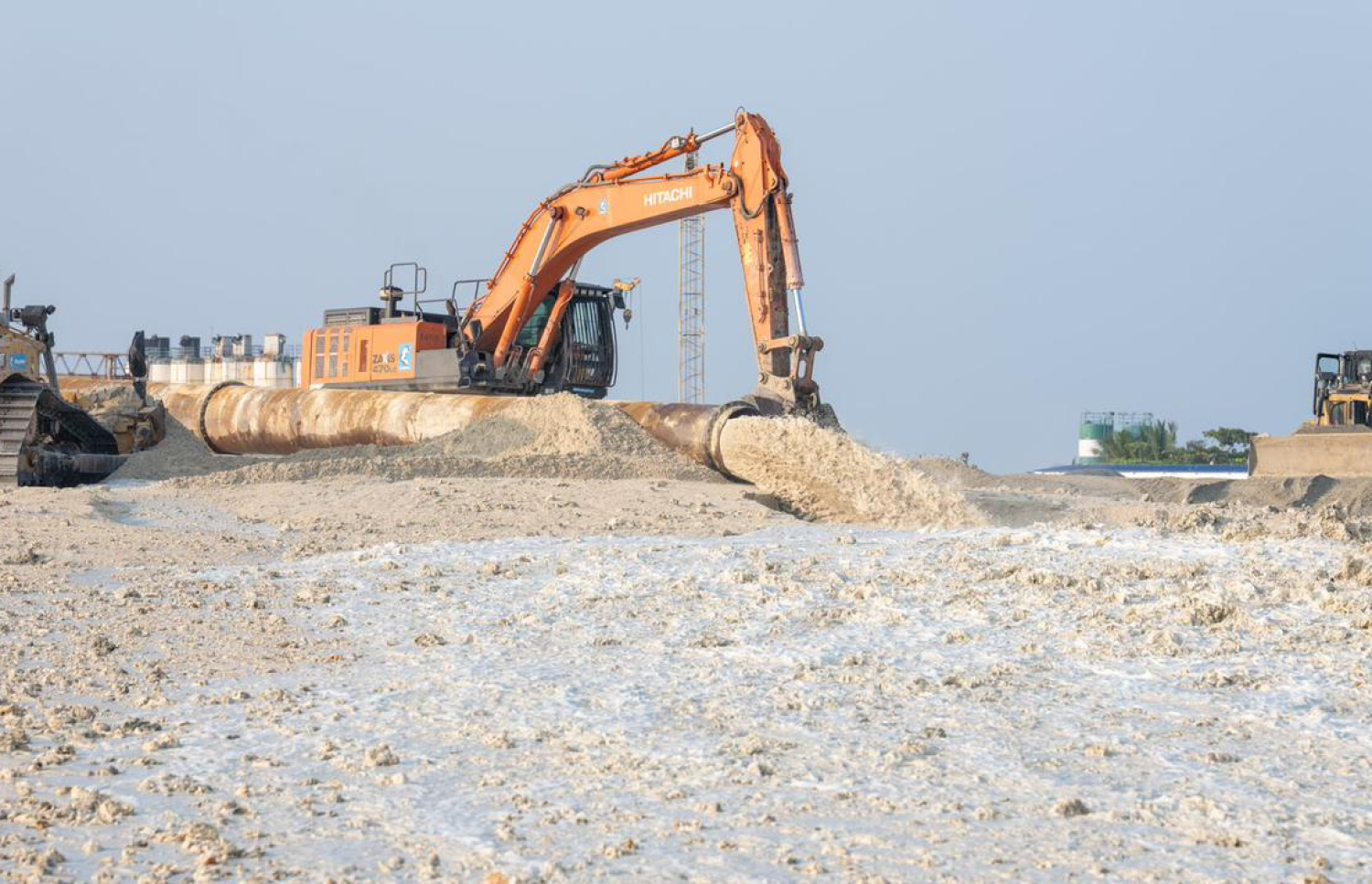
The affordable housing programme also forms part of wider plans to expand housing in the Greater Male; region, including Hulhumale’ Phase 3. Increasing the supply of homes is a critical step towards easing pressure on one of the country's most constrained property markets.
Whether these measures succeed will depend not only on how quickly new homes are delivered, but also on whether affordability safeguards remain in place, ensuring the homes reach first time buyers rather than becoming investment assets.
Why Controls Matter
The Maldivian housing market has long been distorted by speculation. Developers built luxury units for investors, not affordable homes for families. Without strict controls, even well intentioned schemes risk being hijacked.
Housing Minister Abdulla Muththalib stated that housing policy must be rethought not as a series of ad hoc projects but as a coherent strategy that balances supply, affordability, and social equity.
The Human Cost
Behind the statistics lie real lives. Young couples share cramped apartments with extended families, delaying marriage or children because they cannot afford space of their own. Professionals in tourism or civil service find themselves living hand to mouth despite steady incomes.
The psychological toll is significant. Homeownership is not just an economic asset; it is a symbol of stability, independence, and adulthood. When that symbol remains out of reach, frustration grows.
The Verdict: Can They Afford It?
The answer is changing from a definitive, generational "No" to a cautious, conditional “Yes, if…”
For many young Maldivians, homeownership remains beyond reach if they rely solely on the private property market. High prices, steep deposit requirements and wages that have failed to keep pace with soaring real estate values mean the numbers still do not add up for many first time buyers.
However, the landscape is beginning to shift. Through equity support, concessionary financing, pension reforms and partnerships with private developers to deliver homes at controlled prices, the government is attempting to reshape the housing market rather than simply build more homes. The emphasis is increasingly on helping working families onto the property ladder while preserving social housing for those who need it most.
Whether that shift succeeds will depend on how quickly these reforms can be translated into homes. Demand continues to far outstrip supply, and ensuring affordable housing reaches first time buyers rather than investors will be crucial if the housing programmes are to achieve its aim.
The housing crisis is about more than bricks and mortar. It is about whether a generation can build stable lives, start families and invest in their future without being trapped in an endless cycle of renting.
For young Maldivians, the dream of owning a home no longer depends on waiting for salaries to catch up with property prices. It depends on whether these reforms can deliver affordable homes at the scale and speed needed before another generation is priced out of the market.


