
Morocco's national football team continues to win the hearts of Maldivian football fans. Since their historic run at the 2022 FIFA World Cup, support for the Atlas Lions has grown significantly in the Maldives. Many Maldivians have followed Morocco's journey with pride, celebrating their achievements on football's biggest stage.
As Morocco continues to impress the world, many football fans in the Maldives are discovering the country's rich football heritage. Yet for older supporters, Morocco's current success brings back memories of a player who left an unforgettable mark on Maldivian football more than two decades ago.
That player was Fidadi Mohamed.
Fidadi, who played for Victory Sports Club in 2001 and again in 2005, is still regarded by many as the greatest foreign player ever to play in the Maldives. His influence extended far beyond goals and trophies. He changed the way football was played, trained and understood at one of the country's most successful clubs.
A Moroccan International
Before arriving in the Maldives, Fidadi had already built an impressive football career.
He was included in Morocco's provisional squad for the 1994 FIFA World Cup in the United States. Although he was widely expected to make the final squad, a dispute with the coach resulted in his omission.
Nevertheless, he played an important role in Morocco's qualification campaign, appearing in World Cup qualifiers against Ethiopia, Benin, Tunisia and Zambia. He also represented Morocco in an international friendly against Slovakia.
Fidadi began his professional career with Olympique Club de Khouribga before moving to Saudi Arabian side Al-Ettifaq. He later headed east and joined Malaysian giants Selangor FA in 1998, where he established himself as one of the league's standout foreign players.
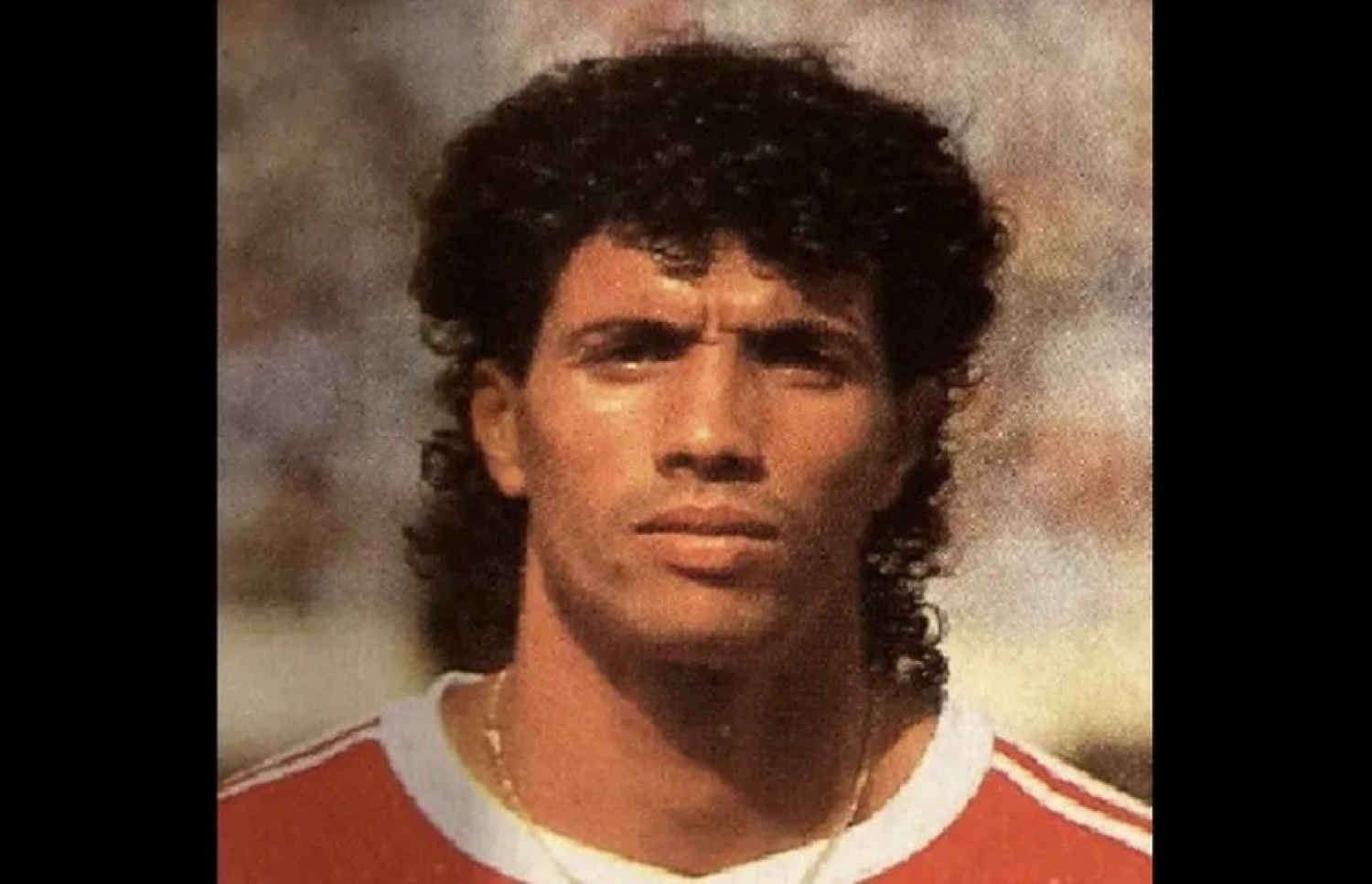
It was in Malaysia that his path eventually crossed with Maldivian football.
The Move to Victory
Following Victory's National Championship triumph in 2000, head coach Mauroof Ahmed, better known as Maattey, was looking to strengthen his squad for another title challenge.
Seeking advice, he turned to Singaporean football legend Fandi Ahmad.
"Fandi told me there was a very good player in Malaysia," Maattey recalled. "He told me to sign him and guaranteed that we would win the trophy."
Convinced by the recommendation, Victory signed Fidadi on a monthly salary of US$3,500, a remarkable figure in Maldivian football at the time.
The impact was immediate.
Tall, powerfully built and blessed with incredible stamina, Fidadi quickly became the standard-setter in training. Teammates found themselves working harder simply to keep pace with him.
Even before the season began, his influence was already changing the culture within the squad.
Transforming Victory
Victory's 2001 season began in disastrous fashion with a 4-0 defeat to arch-rivals New Radiant.
Following the loss, Fidadi offered a tactical solution.
At the time, most Maldivian clubs relied on a five-man defensive system featuring a sweeper. Fidadi recommended switching to a modern 4-4-2 formation. Maattey accepted the advice and reorganized the team accordingly.
The results were dramatic.
Operating in midfield, Fidadi controlled matches from start to finish. He won possession, launched attacks, distributed passes and contributed goals himself. Nigerian striker Friday Gabon benefited greatly from the opportunities created by the Moroccan playmaker.
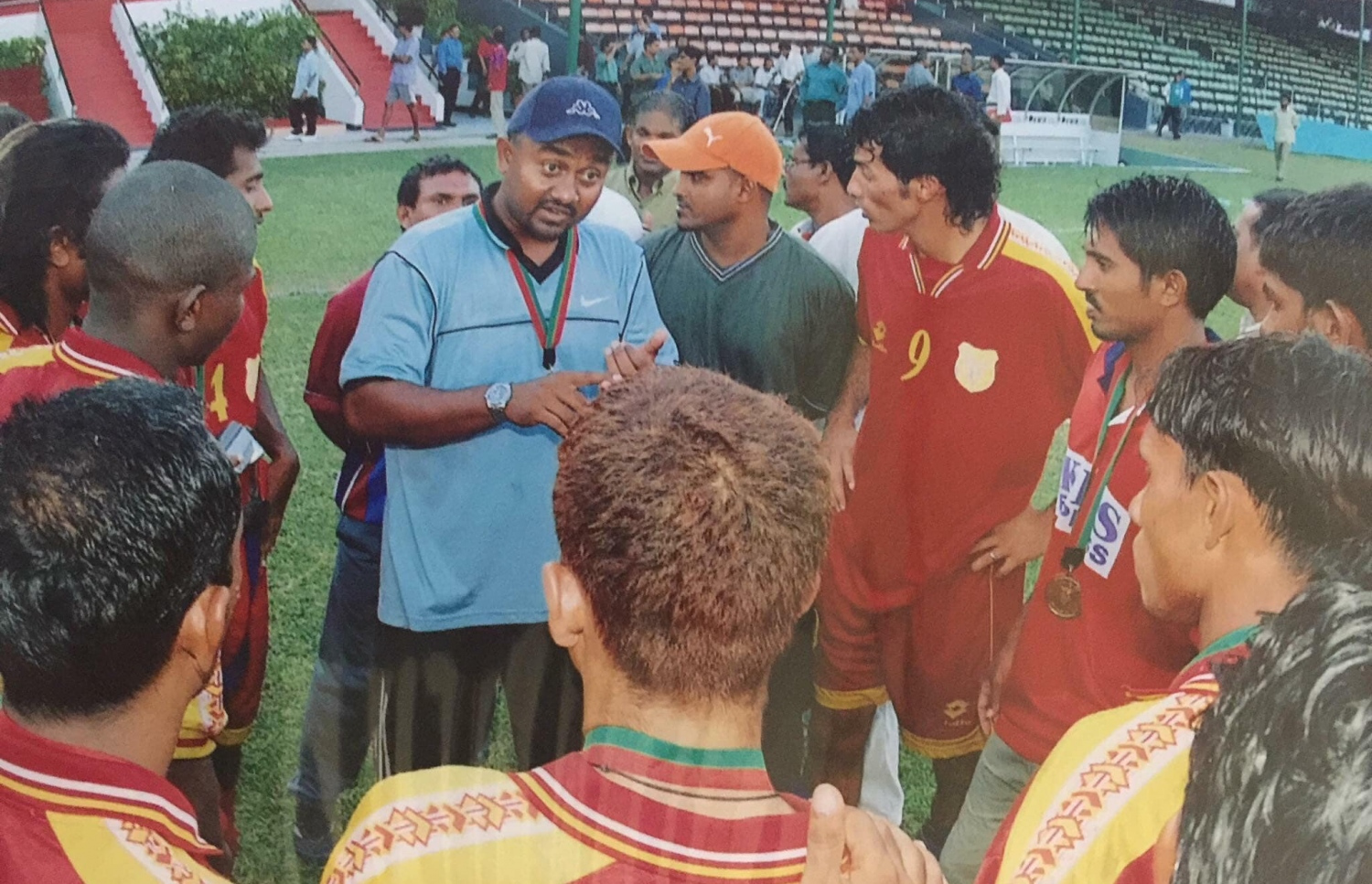
The transformation became clear when Victory met New Radiant again in the Cup Winners' Cup. After losing 4-0 earlier in the season, Victory stunned their rivals with a 5-1 victory. Fidadi scored twice.
He followed that performance with another goal in a 3-2 win over Hurriyya as Victory went on to lift the Cup Winners' Cup after defeating Valencia on penalties.
Victory's success continued throughout the season.
The club won the Male' League title with Fidadi at the centre of everything. He scored six goals during the competition, including four against Hurriyya.
In the Dhivehi League, he added a hat-trick in a 10-0 victory over Veymandoo and scored twice in a 9-2 win against Hinnavaru Hesperus.
By then, Fidadi had become the dominant figure in Maldivian football.
The Incident That Changed Everything
Just as Fidadi's influence appeared to be reaching its peak, events took a dramatic turn.
On September 21, 2001, Victory drew 1-1 with IFC in a heated Dhivehi League encounter. Tensions between the two clubs were already high.
After the final whistle, Fidadi approached the IFC bench and allegedly directed insults and provocative gestures toward a team official. The confrontation quickly escalated.
Members of the IFC bench rushed towards him. Victory players joined the fray, and one of the largest brawls in Maldivian football history erupted.
Later that night, police arrested Fidadi at his home in Malé.
Having brought his wife and two young children to the Maldives, he was reportedly devastated by the arrest. According to Maattey, he was held in a small and uncomfortable cell at police headquarters.
When the coach visited him, he found Fidadi sitting shirtless, wiping sweat from his body with a towel.
"He was psychologically broken," Maattey recalled.
Two days later, Fidadi was released and deported from the Maldives.
A Legacy Beyond Trophies
The fallout from the incident severely affected Victory. Several players were jailed or banished, leaving the squad weakened for the remainder of the season.
Although the club failed to win the Dhivehi League title, Victory still defeated Valencia 2-1 in the National Tournament final to secure a second consecutive championship.
Maattey believes Fidadi's influence was central to that success.
"Because of him, a winning mentality was created in the team," he said. "Fidadi transformed that squad into a championship-winning team. He was the foundation of Victory's success."
His impact extended far beyond results on the field.
Young players such as Imran Mohamed, Sobah Mohamed Ibrahim and Ismail Mohamed (Issey) learned from him during their formative years. Those players later became key members of the Maldives national team that won the 2008 SAFF Championship.
In many ways, Fidadi's influence continued to shape Maldivian football long after his departure.
The Greatest Foreign Player?
Before Fidadi arrived, many considered Patrick Tchicaya, the Congolese star who played for New Radiant and Valencia, to be the greatest foreign player to grace Maldivian football.
Fidadi's performances changed that conversation.
"Tchicaya was an individually brilliant player," Maattey said. "But Fidadi was a team player. He made the whole team play."
Former teammate Ali Suzain goes even further.
"Without a doubt, Fidadi was the best foreign player to have ever played in the Maldives," he said.
A Lasting Connection
After his deportation ban expired, Victory brought Fidadi back in 2005. By then, however, age had caught up with him and he was unable to reproduce the extraordinary performances of his first spell.
As Morocco continues to shine on the international stage, many Maldivian football fans are reminded of the remarkable Moroccan who once dominated local football.
Maattey believes the strength, intensity and determination displayed by Morocco's current generation are the same qualities he saw in Fidadi more than two decades ago.
"It is a natural trait that exists within them," he said.
For many Maldivians, Morocco's rise is not just a story about a national team enjoying success. It is also a reminder of a player whose influence helped shape one of the most successful eras in Maldivian football history.


