
Minister of Climate Change, Environment and Energy Ali Shareef spoke with The Edition at length about his stance on climate change resilience, finding a balance between socioeconomic development and environmental protection, and the path he is forging as the country’s latest environment minister.
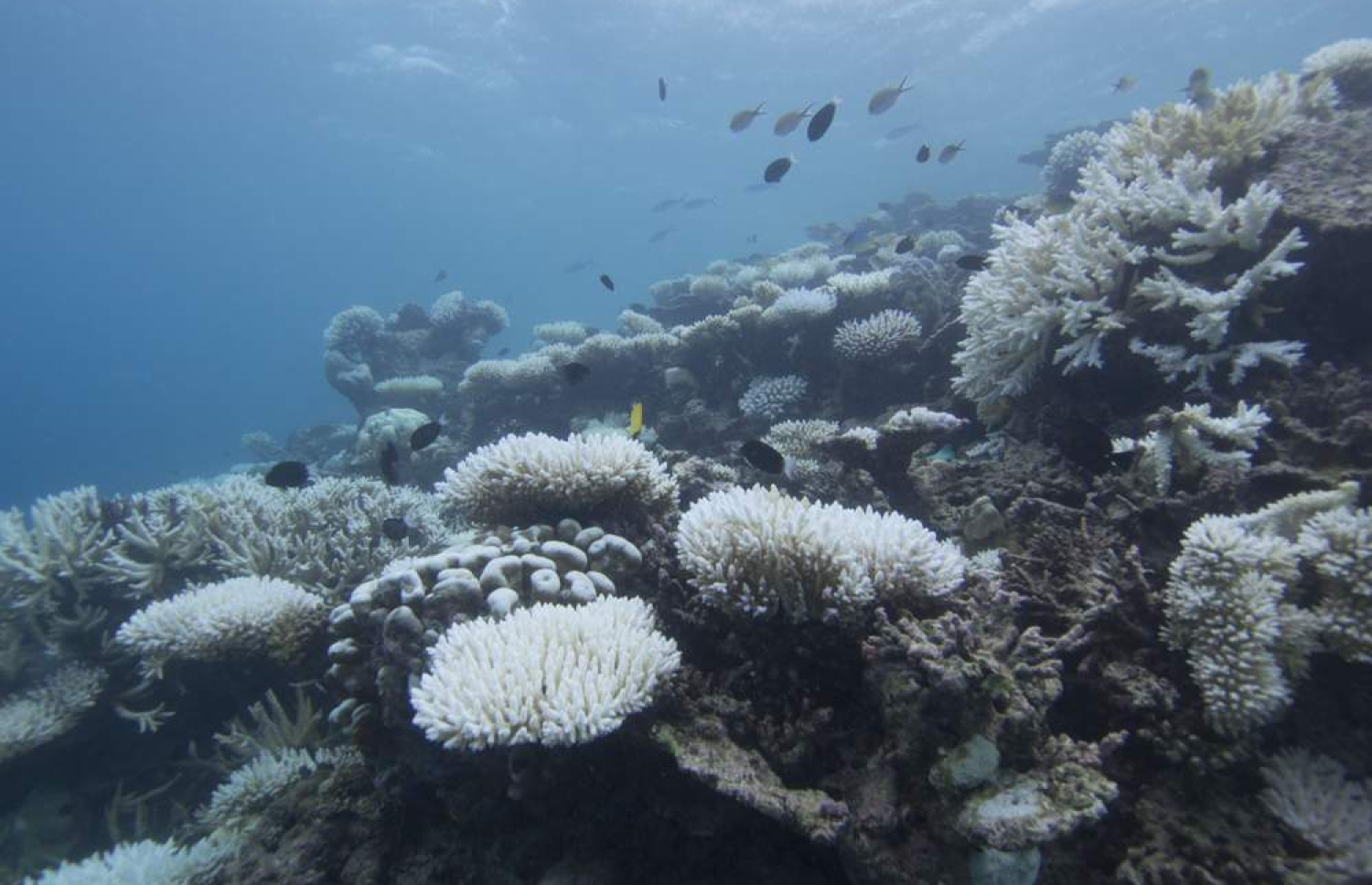
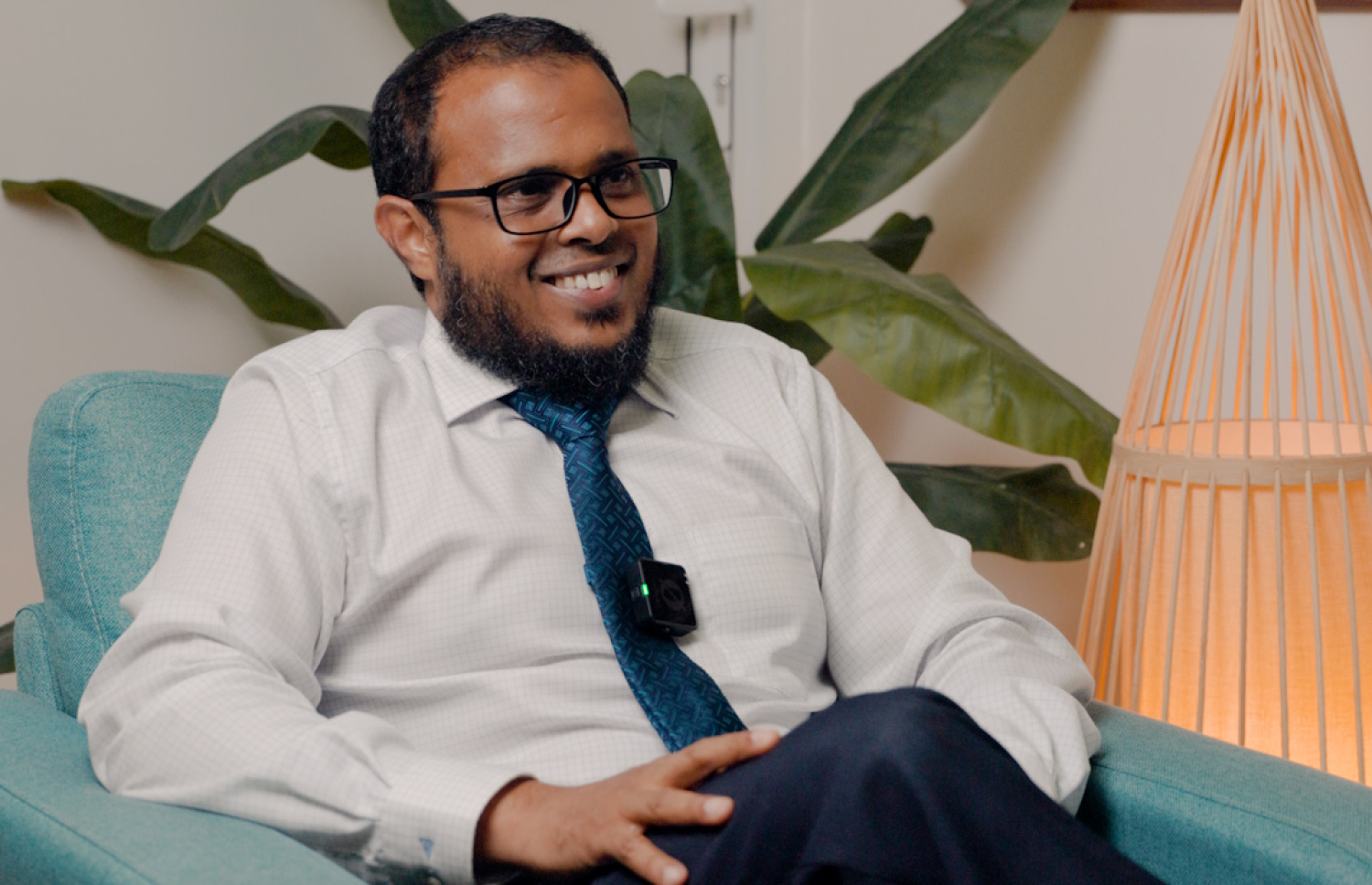
He shared his views on matters of pressing public interest, such as the Vilimale’ Funavaa issue, as well as the imminent threat of coral bleaching.
Watch the full interview:
Upon assuming office, one of Shareef’s first priorities was to streamline the ministry’s engagement with the public, urging senior officials at the ministry to adopt a new approach where public queries and concerns are addressed promptly and to ensure that bureaucratic red tape becomes a thing of the past.
He is also floating several policy changes, things that he had seen as key even during his past tenure as Special Envoy for Climate Change at the President’s Office.
Shareef, who moved directly from the post of Special Envoy to his current position in the cabinet reflected that the transition had been easy for him, with his extensive background working in the field, including at the ministry itself. He brings with him decades of experience and expertise, and hopes that these will guide him in bringing about meaningful change during his time in office.
Moving away from fossil fuels and adapting to renewable energy
As a small island state which is heavily dependent on fossil fuels, Shareef reflected that Maldives cannot, in the short term, drop the use of fossil fuel in its essential services. However, the country is advocating on the international stage for larger global actors to minimize the use of fossil fuels and support smaller nations like the Maldives on a similar journey.
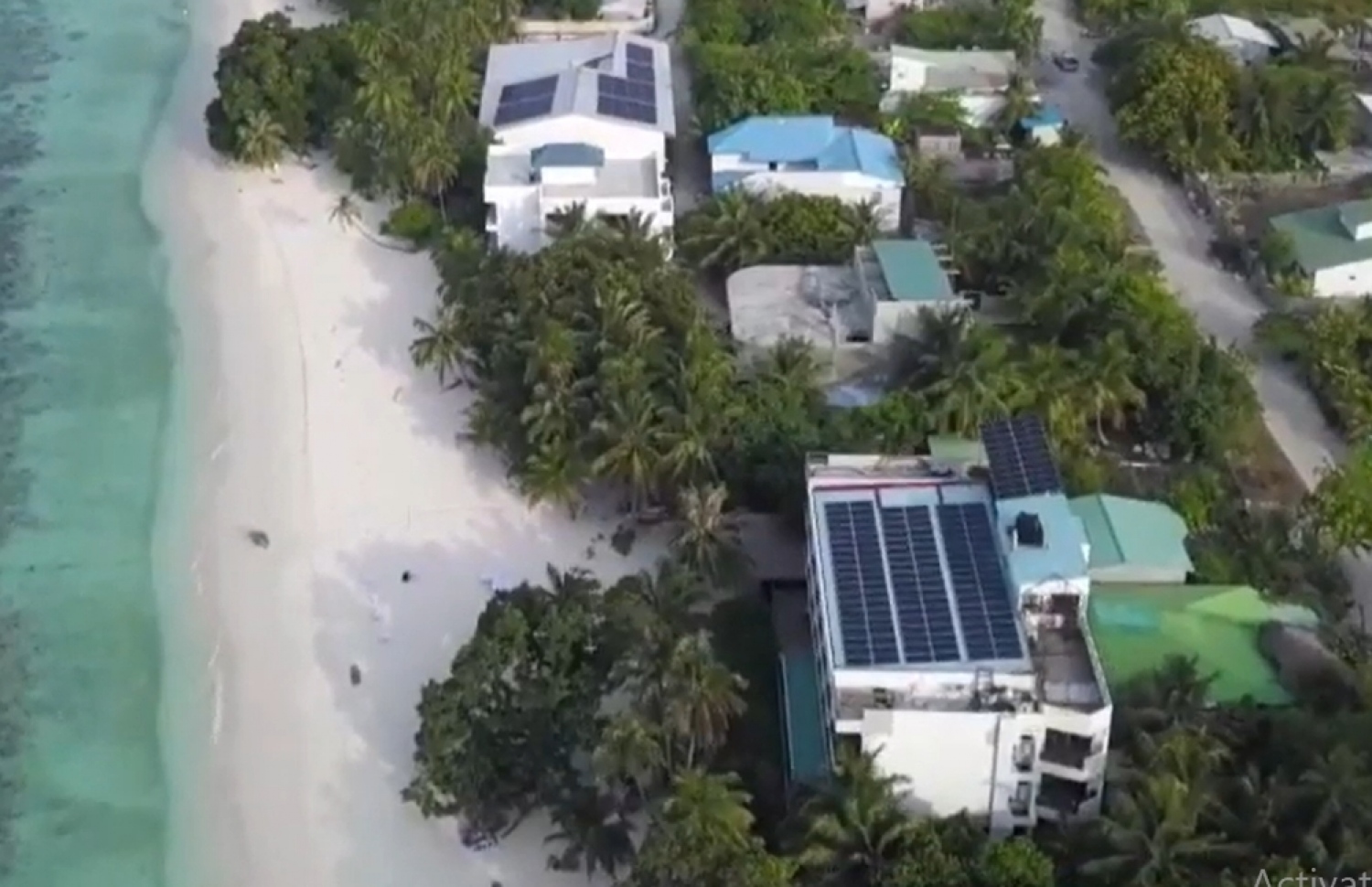
In the meantime, the country is steadily promoting the adaptation of renewable energy options, Shareef said, with a goal of reaching 33 percent of electricity production through renewable energy sources, as announced by President Dr Mohamed Muizzu in 2024. He assured that this goal is looking achievable, based on ongoing efforts by both the private and public sector.
Resilient islands
Shareef spoke of the numerous projects being conducted across the country to build climate-resilient islands, focusing on areas such as providing safe water, shore protection and so on.
Asked about the approximately 41 inhabited islands which, even to this day, lack fully established sewerage infrastructure, Shareef announced that the Housing Ministry is working on related projects on these islands, which have been budgeted for under the national program and targeted for completion by 2027-end. Along with this, the government is also working on providing piped desalinated water across the country to address increasing groundwater salinity due to sea level rise, the Minister added.
These, he said, are amongst several measures being taken by the government to ensure Maldives islands are increasing climate resilience.
Vilimale' Funavaa and the need to compromise
Housing and environment are both very pressing issues, Shareef said. While there is a need to protect the environment, socio-economic development is also an area that cannot be sidelined, he said.
“Either you want a proper housing for yourself and the next generation that is coming up after you, or is it just the pristine environment as it is that you want. I don’t think we are going to get both here at the same time. No way. I don’t think anywhere in the world that is a philosophy,” Shareef said.
He reflected on how developed countries, too, had to make environmental compromises to achieve infrastructural development.
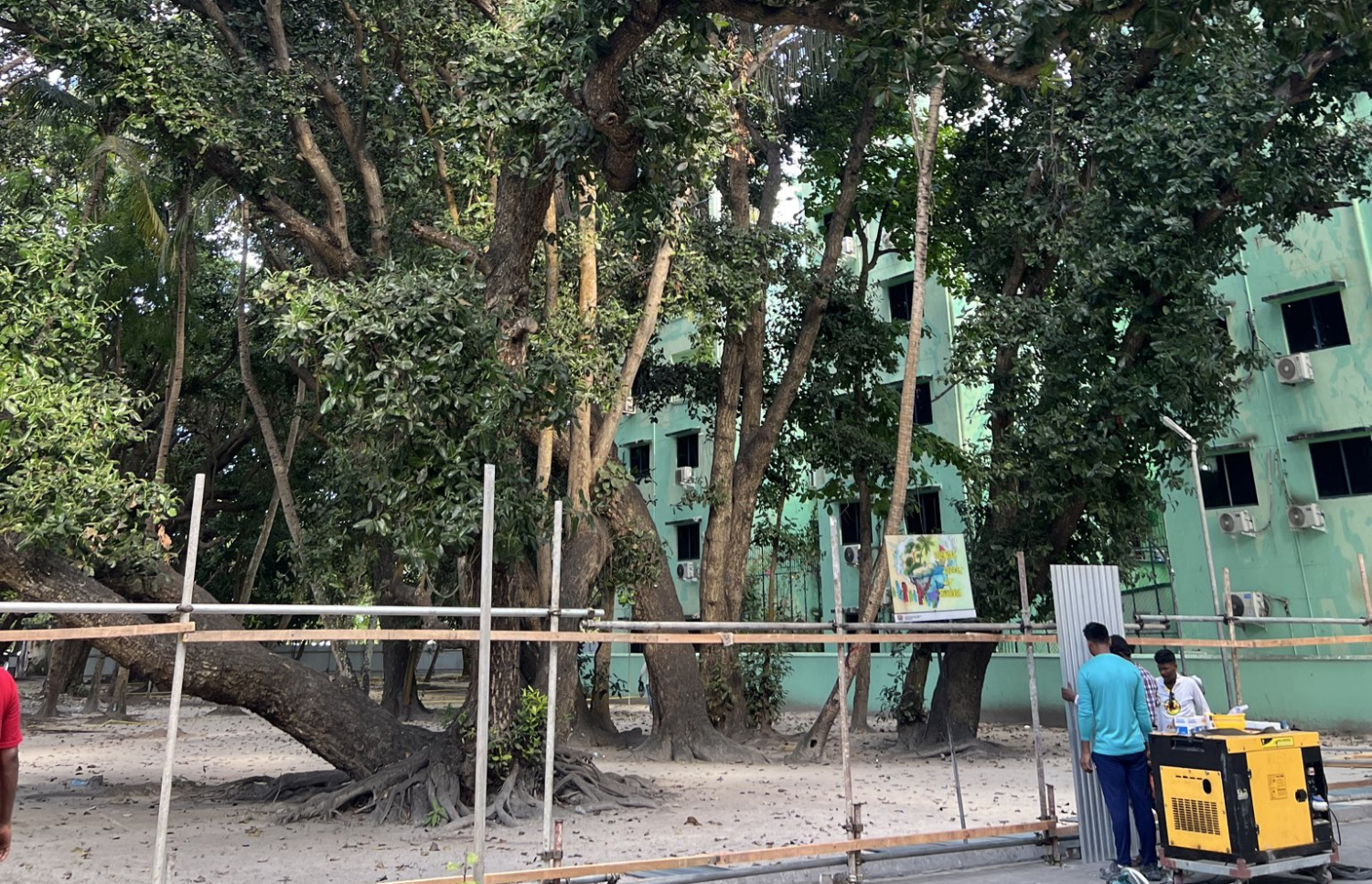
“Right now, yes, the space was there fortunately so we were able to move the building and keep the tree. But that might not be the case always, in the very small islands that we have. Sometimes, we might have to sacrifice the environment to get that,” he said.
He went on to assert that the environment is not limited to a single sphere.
“Environment does not mean… I think that’s the confusion here for some people. Environment does not mean just only one sphere. In an environment there is biological environment, physical environment, socio environment, economic environment, atmospheric environment is there. I mean, environment in it’s sense is a very broad thing. It’s not just the living organisms or the physical environment, you have to consider the whole spectrum of the environment,” Shareef explained.
“And then when you weigh and do it, okay, what’s the most balance that you want to strike? Or what’s the most dire need that you want to address while you sacrifice the other thing, and what’s the level of sacrifice that you could do in order to get the socioeconomic benefit. That’s the balance that we are talking about.”


