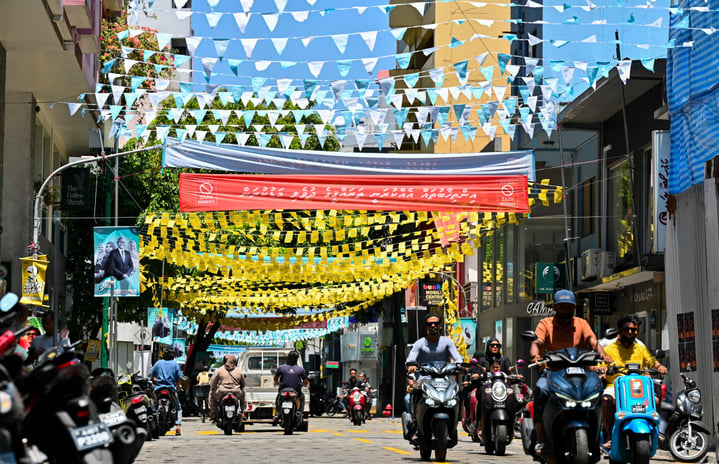
The Maldives is gearing up for three major polls on Saturday, April 4: Local Council Elections, Women’s Development Committee Elections, and to top it off, a referendum on holding the Presidential and Parliamentary elections on the same day.
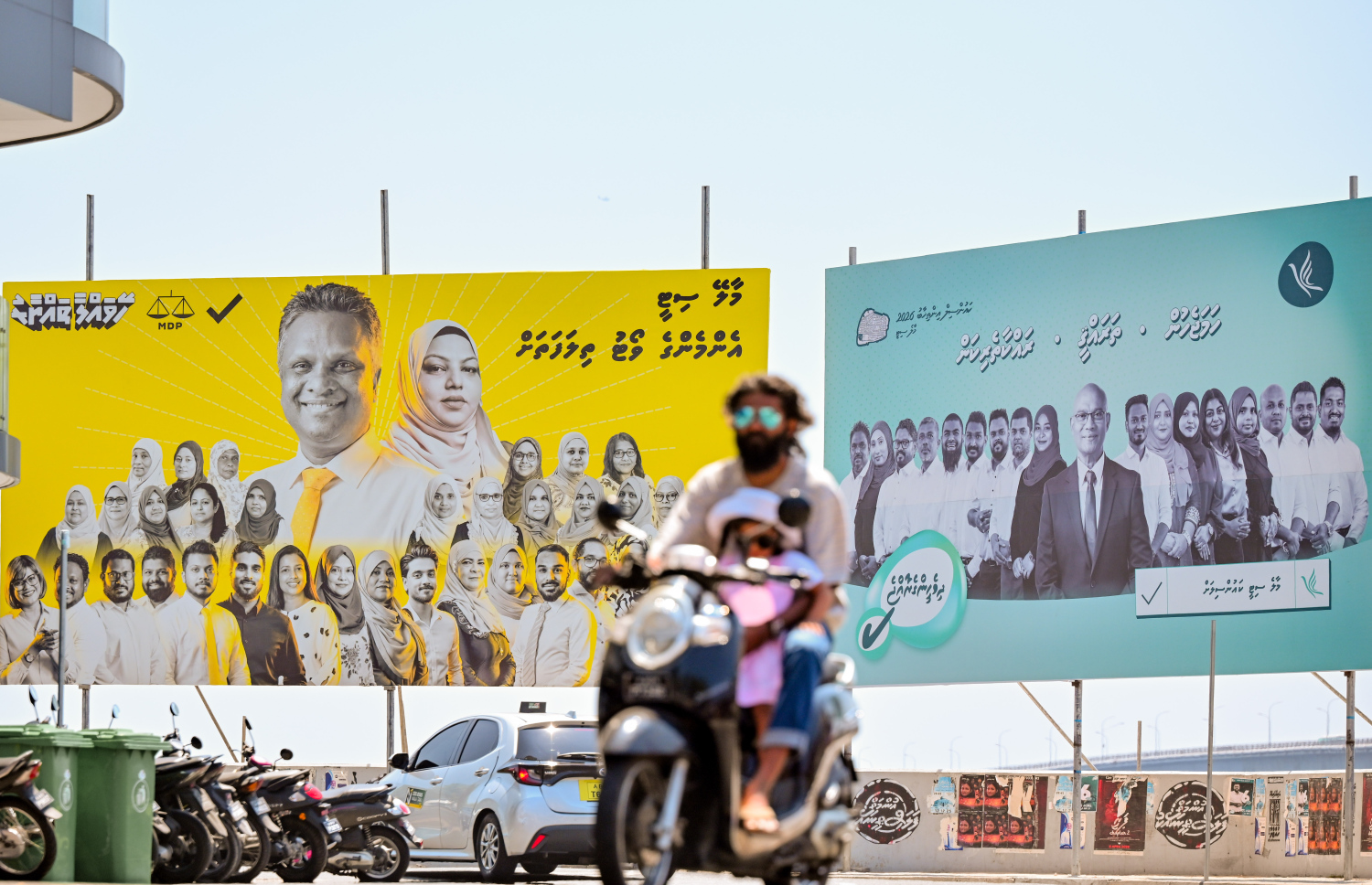
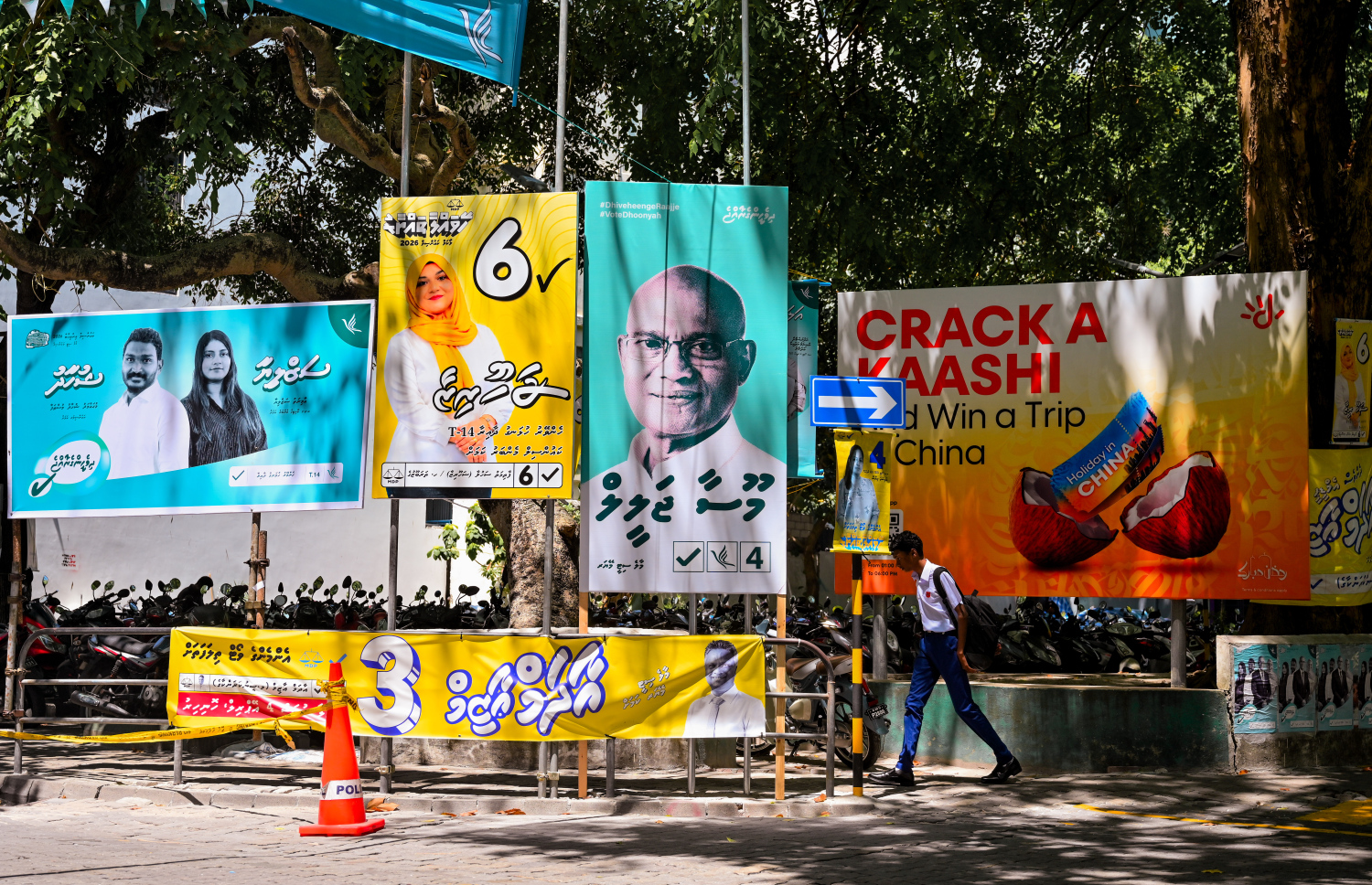
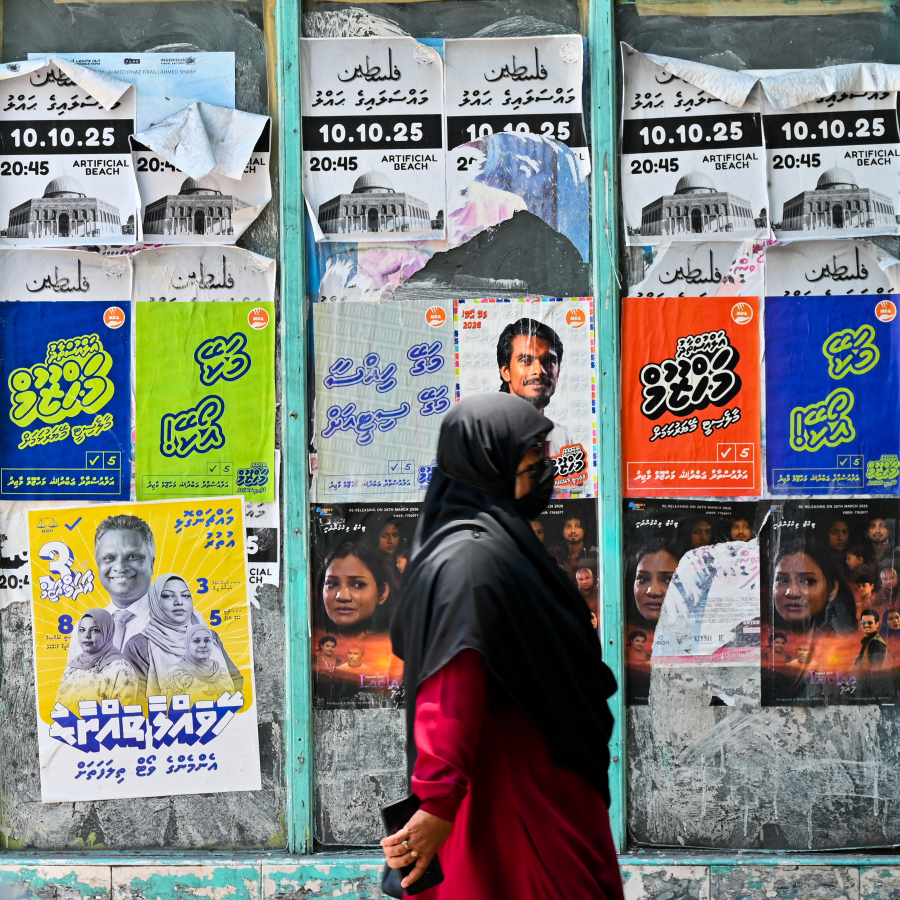
Parties have been heavily engaged in campaigning. The streets of capital Male’ are decked out with lines of party flags. Posters are affixed on nearly every available wall in Male’ and the islands. Pickup trucks with deafening loudspeakers are making the rounds every day, touting their preferred stance on the referendum. Despite the fuel woes brought on by the Middle East war, party supporters are organizing motorcycle rallies. Door-to-door campaigns see leaders the people haven’t seen in years sitting on their sofas. In short, the game is on, and all political actors are working tirelessly to secure a win.
But is all this effort really bringing the desired outcome? Are people truly invested in the election? Are people aware of what it is they are expected to vote for? Or is the election marred by disinformation, misinformation, vote buying, undue political influence, and a general sense of apathy?
To benefit from the election, one way or another
“People are disillusioned. They feel that once elected, leaders will not be sincere in working for the people. So many are now of the view that it’s better to make an immediate profit, jobs or ‘gifts’ or whatever, during campaigns rather than expect actual results while they are in office,” a 47 year old voter opined.
Vote-buying has been the elephant in the room in Maldives’ politics for years now. Everyone knows someone who has been offered a deal to sell their vote. Of course, no one has done it themselves, just ‘have heard of it from a friend of a friend’.
NGOs such as Transparency Maldives are leading initiatives to raise awareness on such issues. But the fear is, it might be too little too late. Disillusion leads to indifference, which ultimately harms the nation while pooling power where it should not be.
Besides organizations, individuals with huge followings on social media are also pitching in, sharing their views and general advice. Popular musician turned religious figure Ali Rameez recently posted a TikTok video, watched by thousands, where a sheikh shares the Islamic stance on the practice of selling votes.
Then comes the twin evils of misinformation and disinformation. The referendum is up for much debate, with political actors on both sides muddying the waters with their arguments in favour and against merging election day for presidential and parliamentary elections.
Go Vote: Once? Or Twice?
Let’s attempt to weed out the pros and cons from the available information.
If the elections are held on the same day, statistics indicate that voter turnout may be significantly higher than otherwise. The government’s claim that holding the elections together will allow the administration to focus on governance, rather than on elections, also carries weight. Although it might not be how it should be, the truth of the matter is, when elections approach, the entire government apparatus is focused on winning votes, rather than on governing. Same day elections also take away the risk of undue political influence from the ruling party on the parliamentary elections, which many say explain the supermajority often enjoyed by ruling parties in the Maldives. However, research suggests that if a presidential candidate is very popular on election day, the coattail effect will still produce a large parliamentary majority for his party, not on the merits of the candidates themselves, but on the popularity of the presidential candidate alone.
If the elections are spaced out and held separately, voters have the option of making two distinct decisions. Voting for parliament a few months after the presidential election allows voters to see the administration in action, which can help shape their decisions in this second election. Staggered elections effectively give voters a second opportunity to hold the government accountable. It would also cancel out the inevitable noise of presidential candidates, and allow voters to form a deeper knowledge of candidates running for parliament in their separate constituencies. If the two are held together, voters are likely to focus on the higher office, and pay less attention to the parliamentary vote.
“What difference does it make? If the ruling party is elected, they will just rubberstamp everything the government wants. If, on the other hand, the opposition is elected, they will just play the fool and obstruct for the sake of political scores, rather than truly holding the government accountable. There is no winning for the ordinary person,” one voter lamented.
Who’s that??
Despite the heavy campaigning, many remain in the dark about candidates running for council and WDC seats in their constituencies.
This may not be the fault of the parties, who have been energetically campaigning for weeks now. Instead, this might be owed to people ‘tuning out’ the campaign noise.
How many posters lining a street finally lead a person to just ignore them all?
How many campaign calls and messages lead a person to just decline the call, or mark as read?
The sheer volume of campaign material overwhelms the system, leading to the general public moving away, rather than getting invested in, the election process.
“I know Moosa Jaleel and Adam Azim are running for mayor. No way to miss that if you read the news at all. But that’s about it. I don’t know who the candidate is for my constituency,” a first-time voter shared.
His much older brother, however, said, “Oh, I know the candidates. It’s just that none of them have really given me a reason to vote for them. All I’m hearing is vapid claims, nothing substantial”.
All hope is not lost yet though. Voters have today to do some final research. Find out about your candidates, shut out the noise and focus on what you want from a council member, a WDC member. Weigh the pros and cons of holding the elections on the same day.
Don’t let apathy win. Your voice, your vote matters. Contribute to your future by turning up to vote.


