
The written word is a fantastic way to articulate thought, emotions and ideas in an attempt to have people understand, feel or make something a reality. And one of the best ways Maldives has been doing that for quite some time is through poetry and story telling.
Maldivian poets such as Hussain Salahuddin, Bodufenvalhuge Seedhi, Aminath Faiza and Fathimath Saeed (who served as the inaugural First Lady of the Maldives) are household names, but there are some who have been forging a path in this literary sphere in recent years as well.
This feature will cover two who are on the rise for their style of poetry writing that has garnered attention, fostered poetry writing and emotional literature.
Hawla Riza: Fueled by Love, Healing and Everything in Between
Hawla Riza is the author of Heal in Paradise, the first Maldivian literary and poetry souvenir meant to showcase the beauty of her homeland to both locals and to the tourists who travel to Maldives. With themes of love, beauty, grief and resilience, Hawla has poured her soul into her book, armed with the English lexicon in one hand and a firm grasp of her emotional faculties in the other.
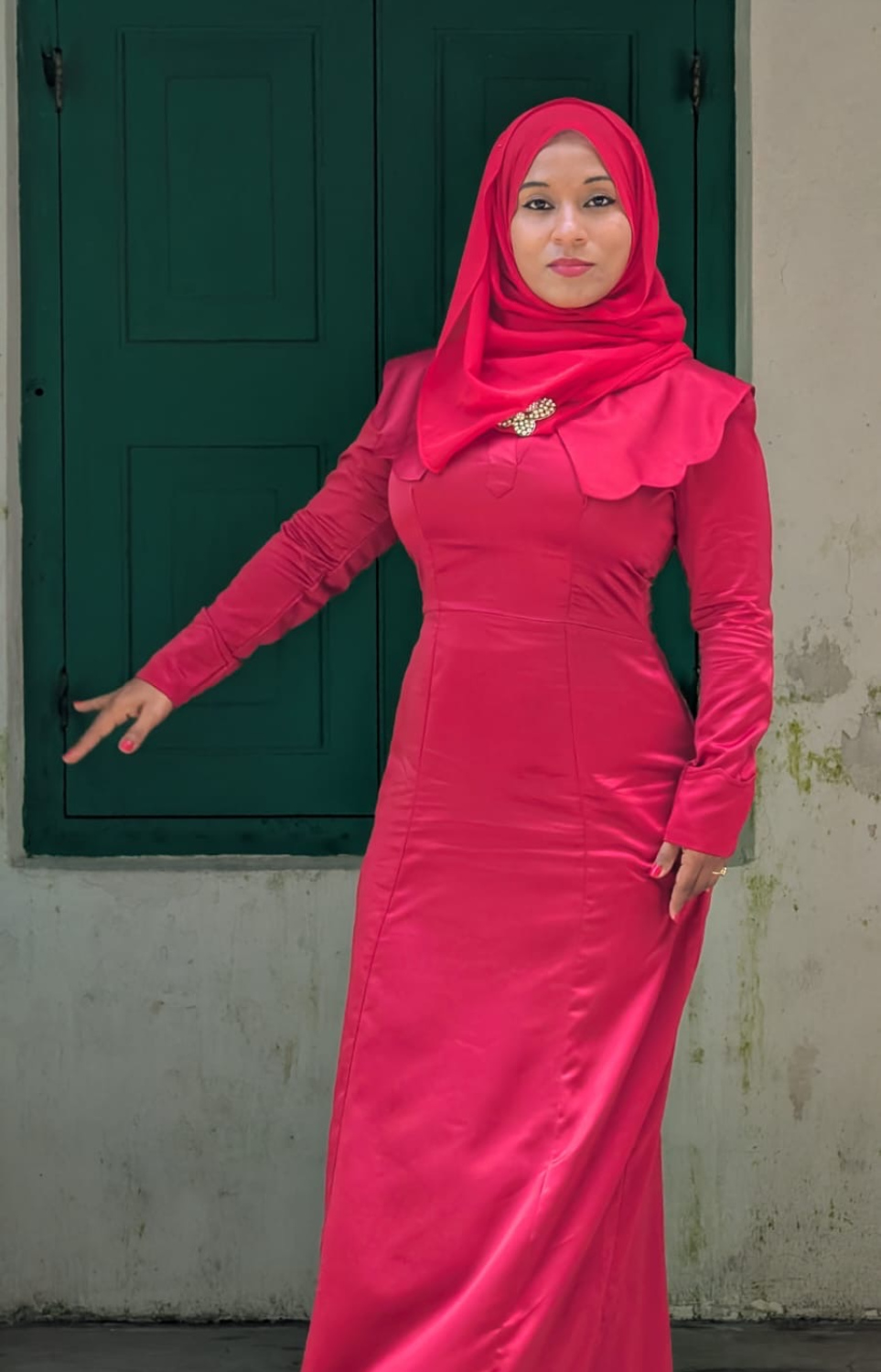
She began her journey into the world of poetry due to her love of writing, while simultaneously working as an HRM lecturer. Due to her father sadly passing away in 2021, her family dynamics flipped, and with that came some major life changes.
She began writing poetry as a coping mechanism, subsequently finding solace and peace in the written word. She wrote a lot of poetry at the time, and wrote a poem about grief that she had turned into various characters, such as twisting grief into denial.
She published that poem on her Instagram page (@hawlariza) and proceeded to receive direct messages from people expressing how much they liked it. She then went on to write poetry and submit it to international journals, of which three of the poems she wrote in the course of a year and a half got published.
She began writing her newly published book of poems Heal in Paradise in 2023, written as a souvenir where Maldives is the backdrop.
How was it writing poetry in the beginning and what sort of creative process did you have, if at all?
When I started writing, I was mostly pouring out all my emotions.
It’s sort of like vomit on paper as I don’t want to miss anything and I wanted the reader to feel like they were at the beach or driving down the highway and feel happy, sad and bitter so I add a lot of taste and sometimes metaphors as well.
Sometimes, I like to create the mood that I want to write in so, if I want to write a sad poem, I would get into a sad headspace.
Do you have any one specific line of poetry that has stuck with you?
Okay so, my book is titled Heal in Paradise, but my style of writing is quite raw and truthful, with one of the chapters in the book being Pain.
I wanted to include how much our mothers sacrifice for us, even if you are well off there would be sacrifices. One of the lines from my poem “a wish for my mother”, where the last line is:
“my mother is called strong
i wish she was called human”
That line has stuck with me and a lot of the readers as well.
Of all the poems you have read or seen, is there one where you were like, “I wish I wrote that”?
I would say Mahmoud Darwish’s poetry is something that I really love. One of his poems has a line, “Speak of her over my grave and watch how she brings me back to life,” and “All roads lead to you, even those I took to forget you.”
He writes in such an unforgettable way and I hope to achieve that level some day.
Is there a specific poem you have written that would wholly define you as an individual?
There is a poem I wrote called “i hide behind poetry”, where I wrote about why I write poetry, where I use it to convey my emotions and such. I think that would define me as an individual.
Is there a specific poem you would like to be remembered for, one that you would define as your legacy? Or has it still not been written into reality?
I think I still have not written something that I would define as my legacy but the closest one right now I would say is my “a wish for my mother” poem.
From the time you began writing poetry until now, have you seen any changes in the world of poetry in Maldives?
I would say that I would label myself as an outsider in the world of poetry in Maldives, because I was not a part of it initially, I stumbled into it actually after I discovered my love for poetry.
I am discovering the world as we speak. I think being an outsider gives me freedom to write freely which is quite liberating. I think that fresh perspective is the reason Heal in Paradise is now becoming the readers’ favourite poetry book from the Maldives.
However, I still love connecting with local poets and like-minded writers and had the honor of participating in the recent recital hosted by the Underwater Poets Society.
What are your thoughts about the future of poetry in our country?
I would say that poetry is an art form much like music and dancing. Art is about expression and therapy, which it was and is for me. For people who enjoy reading poetry I would say it is much like therapy as well because they tend to recognize painful experiences other people go through, so when you are able to relate, it can become a healing experience.
Anything that heals is good for the country.
Hawla described her book Heal in Paradise, where she included a tribute to Maldivian heroes. She included the flag, the meaning behind the color red, Maldivian symbols such as the cowrie shell, sarongs and toddy. She writes in a relatable and accessible way, allowing the reader to relate to her and the book, fostering deeper meaning in her writing for the reader.
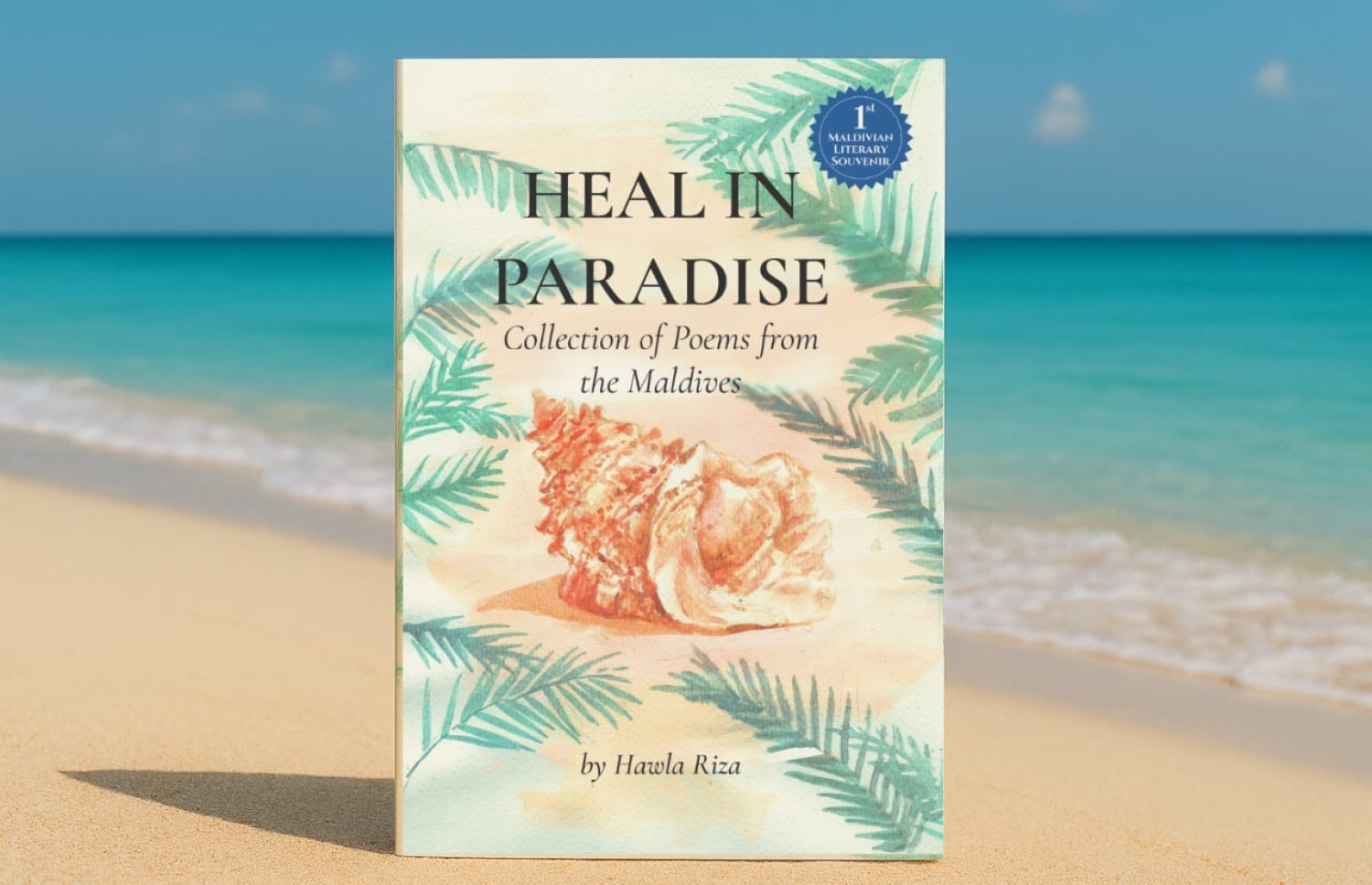
She also included a poem about Maldivian women where she described them aesthetically. She also wrote about Maldivian fishermen, all of this with the intent for tourists to form an emotional attachment to this paradisical island nation. Her poem, The Capital, describes life in Male’ in a vivid fashion, where survival of the fittest is paramount. Her book Heal in Paradise can be found on hawlariza.com.
Hussain Ali: Poet, Graphic Designer, TikTok Influencer
While Hussain Ali may be known more so as the guy on TikTok who makes funny cooking videos, he puts his status as a poet at the forefront of his being.
A graphic designer by trade, Hussain began his journey into poetry when his sister passed away when he was 18 years old. He used poetry to weave his emotions into words, with him using it as the medium for him to process his grief when he did not know how to initially.
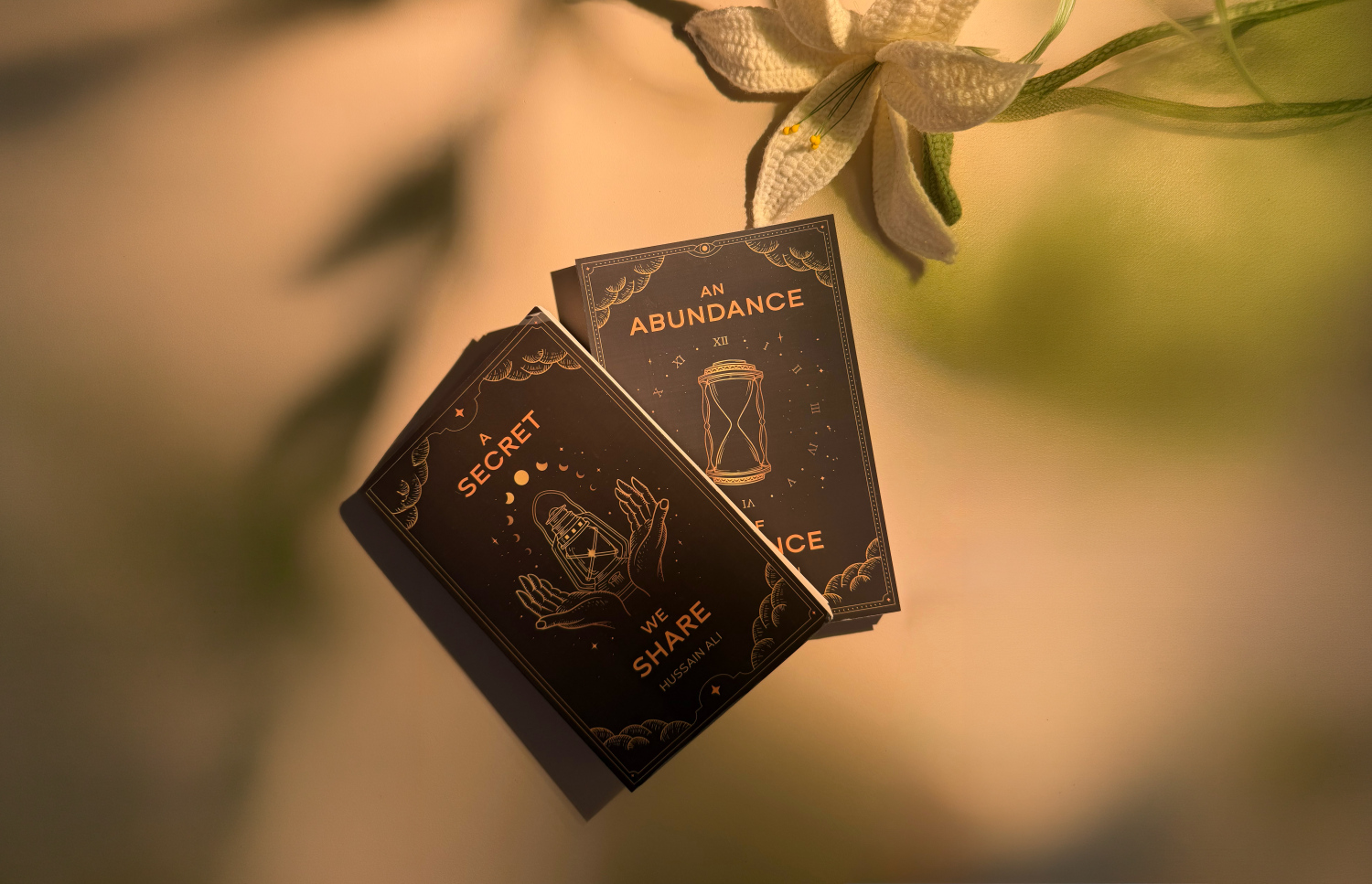
His first poetry book is called A Secret We Share and his second, An Abundance of Absence. Both share themes of grief, depression and heartbreak. The first book was written when he was 19 years old and published at 21. The second book was written and published when he was 23 to 24 years old. He has since republished both those books in 2025, with his growth as a person being apparent all throughout.
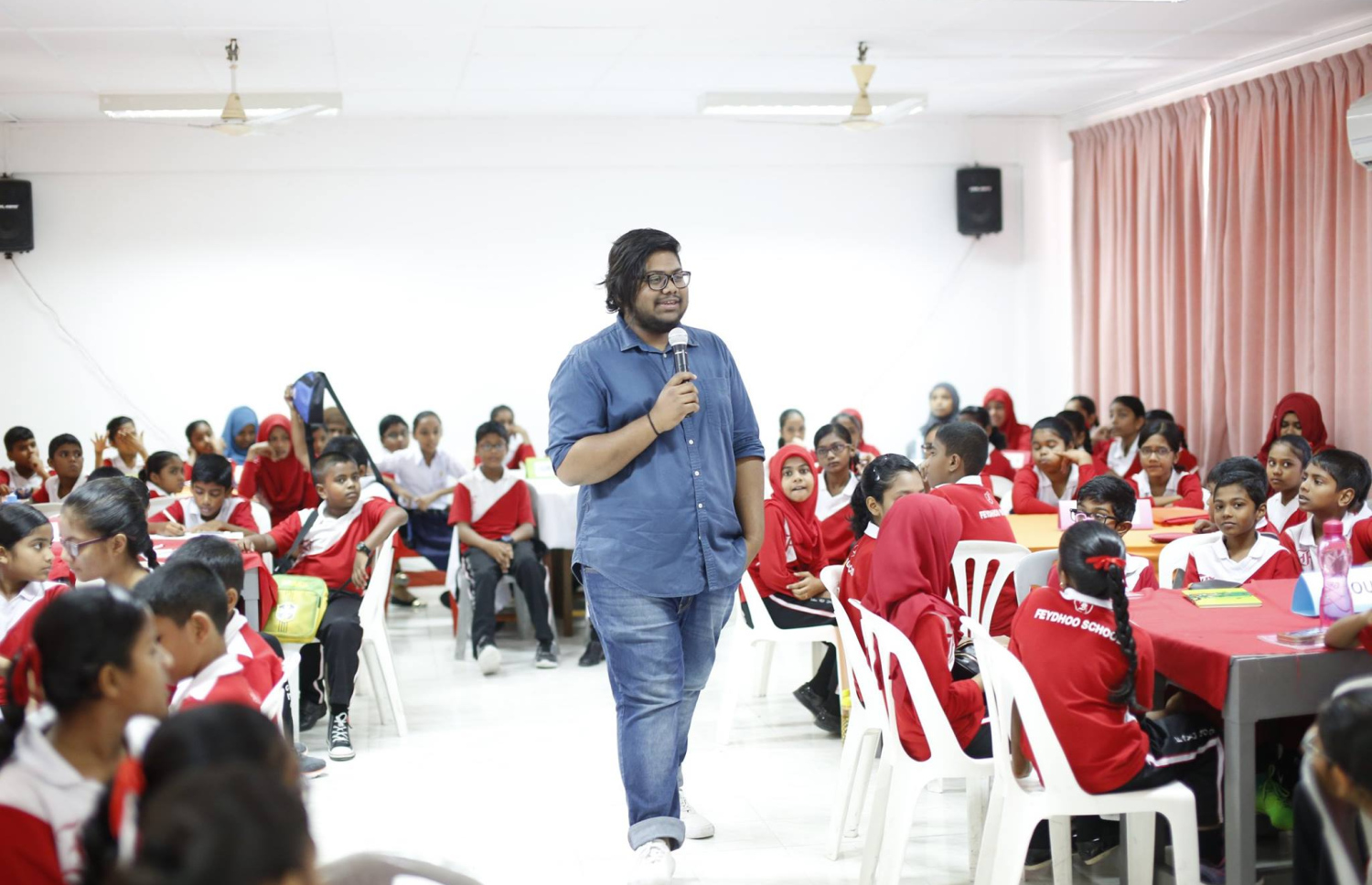
Hussain is also the first Maldivian to have gone on a book tour around Maldives, with it starting when he received an invitation to go speak at Villa College. He gave a motivational speech where he talked about poetry and about his book. He got the idea to make it into a book tour after that, where he went to Billabong International School, Addu and Male’.
How was it writing poetry in the beginning and what sort of creative process did you have, if at all?
I do not think I had a process, per se. I was simply writing down my feelings onto paper, which started on my Notes app. I would make time to write during my hectic schedule at the time when I was working at PSM.
Do you have any one specific line of poetry that has stuck with you?
Yes, there is a poem written by Warsan Shire, with a line that goes:
“My alone feels so good, I'll only have you if you're sweeter than my solitude.”
I really resonate with that as I enjoy being by myself. I discovered this line around 2017/2018 and I have since been sharing this as my favourite line of poetry.
Of all the poems you have read or seen, is there one where you were like, “I wish I wrote that”?
I really like how Rumi writes. He makes everything sound so beautiful, I think he sees the world through rose-tinted glasses.
I wish I could write half as well as Rumi does, that would fulfill me.
Is there a specific poem you have written that would wholly define you as an individual?
There are many I would say. There is one that sticks with me but there are a lot of them in my first book.
Is there a specific poem you would like to be remembered for, one that you would define as your legacy? Or has it still not been written into reality?
There is one, which is a spoken word poem, the very first one I wrote and performed live, which I have done at an open mic night in Malaysia as well. It is the one and only poem I will always perform until my time as a poet comes to an end.
The poem is named Stars, which has a lot of anger and raw emotions. It has this one beautiful line:
“You are water and I am sand, I am in you while you are all over me but we will never be one, not even if I broke myself into billions and offered you the dust that remains. “
From the time you began writing poetry until now, have you seen any changes in the world of poetry in Maldives?
I have but I would not say it is a good change.
When I started writing and sharing poetry, I feel like between me and Shaaards (another poet in Maldives) we probably created a movement. We were the only ones doing it at the time but within a few months, people began writing spoken word poetry and sharing it on social media. There were people who were interested in putting out books as well. There were frequent poetry events, around once a month.
It was quite active back then but now, not so much.
What are your thoughts about the future of poetry in our country?
The future has potential, because in terms of self-publishing, it is quite accessible these days. There are more ways for people to put their work out there. We have more poets putting out books so that is good.
While contradictory, even though the scene has died down, there are a lot of poets who have published their work so it is a balancing act currently.
Hussain is currently working on his third book and is eager to drop but is waiting for the right time to announce it. Check out his other two books in the meantime for a look into his work and what may be to come.


