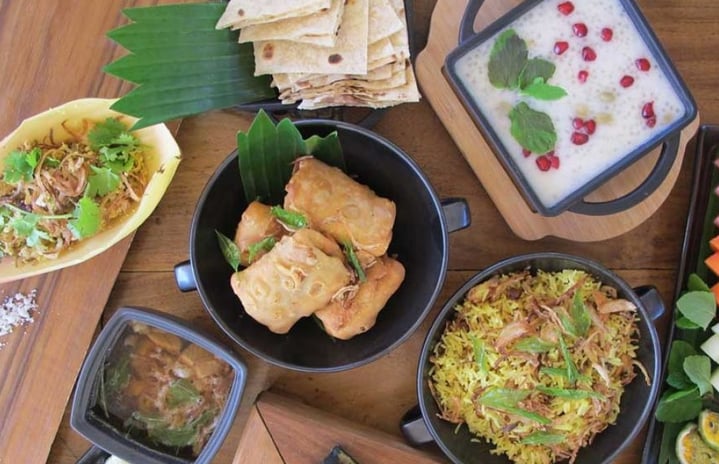
When people think of Maldivian cuisine, they think of fish, spices and coconut. While those are just a few staples in the archipelago, there are a variety of tastes that have made our food what it is today.
The year was 5 BC, around the period when the Maldives’ first settlers are believed to have arrived, likely from Sri Lanka and southern India They brought with them their very own culinary methods, based on the three foundations of food that Maldives still uses to this day: fish, coconut milk and rice. With Maldives being composed of a multitude of islands, settlers had relied on the sea for sustenance, as rearing livestock and cultivating grain would have been troublesome.
As the years passed, Africans, Arabs, Eastern Asians and Persians came and went through the archipelagic nation, with various culinary influences being adopted by Maldivian settlers, such as drying and salting of fish from Africa, spices such as cloves, cardamom and cinnamon from Arabia, curry from India and preservation of food via fermentation from Southeast Asia.
In the 12th century, Islam was introduced to Maldives. This changed the culinary foundations of the nation, with pork being removed and alcohol being replaced.
European influences arrived much later, leaving their mark on Maldivian cuisine as well. One of the main staples of the island nation’s food is tea, which was introduced by the British. It is to this day drank every day, traditionally enjoyed in the evenings with a variety of short eats, including bajiya- triangular dumplings filled with tuna, onions and chilli, gulha- round fried dough balls with a similar filling, as well as cutlets, biskeemiya and an assortment of sweet treats
Portuguese influence also introduced new frying techniques, expanding the ways fish could be prepared and enjoyed. These innovations brought fresh flavors and textures to Maldivian dishes, further broadening the islands’ culinary palette.
Fast forward to the tail end of the 20th century and we see tourism come into the fold. 1972 saw the first resort in Maldives, "Kurumba" open. Tourists who would then travel to Maldives would experience Asian and European cuisine, with traditional food slowly fading into the background. However, tourists can still visit the islands and get a true taste of Maldives, with locals cooking up fantastic meals for visitors. It was this that also allowed old recipes to stand the test of time, as resorts needed to incorporate Maldivian food into their menus so that guests could get the best and well-rounded experience of island living.
Maldivians used to eat whenever they felt like it, but British influence introduced structured, scheduled meal times. Them bringing tea to Maldives cemented the long-standing tradition of tea time, with breakfast, lunch and dinner following suit.
While rice holds a central place in Maldivian cuisine, roshi - a flatbread, is equally important, particularly at breakfast, where it is commonly served with mas huni, a tuna dish with countless variations. Some people make it with just the basics - tuna and grated coconut, while others mix in pumpkin, some with a variety of leaves and some even with eggplant.
Rihaakuru is another staple, a dark, salty and viscous paste made from reduced tuna that is eaten with roshi for a lighter start to the day. Mas huni has been the go-to breakfast to fuel the day, with rice being consumed mostly for lunch. This is when a heavy meal is called for, where a curry tends to accompany the rice. Spicy tuna curry is a fan favorite, with the more traditional garudhiya being the top pick if you are looking for a more traditional meal. Garudhiya is basically a clear fish broth packed with flavor and aroma that keeps locals going back for more. Tea time has short eats and of course tea, with dinner being a heavy meal as well.
Coconut is the cornerstone of Maldivian cuisine, with it being used in almost every dish. Coconut milk can be made into a soup, its flesh into paste and shavings, and much more. It also has its place on the sweeter side of the plate, such as bondi, bondi baiy and more. Addu bondi is the most famous of the bunch and is a must try for all who travel to Maldives and for locals as well. This is a roll made with palm honey and coconut, a sweet and tasty treat that sees consumption throughout the year, but is especially made after Ramadan during Eid or even on special occasions.
Spices bring everything together in Maldivian cuisine, with spices such as cloves, cinnamon, cardamom, cumin, coriander, fennel, turmeric and chilli being vital. For Maldivians, the spicier it is, the better, with more people nowadays opting for a milder eating experience. When made to taste, it is just as good. Curries are chock full of them, and while tuna or fish curry has a place in everyone’s heart, chicken curry is also made with love. Another curry that is quite popular is banbukeyo (breadfruit) curry.
A time-honored dish with roots in the fishermen’s traditions, kandu kukulhu is a curry that allowed seafarers to prepare a hearty meal without returning to shore. The dish is not simple to make: thick pieces of tuna are marinated in a blend of spices, including turmeric, ground chili, curry leaves, garlic, ginger and salt. The seasoned fish is then rolled and secured with a strip of pandan leaf before cooking. Eat it with rice or roshi, whichever you are in the mood for for a tuna dish that is out of this world.
It is important to note that there are different types of tuna that are used for certain dishes. Skipjack tuna is the most commonly used, with yellowfin tuna coming in second. Other types of fish used in dishes include the red and white snapper, jack fish, sailfish, the wahoo, mahi mahi, grouper and sometimes the barracuda for the more traditional dishes.
Fruits and vegetables are also grown in Maldives but due to a very limited land mass and the state of the climate, not a lot of variety is available, with many having to be imported. Locally grown vegetables include sweet potatoes, corn, millet, pumpkins, and sea almonds. As for fruits, you can expect bananas, watermelon, mangoes, breadfruit, papayas, chilli, pumpkin and taro.
While Maldivian cuisine has evolved through the ages, it has still remained true to its roots and continues to bear dishes that stem from traditional meals and cooking methods. With more time, talented chefs and home cooks can only create much better dishes that are sure to stand the test of time and define the Maldivian culinary landscape even further.


