
Minister of Construction, Housing and Infrastructure Dr Abdulla Muththalib spoke to The Edition in detail about the government's housing policy and planned housing projects.
Watch the video for the full conversation.
The 'Housing for All' policy approaches the issue in a three-pronged approach: luxury housing for persons with higher incomes, affordable housing purchase options for the middle segment, and social housing for those with the need.
Minister Muththalib also mentioned that a fourth segment is being considered this time: those living in extreme hardship and risk of homelessness. These persons are to be provided housing based on an assessment made by the Ministry of Social and Family Development.
This approach, the Minister believes, will resolve the current issue where everyone, regardless of their economic status, apply for social housing. Once other affordable housing options are available, those who are able will opt for housing more suited for their level, he opines.
While the government's focus at present is addressing the pressing housing issues, especially in the Male' region, they will, in future, launch projects facilitating migration from isolated islands to urban centres, the Minister noted.
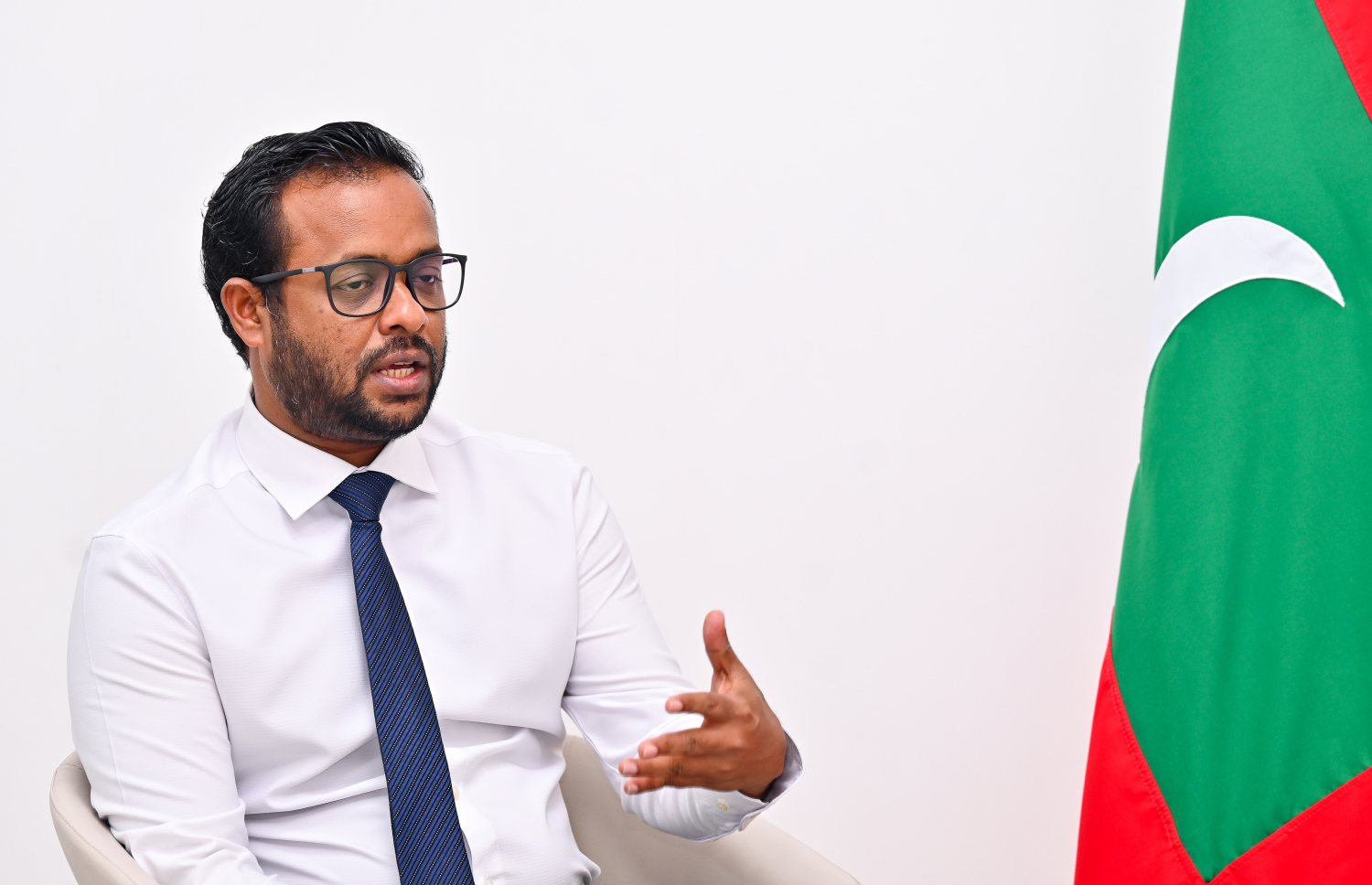
Rasmale' and other developments
According to the Minister, the government's aim is to develop Rasmale' into a city in its own right, with its own robust economy and self-sufficient services.
Muththalib reflected on how even with the development of Hulhumale' Phase 2, the unavailability of services there led to further congestion in Male' and Hulhumale' Phase 1.
"What we must bear in mind is that we cannot stop others from migrating to Male’. For 30 years, governments have been undertaking many efforts to develop the north and south. We established a tertiary level hospital at Addu. But there is a challenge in retaining special doctors for this hospital due to living standards they desire, lack of sufficient numbers of patients, and various other reasons," Minister Muththalib stated.
"So just building infrastructure somewhere is not enough to have people migrate to live there. There must be job opportunities there. There must be adequate levels of education offered there. Other services must also be made available if people are to choose to move and live there. We can see now, about half the population of Addu lives in Male’. So we cannot achieve this just by developing infrastructure, we have to build an economy of that level as well."
Rasmale' is planned to be massive - "Imagine a land thrice the size of Hulhumale' Phases 1 and 2 together - and then make it even bigger".
A city of this size is undoubtedly going to need a strong transportation system, especially with the plans to make it a smart eco-city.
"A public transport system must be established. Not just bus, but a train system must also be introduced. Ministry of Finance is currently working on hiring a foreign consultant," the Minister responded.
"Although at the moment the work is being done on a zonal level, a masterplan for the entire Male’ will be made, based on public transport, where public transport is encouraged over individual private vehicles. We are placing high priority on this."
In addition to this, the government is also exploring the best means of transport between Rasmale' and Male'.
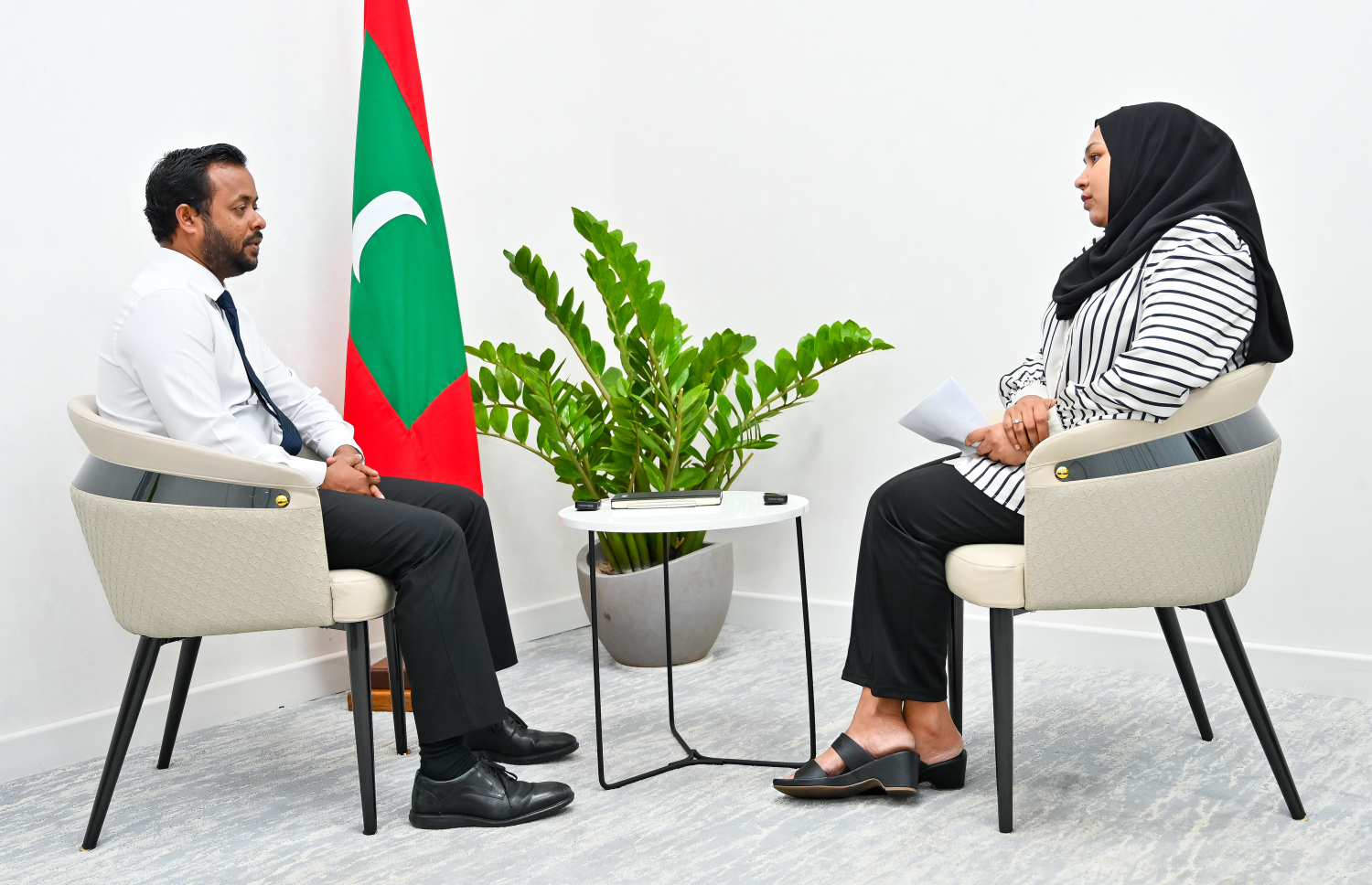
Free land plots: wisdom or folly?
On the ever-present debate of whether land, being a scarce resource, should be given away for free, Muththalib said that ideologically, he is of the view that land should not be given away for free.
Contextually, however, his stance is that this does not apply in the Maldives.
"Giving land plots is something that has been practised in Maldives even historically, giving a State land plot to each family. This is something strongly embedded in society culturally. It is something that our psyche takes as a right entitled to every person. So if this is what society believes, and if this has been always practised in the Maldives, we cannot look at how things are done elsewhere in the world and say ideologically, this is not right, and choose not to give land," he stated.
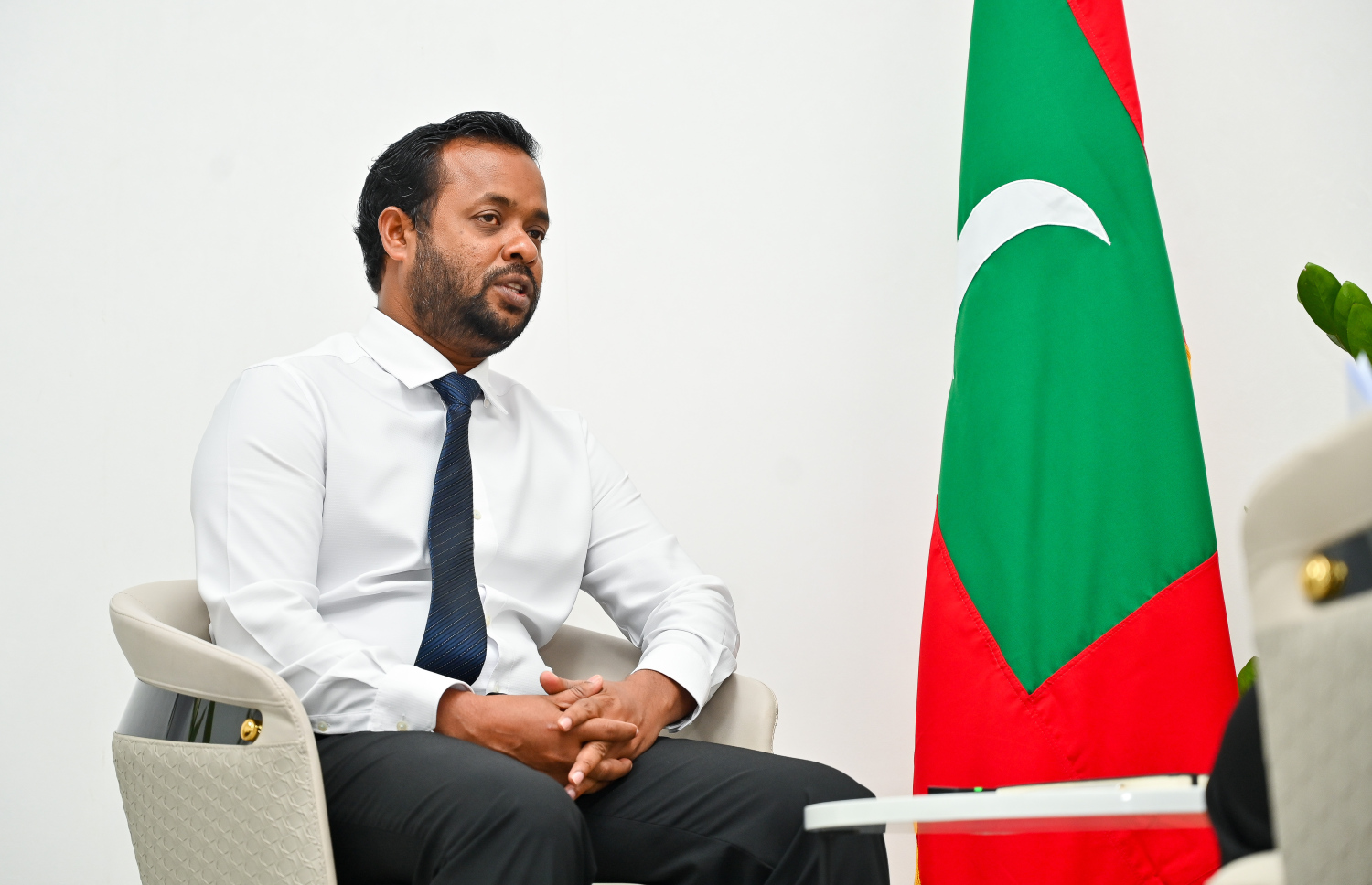
Social housing: a right, and a responsibility
The minister addressed the growing issue of those granted social housing failing to make timely rent payments. This, he said, infringes on the rights of others who yet remain to receive housing as it obstructs the government from obtaining further loans to continue developing social housing for those in need.
"Flats are built by the government through loans. While this is so, the government is not able to get further loans if it is not seen as feasible. Meaning, if those living in these flats do not pay rent to pay back the loan, then our chances of getting further loans significantly narrows. Through doing this, you are infringing upon the rights of other citizens. We are providing ready-made housing. The State is providing this at a much lower rate than is available commercially in Male’. So pay these rents, doing so is very important to protect the rights of other citizens. It is only then that the government can show that the money is being received from this, this is feasible, then we can get loans and provide housing to other citizens," Muththalib explained.
"If the work we are doing through the government’s housing policy to address the housing issues in Male’ is successful, then, god willing, the government’s aim is for there to be no one without housing by the end of the term."
Related stories
1 Comments
RECENT
POPULAR
Mohamed
There is group of people who are excluded from all categories, because the wife has a plot of land or apartment and the husband is deprived from all his rights to be eligible and the wife has total control on the husband. To be eligible government policy is forcing husband to divorce his wife. Is also restricts husband to live separately.
18 Dec 2025
0
0


