
Maldives is a country that has been artistically fueled for generations now. With boduberu being introduced in the 11th century and all the way to local legends such as Zero Degree Atoll, Traphic Jam, Detune and more, Maldivian music and local artists have gained local and some international recognition.
With boduberu being introduced in the 11th century and all the way to local legends such as Zero Degree Atoll, Traphic Jam, Detune and more, Maldivian music and local artists have gained local and some international recognition.
With so many high profile artists and bands that have broken through the arguably high barrier of entry in the Maldivian music scene, smaller artists and bands have expressed that it can be a bit of a challenge, but achievable through perseverance and passion for the craft.
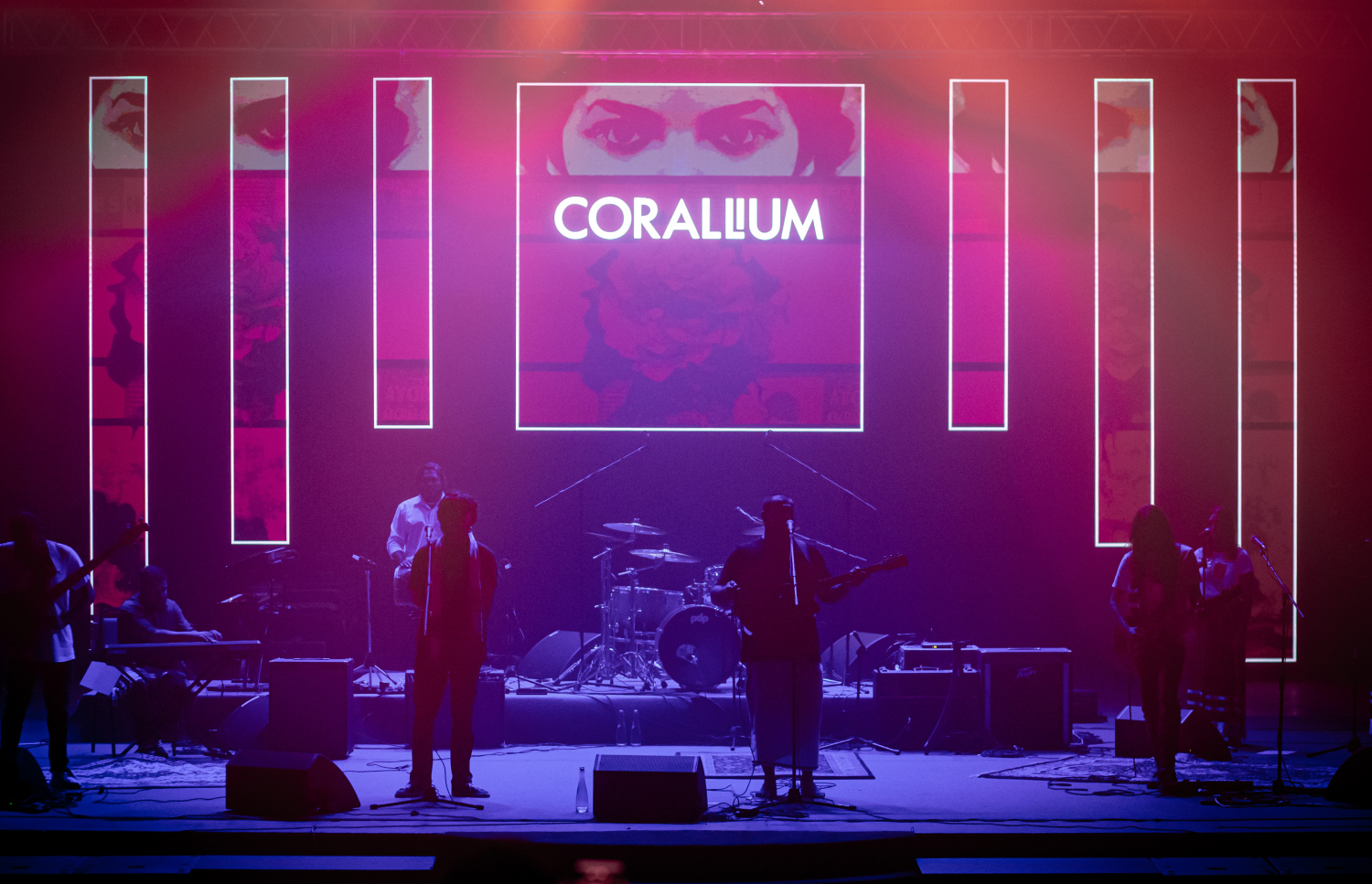
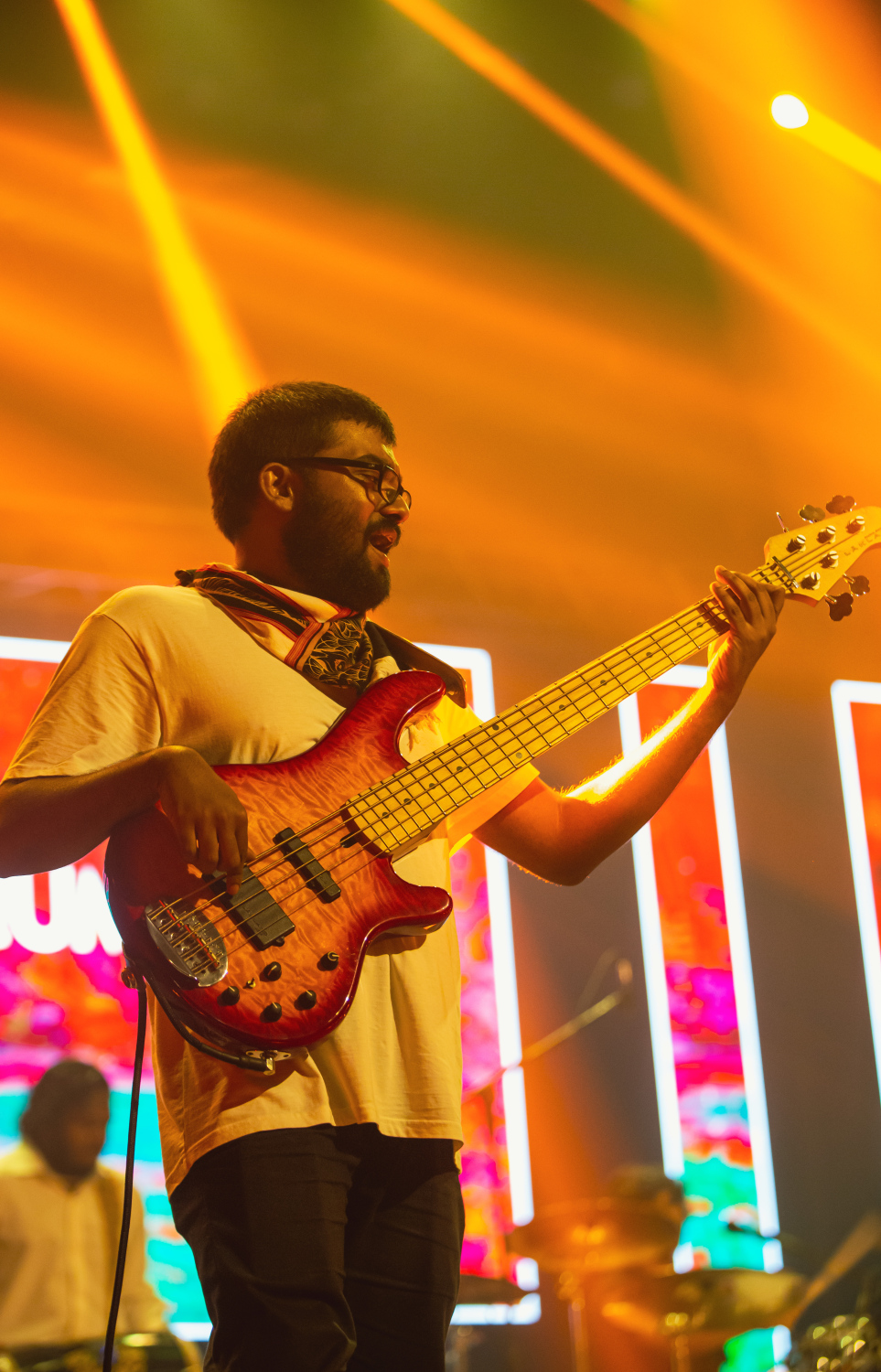
With that, the topic of this feature is Mirah Ally: music producer, sound engineer, bassist for Corallium, solo artist for Digital Flock and resident artist at Oaga Art Resort Maldives.
Before we dive in, check out the work he’s done for Corallium and Digital Flock:
Mirah’s passion for music began when he was just a child, with his father being quite into music as well. His father would play arabic music and various other tunes from all over the world, which as he said “inspired me a lot, but what made me want to pick up an instrument was seeing bands like System of a Down and Slipknot, with one of my most unforgettable memories being their music video for Before I Forget. I thought they were so cool and dope and that made me want to play guitar and do that on stage. I watched it at a friend’s place and downloaded it onto a pendrive, brought it back home to my dad and was like, dad please I need a guitar, heyonuvaane, please!”, he said while laughing.
This was around when he was 11 years old and as he said while still chuckling, “I begged him to get me a guitar for around three to four months and he brought me one when he went on a work trip somewhere, just an off-brand, no-name guitar for a 100 bucks. I spent around 8 hours everyday playing and practicing, getting down to business right after school with Ultimate Guitar open and learning Slipknot songs. I started playing bass when I was 18, because a friend of mine needed a bassist for a show. Man, was it hard but we pulled through the show.
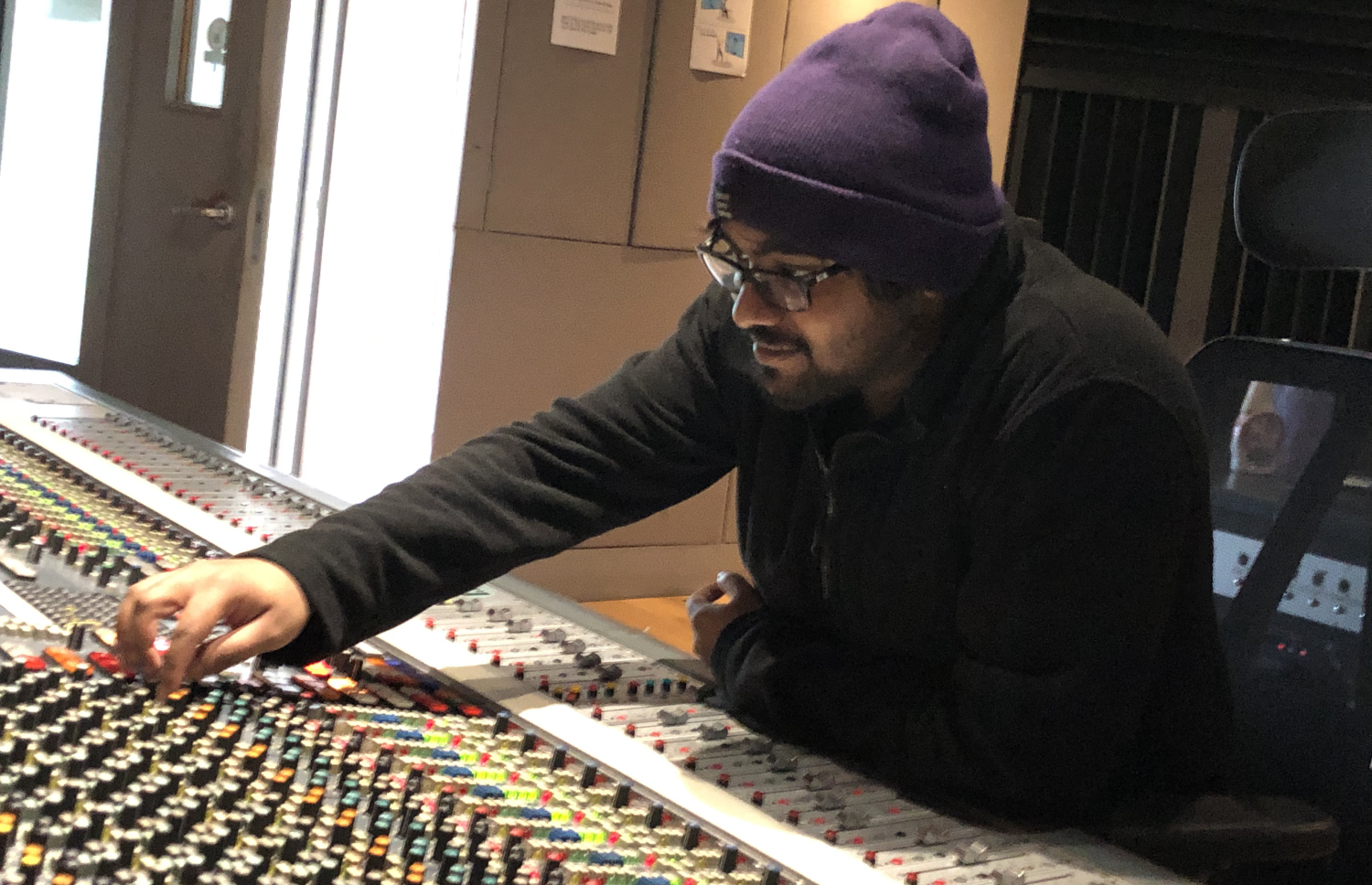
This was when my bass playing began, the same process as when I started playing guitar. At the time, I was making a lot of music as well but I didn’t really have any equipment to record so I downloaded Guitar Pro 5 and tabbed out my ideas on that. I learned how to record my music by myself, which opened up the world of the technical and engineering side of the audio world to me.”
With Mirah’s background as a musician, reach as a band member and his introduction into the music world during his younger days established, I proceeded to ask him various questions about his musical journey.
Humble Beginnings
1. What was the beginning of your musical career like?
“My first week in Ireland (Pulse College, Bachelor of Arts - BA, Music Production, 2017 - 2020 in Dublin, Ireland) was already pretty great. I had a really good lecturer that encouraged me to pursue my mixing skills after I showed him one of my mixes, and after that the rest was history.
I started working as a professional mixing engineer after my studies, with my first two projects being working on Raveo’s Udhuhilaa and Nish’s Dhevihifee.
I currently have 95 songs credited to me as a mixing engineer, with most of them being local songs. So yeah, that’s how I got started in my engineering career.”
2. What were the challenges you had encountered in the beginning?
“Post uni, one of the biggest challenges I feel is making yourself do the work. People always tend to underestimate the business side of things such as marketing, social media, content, etc. And for the longest time, I wasn’t a fan of it. I’m a musician, I shouldn’t be making content I thought,” he said while laughing.
“I feel like the business side of music was quite challenging for me in the beginning.
You have to be able to promote yourself. If no one knows you exist, then no one’s going to listen to your songs.”
3. How did you find your unique sound or style?
“Oh, I haven’t,” we both burst into laughter as he said that.
“I’m still finding my sound, like it’s changed a lot over the years I’d say. The first album I put out had tracks with droney, ambient sounds, and right now I’m making EDM house music and stuff like that.
It’s a huge jump and it’s always changing as I discover more music that I like. So I wouldn’t say I have a unique sound but some people would point to a track and say ‘oh that sounds a lot like Digital Flock’ and I’m like alright, I don’t know what you’re on about but alright,” and we just burst out laughing again.
Creative Process
1. Tell me about your songwriting process.
“I think the first thing I do is come up with a decent drum groove. Once I have a loop going, I find a sample that fits the idea in my head and go from there until it becomes completely different.
I’ll take that loop to Husny and Iqyan Rafeeu who are great lyricists and we’d sit down together and work on vocals, melody, etc. Once I have a structure, vocal, chorus and verse-wise, I’ll expand the loop and I’ll lay out the arrangement of the track. I’ll drop the vocals in, switch a lot of stuff around and I’ll start picking away at all the layers of the tracks, do some transition effects, etc.
I’d say it’s a bit different when it comes to Corallium, because there are a couple of songwriters in the band. The first EP was a lot of instrumental tracks I’d done for college assignments and I’d take those to my bandmates to get something out there. They worked on the melody, lyrics and we threw that on top of the music I’d written.
The second release we did, a single named Sunmaa, was a much more collaborative effort and it sounded more like a band.”
2. What sort of themes do you explore when you’re writing?
“My upcoming Digital Flock album is a lot about feeling lost and trying to find yourself by any means necessary. Basically, trying to escape whatever situation you may be in and come out stronger on the other side.
I’d say Corallium is 99% political, with sprinkles of social injustices, abuse and issues therein. Digital Flock is more about finding yourself and overcoming obstacles.
I try to write Digital Flock with an air of relatability and with more of an emotional connection to oneself. There are a few political songs in there but it’s very rare that that happens for Digital Flock.”
3. Do you actively search for inspiration? If so, how and where?
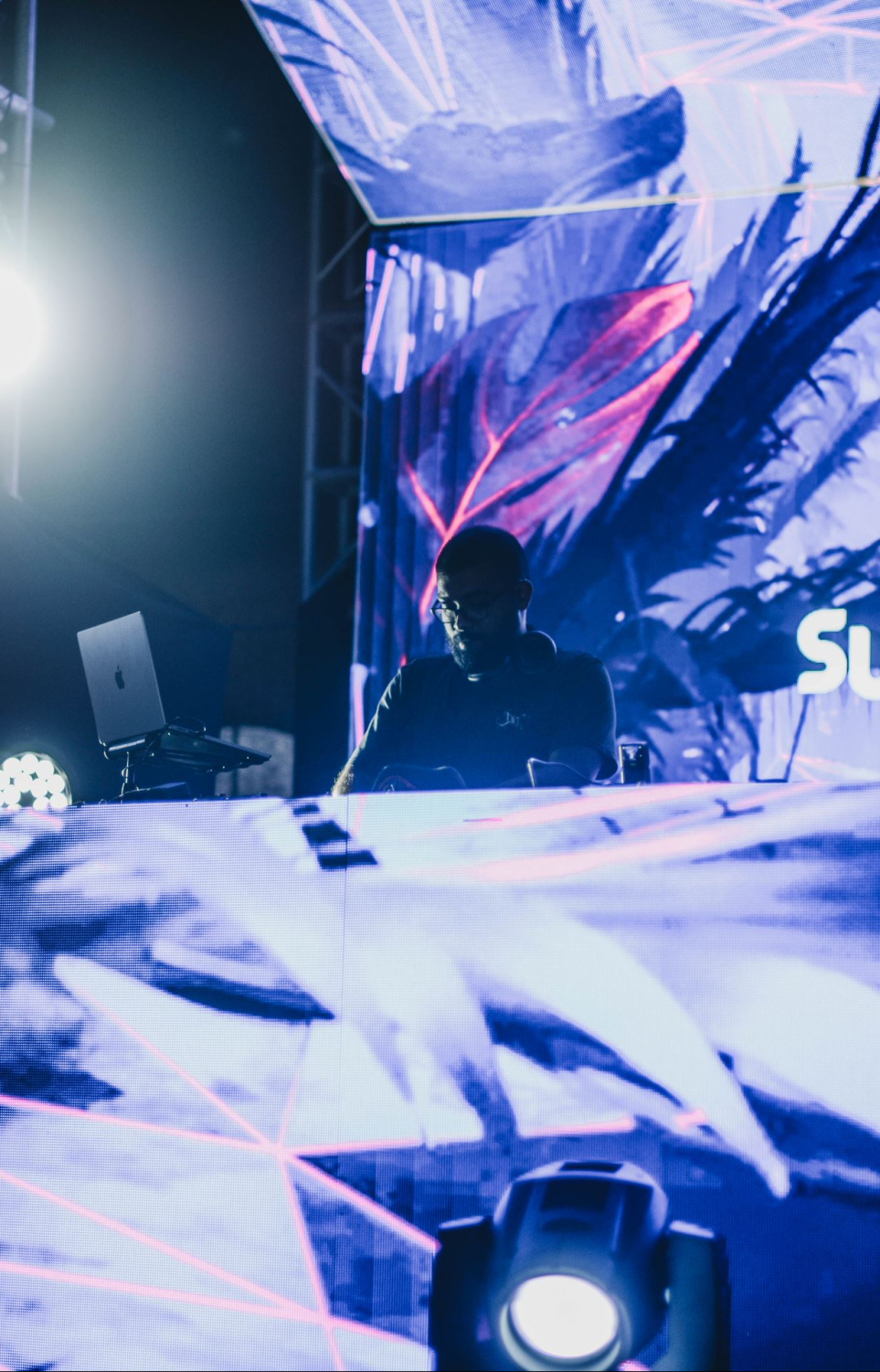
“I’m always hunting down music that caters to my taste at the time, especially since I’m DJ’ing now as well.
I’d go onto SoundCloud and just find new music and dig around for cool remixes. I’ve discovered some pretty cool producers just by doing that.”
4. Do you usually turn to something other than music when looking for inspiration or if you have writer’s block?
“Right now, I have this new obsession with cinematography, films and stuff like that. I recently bought a new camera as well. I do color grading and I’m red/green color blind as well, so it’s kinda tough but I love it,” he said while laughing.
“I’ve also started doing analogue collages along reading and drawing inspiration from it, like I’ve gotten themes from fictional books and video games such as Last of Us because of its expansive story and emotional progression.”
Influences and Inspiration
1. Who has the most influential hold over your music?
“Aww man, that’s tough!
Right now, I’d say for producers my top 3 are Bonobo, Skrillex and Fred Again. As a bass player, Jaco Pastorius is number one, the GOAT.
A lot of Jaco’s stuff has translated onto my electronic music playing, like his 16th note vibe. Basically Jaco’s bass playing but in electronic form.”
2. Do you have any influences outside of music that have had an impact on your sound?
“I’d say a lot of life experiences, my own and people around me. Some friends who’ve gone through some tough times and have either come back stronger or succumbed sadly. A lot of it, the story, the vibes, the feels go into more a melancholic direction.
I always try to make music that highlights the not-so-pretty aspects of life like, just listen to my depressing music and be sad with me,” he says the last line jokingly as we double over in laughter. Realism or pessimism, I ask him? Yes, he says.
3. What keeps you inspired as time goes by?
“So, we live in a very secluded place in the world, a bit restrictive I’d say and there really aren’t that many opportunities to make money as an artist, but I’m always hopeful that things will change through enough effort and that keeps me going.
I want to get over this insane barrier that Maldives has and I’m always pushing myself. I’ve been playing for 17 years and these have always been driving forces for me.
One of the larger barriers that Maldives has is that a lot of streaming platforms such as Bandcamp, where fans can pay whatever they want, only have PayPal. And because PayPal doesn’t operate over here, it’s a pretty big loss, like you can’t make what you want essentially.”
Thoughts on the Local Music Industry
1. What are some of the changes the local music industry has gone through since you started?
“I’ve been in the Maldivian music industry since 2020 and while I haven’t seen a major change, I have seen a lot of people putting out original music which is always good.
I think what this place is missing is more originality and people putting out more stuff. And that has changed substantially, people are consistently putting out albums I’d say over the last five years. I’ve noticed loads of great releases over the last few years.”
2. What are your thoughts about the role of social media in today’s music scene?
“I would go so far as to say that social media is more important than the music but not on such a surface level. As an artist, music is obviously the most important thing but the industry as it is focuses a lot on visibility and just being visible will get you opportunities.
That follower count, the Spotify monthly listener numbers, if people see that you’re making content, opportunities, brand deals, etc will slowly come your way.”
3. What are your views on music distribution platforms like SoundCloud or any other platform you’re using and the platforms as a whole?
“I try to be on all streaming services because you don’t get to decide what your fans use to listen to music.
For the longest time I was like ‘oh I’m not going to use SoundCloud because I don’t get royalties from that, etc’ but that really isn’t the point. Art should be accessible and not everyone can subscribe for 10 Dollars a month for Apple Music or Spotify and stuff like that. I want people to listen to my music at this point, the money doesn’t really matter.
I started with Bandcamp when I released my first Digital Flock tracks and I was really surprised with the positive reception, people cared enough to buy my music. So after that I started uploading all my stuff to major streaming services to Apple Music, Spotify, etc.
Right now I’d say my main focus is Spotify, I think that’s where the majority of listeners are for music streaming. Spotify for all my key work and SoundCloud for remixes and bootleg stuff.”
Ongoing Projects and Plans for the Future
1. What’s on your musical workplate currently?
“Right now, I’m trying to finish Digital Flock’s second full length album. I released its first single a year ago in August. I was supposed to release the album in January but I’ve kinda ended up procrastinating,” he said while laughing.
“An album is a large project so I kind of want to take my time but now I’m actively working on finishing it. I love the songs and I want to push it out so I can explore the other ideas I have in my head.
The album is called Aviary, with 8 songs, featuring six different vocalists. I made all the music myself and I worked with two lyricists and songwriters where they’d work on the melody as well.”
2. Will you be performing anywhere in the foreseeable future?
“So when I first started Digital Flock, I told myself I was never going to play live, it’s not for me. I started playing live recently,” and we both just lost it laughing.
“Most of it has been playing at resorts and I’ve been quite lucky. The resort I’m playing at right now is Oaga because they give you creative freedom to play whatever you want so I get the chance to play my own music which I’m very happy about.
In commercial settings, you kind of end up having to play what the guests want like, Top 40 Chart stuff. But in Oaga I get to make music and test it out. I do want to play some local shows but I still haven’t figured out the right setting, place and time to pull off what I have in my head. I’m slowly working towards that and I’d love to play eventually.”
3. What kind of project can your fans expect you to put out next?
“More specifically sound-wise, my next release is probably going to be more trip-hop, more Thievery Corporation, Portishead kind of vibe.
I’ve been listening to a lot of those kinds of music, vibing with it and making tracks like that so that MIGHT be my next release.
I might start doing something like a Side A, Side B, Side C for my albums to incorporate my swift changes in music tastes and styles so fingers crossed!”
Personal Insights
1. What’s your work-life balance like?
“Not very good,” he says with more laughs to be had.
“But joking aside, it doesn’t feel like work. Music is my passion, my hobby, my work, all bundled together. It never really feels stressful. I can just keep doing it all day.
Even in my free time, I make music like, this is my hobby music and not my work music. So work-life balance wise, I’d say it’s pretty good and I’d go so far as to say that it doesn’t exist because I truly do love what I do. I’ve never had an issue where I’ve been stressed or unbalanced.
Even concerning the most commercial work I do where I play for resorts, I’m just playing for guests, vibing with the crowd and getting paid to do what I love.”
2. How do you spend your free time?
“A lot of Netflix when I’m not working on my album. Reading books and I started going to the gym recently which has also become a bit of an obsession of mine, watching YouTube tutorials, stuff like that.”
3. Do you have a job you go to when you’re not producing music?
“No, I’m a full time music producer / DJ / audio engineer. All the work I do is either music or audio related.”
4. What advice would you give to aspiring Maldivian musicians and musicians in general?
“Just put out the song, man. Release it and get the ball rolling.
Art is a very intimate thing and it’s very personal, it’s very human and I think a lot of people are scared to showcase their very personal piece of art to the world, and that stops people from releasing their songs. But it’s just one of those things that you just have to get done and over with so that you can move on to the next creative endeavor
The first few times are going to be a bit rough, but you just have to persevere and just do it. The more you do it, the more confident you will be and the more consistent you will be. You can’t be too precious about the art you’re putting out.
You enjoyed making it so release it and make another one.”
A fun and productive interview, Mirah handled the questions professionally and with a hint of humor and sass.
He is living proof that Maldivian musicians are steadily on the rise and that becoming a force on the stage not only requires musical talent, but the hard work to cultivate it and the patience needed to stick to your convictions.


