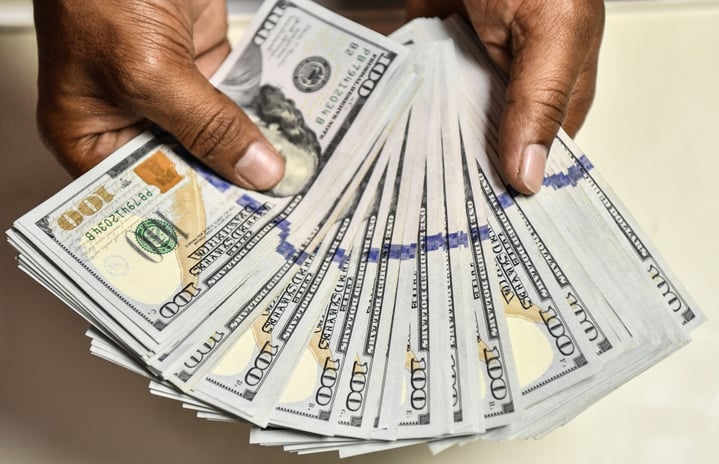
Tensions have risen, particularly among resort workers, following parliament’s passage of amendments to the Foreign Currency Act last week. The changes have fuelled concerns that resort employees who are currently paid in USD could instead have their salaries paid in MVR.
However, a senior official from the Maldives Monetary Authority (MMA) has said that the act passed by the Parliament does not have any barriers where resort staff are to be paid in USD.
In order to solve the issue of USD rates rising exponentially and people facing difficulties in acquiring USD due to the USD black market, MMA has taken enforceable steps under the Foreign Currency Act.
In addition to publicizing the names of resorts that do not exchange USD with banks, an unauthorized money exchanging service has been shut down. Enforcement agencies have also said that steps will be taken against those who illegally sell USD at increased rates.
MMA has begun conducting special efforts in acquiring USD within the banking system. As a way to solve the USD issue, using MVR for transactions within the Maldivian market is a vision held by MMA since its inception, said the authority.
During the latest press conference that was held, Governor of the MMA Ahmed Munawar has shared MMA's efforts in solving the USD crisis. He stated that when looking at other countries, they even use their own currency within their market.
According to an MMA official, the relevant macro amendments will be enforced and preparations made before all transactions within Maldives are changed to MVR, and after research into economic changes is done as well.
Governor Munawar has said that in a time where efforts to solve Maldives' USD crisis is underway, salaries need to be given in MVR in order to raise the Rufiyaa's demand and that the changes need to be brought by the end of 2030.
Parliament passed the amendment to the Foreign Currency Act on Wednesday where 40 percent of the revenue generated in foreign currency by resorts and guesthouses is to be exchanged at banks every month. The amendment will be enforceable from 1st September onwards.
Before the amendment was passed, the Maldives Association of Tourism Industry (MATI) stated that exchanging 40 percent of their USD revenue is not something they can do as resorts rely quite heavily on USD to provide services and other matters.
In a statement written by MATI, they said that exchanging 40 percent of their USD revenue is not a viable amount for the industry as resorts use USD to pay salaries, service charges, taxes (Tourism Goods and Services Tax (TGST), Green Tax, Withholding Tax and Income Tax), rent and loans that need to be paid in foreign currency.
Munawar said that along with the foreign currency that is to be exchanged at banks, the act will see amendments in strengthening monitoring steps as to how the rest of the revenue is spent.
He stated that the only way the issue where Maldivian businesses are not getting the required USD for importing goods can be solved is by those who generate their income in USD exchanging their USD at Maldivian banks.
Munawar also said that 56 percent of the USD that has been exchanged from parties that generate revenue in USD to the MMA up until last month has been used to repay state debts.
As the Foreign Currency Act currently stands, those who generate revenue in foreign currencies have two choices when exchanging USD at banks. One is to exchange USD 500 per tourist and the other is to exchange 20 percent of their total revenue.


