
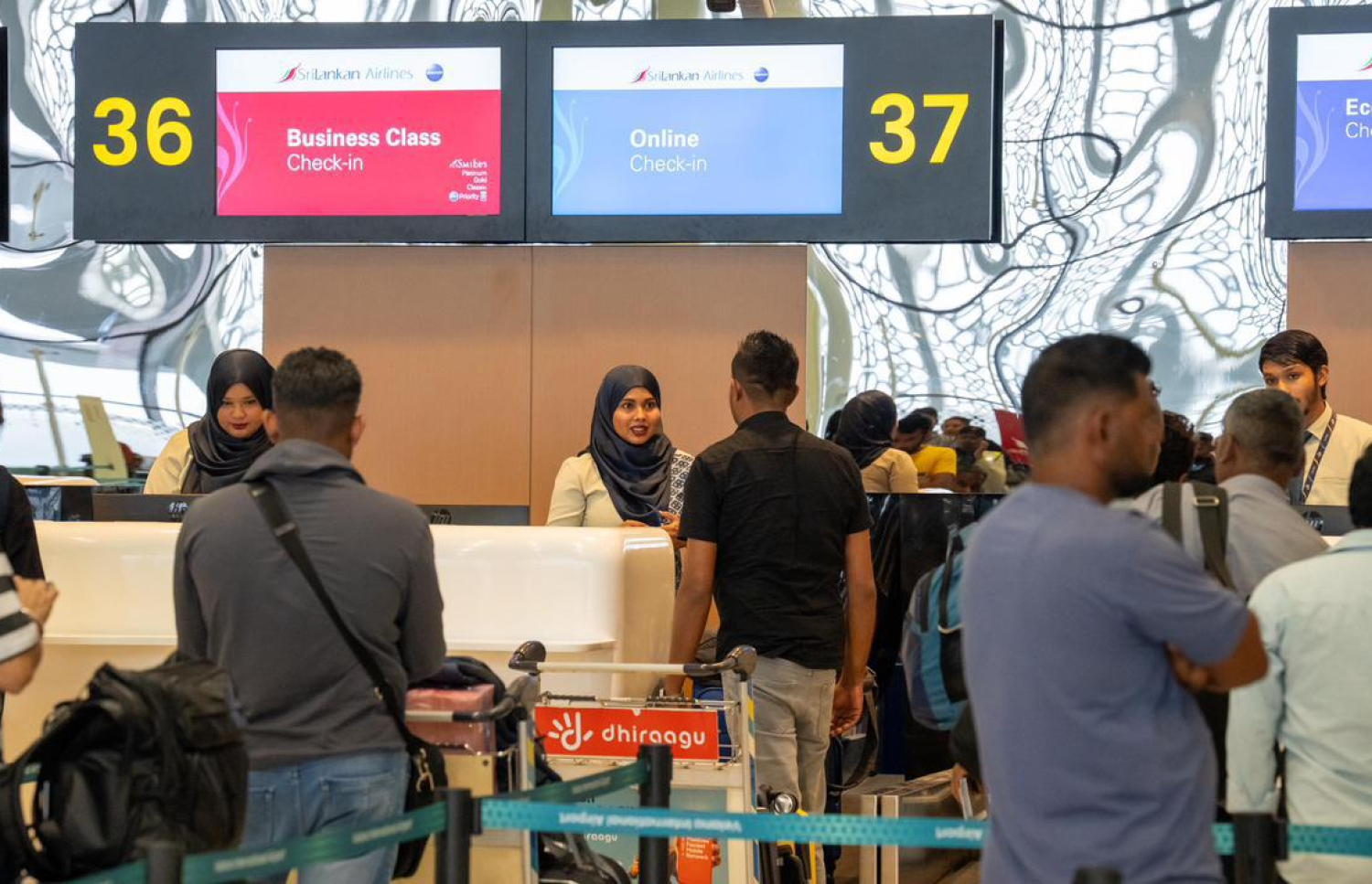
Sri Lankan Airlines officially commenced operations today at the newly developed Terminal 1 of Velana International Airport (VIA).
According to the Maldives Airports Company Limited (MACL), the operator of VIA, Sri Lankan Airlines is the 33rd carrier to transition to the new facility since it first opened on July 26 of this year.
To mark the occasion, a ceremony was held to formally open the airline's check-in counters, where gifts were presented to 115 departing passengers.
The first Sri Lankan Airlines flight to dock at Terminal 1, UL101, arrived with 277 passengers who were greeted with warm welcome featuring traditional cultural performances.
MACL noted that Sri Lankan Airlines is the second carrier from Sri Lanka to operate out of Terminal 1, following a long-standing history of service to the Maldives that dates back to September 1, 1979.
The transition ceremony was graced by the Sri Lankan High Commissioner to the Maldives, Mohamed Rizvi Hassan, alongside Sri Lankan Airlines’ Country Manager, Nayomi Tennakoon, and senior officials from MACL.

The move follows shortly after Singapore Airlines, one of the world’s most renowned carriers, began its operations at the new terminal just yesterday.
The state-of-the-art terminal represents a significant investment of 457 million dollars (approximately 7 billion rufiyaa).
MACL anticipates that the new facility will drive a revenue increase of 7-8 percent in its first year, with growth projected to reach 15 percent the following year. This financial success is expected to be achieved by accommodating more airlines during peak hours and significantly expanding duty-free services.


